

Shuters Shute ⏱️
Lap 261: Sponsored by USATF
Sponsored by USATF
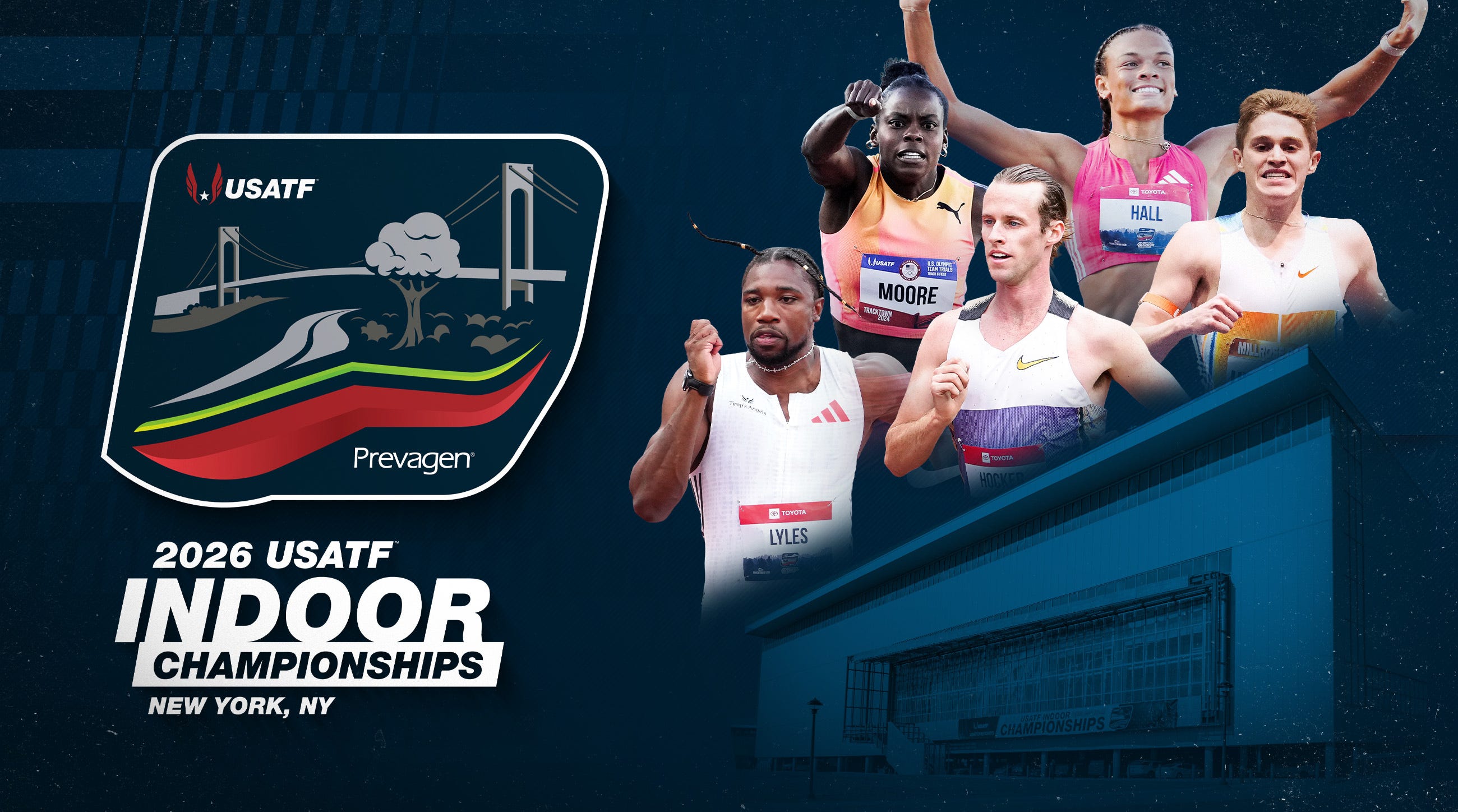
Get your tickets for the 2026 USATF Indoor Championships presented by Prevagen.
Use promo code CITIUS10 to save on tickets to the USATF Indoor Championships, where the stakes are high as athletes compete for the chance to represent Team USATF at the World Indoor Championships in Poland.
Feel the energy of the crowd, the speed on the track, and the pride of watching the nation’s best compete head-to-head at Ocean Breeze Athletic Complex in NYC.
The action takes place February 28 to March 1 as athletes battle for national titles. Tickets are on sale now. Grab yours before they’re gone!
Compiled by David Melly, Paul Snyder, & Kyle Merber
Know When To Fold ‘Em And When To Gold ‘Em 🥇
And just like that the Winter Olympics are over! It feels like just yesterday that this newsletter received a cease and desist from the IOC for selling conceptual Milano-Cortina Cross Country shirts. Ah, the memories! Anyway…
At least at the start of competition, most of us probably had close to zero understanding around how scoring worked in almost every event in the Winter Olympic program. But if you’re like us, over the course of the event, the snow- and ice-based escapades inched forward from half-paid-attention-to background noise to something that had you shouting at your TV
That’s because even if the sports appear to be entirely made up on the spot (“yeah, luge is cool and all, but what if we stacked another person on there?”) there’s something familiar and captivating about them: beautiful human moments and inspiring stories behind every medal won and lost. As fans of track and field, it doesn’t matter if the person bawling their eyes out in triumph or collapsing onto the ice in anguish is a lawyer who moonlights as an elite curler—we are familiar with the soaring highs and crushing lows that accompany loving a niche sport that won’t always love you back.
But no matter how many bobsled upsets left you teary eyed or snowboard near-misses left you gasping, few moments made a more impactful impression than Alysa Liu winning gold in the free skate. The routine itself was nearly perfectly performed. Liu’s joy was radiant, before, during, and after her skate. And she surged to the top of the scoreboard near the end of competition—how’s that for dramatic tension?
But it wasn’t just watching someone at the apex of their craft pop off a career-defining performance when it mattered most. (In all likelihood, most viewers have no real understanding of the basis by which a routine gets scored. While a triple Lutz-triple loop might be harder on paper, the spinning knee slide really captured hearts.) It was about Liu’s journey to that moment.
Liu’s father, a Chinese dissident who was exiled to the United States, had been inspired by Michelle Kwan’s success and poured hundreds of thousands of dollars into his daughter Alysa’s training. Although he had been accused of being overbearing, it all seemed to pay off; Alysa won the senior national title at just 13 years old. But after competing at the 2022 Olympics as a 16-year-old, Liu retired, citing burnout and the accomplishment of her goals.
Two years later, Liu returned on her own terms, skating seriously again because she wanted to, not because it was something expected of her. And we all saw how that went.
Of course Alysa Liu is not the only elite athlete to take a significant break and return better for it. Simone Biles is on her second extended post-Olympic breather. Michael Phelps won six more Olympic medals in Rio despite retiring after London. Dara Torres retired in 1992, came back in 2000 to win five more medals before retiring again, then returned in 2008 to win three more at 41 years old. And Michael Jordan definitely retired on his own volition in 1993—you can bet on that!
Is there something the sport of running can learn from this? After all, we certainly have something of a burnout problem ourselves. Sure sure, a few weeks ago, Kyle wrote about how mature and level-headed this current crop of young stars appear to be. But burnout is not an age specific issue—it’s the result of creating a singular identity which neglects the fun that fuels the motivation.
As a high-level track athlete, yes, track is essentially your job. But hopefully track is also still a sport you enjoy training for and competing in! And if it starts feeling like a slog or a chore, the pressure feels like it exceeds the pleasure, or injury cycles last longer than training blocks… you can just walk away. Nobody’s gonna stop you from walking back later on.
Take a look at Georgia Hunter Bell, or Keira D’Amato, or Allie Ostrander, or Kim Collins, or Tigst Assefa, or Donavan Brazier. It feels like competitive peaks are short in this business, but ultimately, second acts are far from rare, and often what’s required to find balance in performance and joy.
It seems that a key to Liu’s second-run success has been doing it her way. What does that look like in track and field? For Hunter Bell, maybe that’s bouncing between the 800m and 1500m based on whatever catches her fancy. She’s been candid in interviews that she chooses her race focus as much based on vibes as medal odds, and yet—the medals have followed anyways. Another great example is Elise Cranny. The 2023 national champion over 10,000m decided to double 1500m/5000m at the next year’s U.S. Olympic Trials simply because… she doesn’t like the 10k that much. Can you blame her? And yet she still made the Olympic team.
For D’Amato and Sara Hall, another American marathoner with a late career resurgence, rediscovering the joy in running also means rediscovering the joy in racing. After setting the then-American record in the marathon in 2022, D’Amato took on the ambitious Worlds-Berlin-NYC fall triple, repping out three marathons in four months just because she could. Hall is no stranger to three marathons and a handful of halves a year, either, turning her master’s career into a spree of bonus races.
It can also mean switching things up entirely. Allie Ostrander and Molly Seidel have both shown that a trip from the track to the mountains can be a beneficial detour, trading out concrete for trails. Or how about Cordell Tinch, who decided his next side quest after a World title in the hurdles was to revive his long jump career? Given that he’s currently tied for the U.S. season best at 8.29m, it seems like it’s working out so far.
Not all of these stars needed a break to get back on track, but a lot of them did. Next time you’re on the starting line feeling overwhelmed by the pressure or getting into the pool for what feels like the thousandth hour of cross-training through frustration, remember: it’s okay to hit pause.
Fun Celebration Or Unsportsmanlike Conduct—Where’s The Line? 🔫
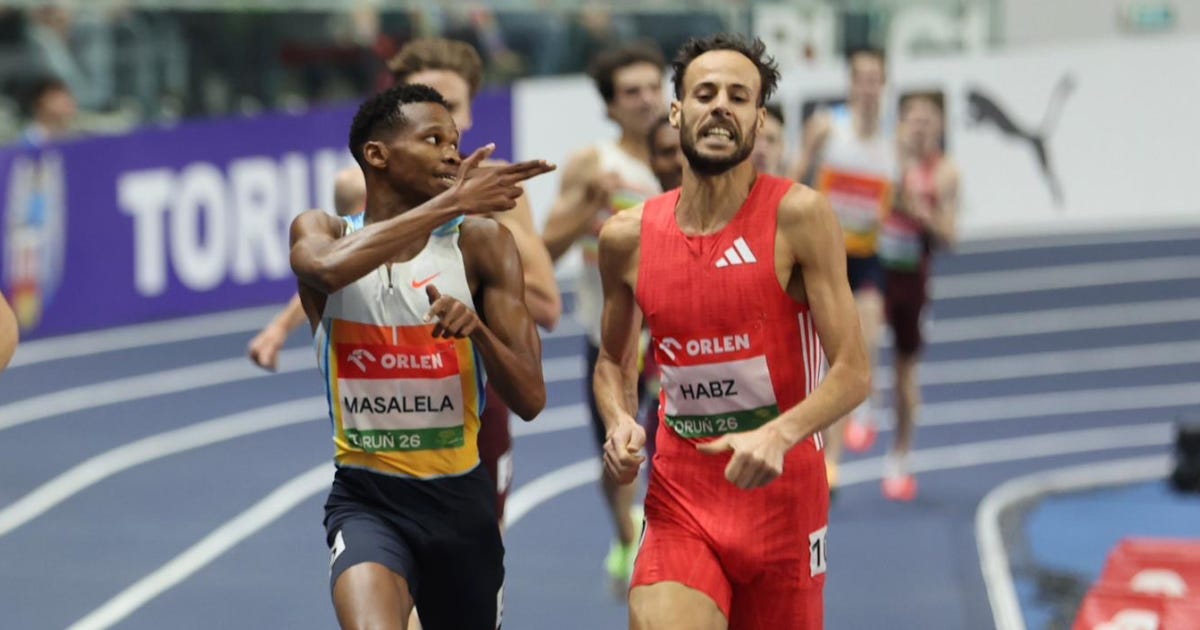
The most talked-about performance in track and field last weekend didn’t show up anywhere in the results. That’s because Tshepiso Masalela’s 1500m run at the Orlen Copernicus Cup in Torun, Poland, ended in a DQ. The Motswana middle-distance star initially clocked a 3:32.55— just 0.01 seconds up on Frenchman Azeddine Habz—but Masalela ended up on the wrong side of a referee whistle as he was ultimately disqualified for unsportsmanlike conduct.
As Masalela came down the homestretch and pulled just ahead of Habz, he pointed to his competitor’s head with a “finger-gun” motion as he crossed the line. First off, it was a pretty ballsy move. Masalela was barely half a step ahead of Habz, and the Frenchman came back at him in the final strides. But (over)confidence aside, the meet officials ruled that Masalela’s behavior was a violation of World Athletics Technical Rule 7.1, which prohibits “unsporting or improper conduct.” The rules don’t further define DQ-worthy conduct, which of course leaves things up to the subjective interpretation of each individual official.
The baked-in vagueness can also lead to inconsistent application of rules, and Masalela’s defenders were quick to point out similar celebrations from stars like Noah Lyles and Mondo Duplantis. It seems that the meet officiating crew in Poland has taken a similar stance to NCAA basketball referees: a celebration that intimates that you’re shooting your competition is a big no-no. Should Lyles or Mondo have gotten DQed? Did they not get the boot because they’re bigger names, or because they were at meets being officiated differently? There’s no way to know for sure.
The complaint that referees don’t always interpret the rules consistently across time and space is as old and as real as sport itself, but it’s a necessary evil we’ll live with as long as we have humans arbitrating athletic disputes. (Unrelated: who’s excited for the debut of the automated strike zone in a few months?!)
So we’re left with two main issues: Did Masalela’s behavior violate TR 7.1 as it’s currently written? And is that rule a just one? Neither has an easy answer, but this newsletter isn’t afraid to tackle the tough questions. Our current thinking: No, and no. And here’s why.
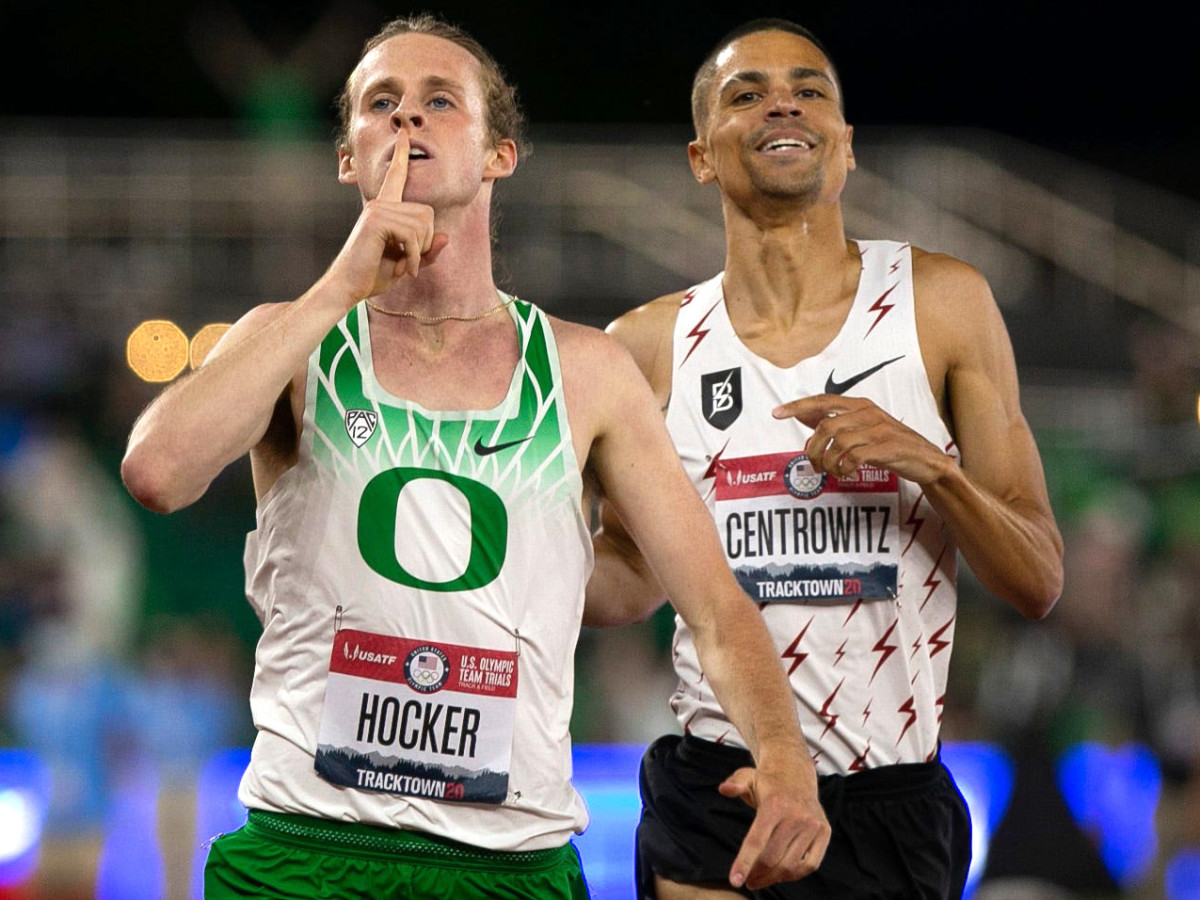
Masalela’s celebration was cocky, and perhaps even douchey. If you’re a coach or a parent, you might not be thrilled to see your athlete or child act that way. But also… it wasn’t a genuine threat of violence by any reasonable interpretation, and it didn’t exceed the scope of race-winning celebrations we’ve come to expect from star athletes. Is the finger-gun any worse than Cole Hocker’s Steph Curry-indebted “bedtime” celebration? Or his competition-shushing? We don’t think so. If you earn the title of “winner” fair and square, go ahead and have your little moment. And the fans love a good finish line show, momentarily rescuing track and field from any allegations of being too boring or bookish.
The rule is also an unfair one. At the very basic level, it’s so broad that it basically provides zero guidance to athletes for how they should (or should not) act. If the goal is for World Athletics to prevent behavior the governing body believes crosses a line, the best way is to spell out exactly what is verboten so clearly that no athlete dares attempting any such antics in the first place. If the rulebooks proactively stated that dogs couldn’t play basketball, the Air Bud Cinematic Universe would never have made it to screen.
There’s also a more philosophical argument against a broad interpretation of TR 7.1. World Athletics may be an international entity, but we here at the Lap Count are big believers in the First Amendment to the U.S. Constitution. Freedom of expression is a value that should extend to the sporting arena, protecting powerful political statements and authentic displays of emotion, alongside yes, silly or obnoxious celebrations. Meet officials should be able to put a stop to truly reprehensible behavior, like actual acts of violence or hate speech, but again, these violations should be clearly and specifically spelled out—particularly in a sport with so much international diversity and, with it, a wide range of cultural norms. And hopefully, a clear and plainly-stated policy would act as a deterrent from any of that awfulness making it onto the oval.
Ultimately, the arbiters of poor taste shouldn’t be the officials; it should be the fans. You want to showboat and taunt your rivals after a win? Go for it, but prepare for the boos to follow. Professional track and field is ultimately an entertainment product, and a key part of captivating storylines are for heroes to face villains, for fans to feel passionately about the people they’re watching on screen. Feeling like the wrong guy won this race makes you want to tune in to the next one to watch him lose. And here’s the dirty little secret: the biggest villains of any sport, from the Yankees to the Patriots to Jake Paul, do pretty darn well in the ratings.
Masalela deserved his national record and any criticism that may have followed. That’s part of sports. If the popular consensus is that his behavior was so unsporting as to make him universally reviled, others won’t exactly jump at the opportunity to follow his lead. And if the viewers feel like he has cool, rebellious bad boy vibes now, that’s just fine too. Even better if it’s both.
Meet Ethan Shuley, America’s Latest Out-Of-Nowhere 2:07 Marathoner 📈
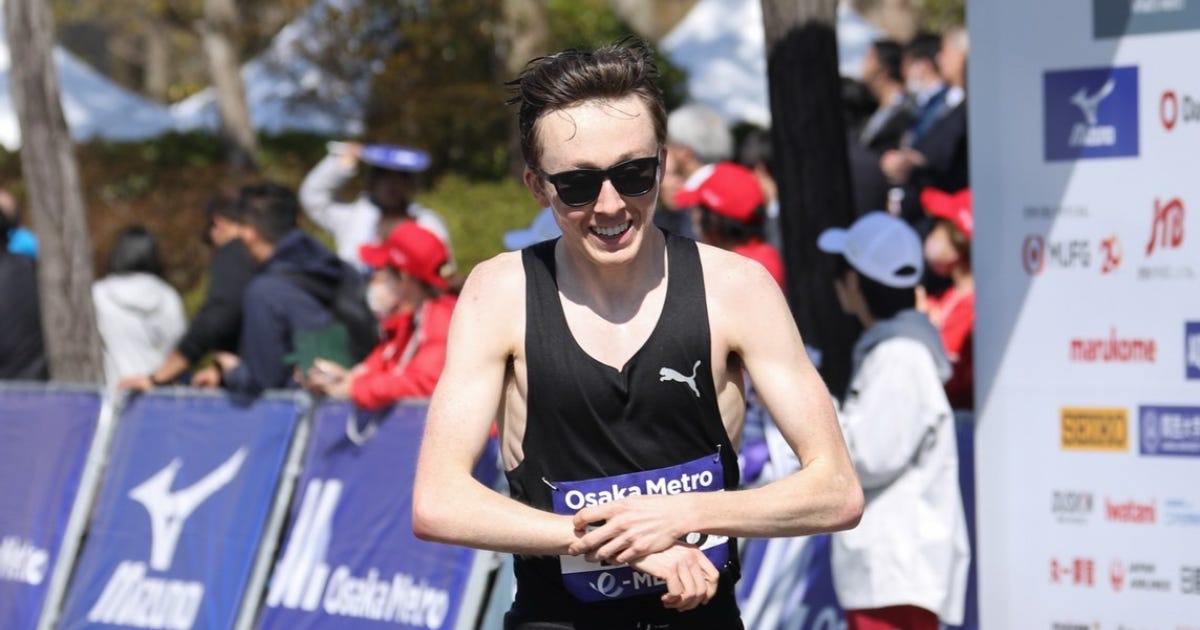
Though elements of Japanese elite running culture are well documented, to the average fan of American distance running, plenty of things about it probably feel inscrutable. If we can grossly oversimplify an entire nation’s relationship to a sport, Japan shows up disproportionately over 26.2 miles because of a national devotion to the distance and a culture that celebrates pushing oneself to the absolute limits on the asphalt.
On Japan’s 2025 depth chart, running sub 3:40 for 1500m puts you in the country’s top-10, while 14 men broke 2:07 for the marathon. In the U.S., 110 men broke 3:40 and one broke 2:07 on a World Athletics-eligible course. Because of this, it’s long been standard easy run conversational fodder among American running dorks: man, wouldn’t it be sweet if more Americans trained like Japanese runners?
Well rejoice, dear dorks—uh… dear readers, because we finally know what that hypothetical looks like, thanks to Ethan Shuley.
Shuley was an injury-prone prep standout in Kentucky turned BYU cross country washout. He moved to Japan after graduation for work, stuck around for film school, got inspired via Instagram to train for an ultra, and found himself drawn back toward high-level running. From there he began to build toward grinding out 150-mile weeks and working his way up the Japanese road running circuit, until he ran 2:07:14 last weekend in Osaka.
Shuley—now the seventh-fastest American marathoner ever and newly in the conversation to represent Team USA in Los Angeles—joined Chris Chavez on the CITIUS MAG podcast for a deep dive into his gradual return to the sport and subsequent ascension toward the top. You can listen to the full conversation on Spotify, Apple Podcasts, YouTube, or wherever you typically pod it up. You can also read the transcript here, but we’ve plucked out some particularly interesting excerpts below.
On Japanese elite-level training and racing culture:
“The biggest thing I can tell you is they’re just so hardcore. We’d wake up at 4:45 in the morning on Saturday for a training run (my only day off) and these guys would just grind it out. It’s very relaxed before and after, but once it’s go time, they go hard.
…Racing here is kind of like how [Rory Linkletter] described it. People do not fear blowing up. The guys who run 2:06 here and their half marathon times don’t follow the calculator that people use to predict marathon pace. They’ll run a 61-minute half and then suddenly run 2:05:30. I would agree that Japanese runners don’t fear the consequences. We saw that with [Hibiki} Yoshida. He went out for the national record even though he had never run a marathon. There is some truth to that.”
On his breakthrough second-place 2:11:30 performance at the 2025 Kobe Marathon, starting from the second wave:
“I knew they were going to go out at 2:08 pace. I had flashbacks of Nagano [a race where he’d run a then-PB of 2:18:13 earlier in the year] and being solo the whole race, and I did not want to experience that again. The first mile I had to really go out hard. I think it was a 4:40 mile. I finally caught up to the lead group’s pace. We went through the half in 63:30, which for the lead group was maybe eight seconds slower than that.
From about 21K to 30K, it was just me and two Kenyan runners plus the pacemakers, who were also Kenyan corporate team guys. At around 30K, cramping started to kick in and I was fighting for my life. But interestingly, that happened to Rotich and the other Kenyan, who actually dropped out around 33K to 35K. I moved up to second at that point and just tried to hold on.”
On his build for his Osaka Marathon performance:
“Slightly more mileage this time, but not drastically different. I’d hit 146-mile weeks before; I got to 150 for this build. Mileage wasn’t too different, but the intensity was definitely harder this time around.
…I don’t love it, but [nine-mile doubles have] become my staple. Once you get to 10 miles on a double, it’s pretty hard on recovery. That mix is what I can handle without completely breaking. All the mileage I do is what I feel is my limit without sacrificing quality. I could do more mileage if I slowed down the pace, but I don’t think that would help me as much.
For me, the Osaka Marathon was my world major. I’m not a pro, so this is my time to do a good race… I just really wanted it.
My approach is really just to take it race by race. Being in Japan and not racing on the global stage with the big marathons, it humbles you a lot. Even though I ran 2:07, there are a lot of guys younger than me here in Japan and among the foreign runners who have absolutely destroyed me. In terms of future goals, I’d like to continue to be more competitive place-wise in future races and hopefully one day get some wins.”
More News From The Track And Field World 📰
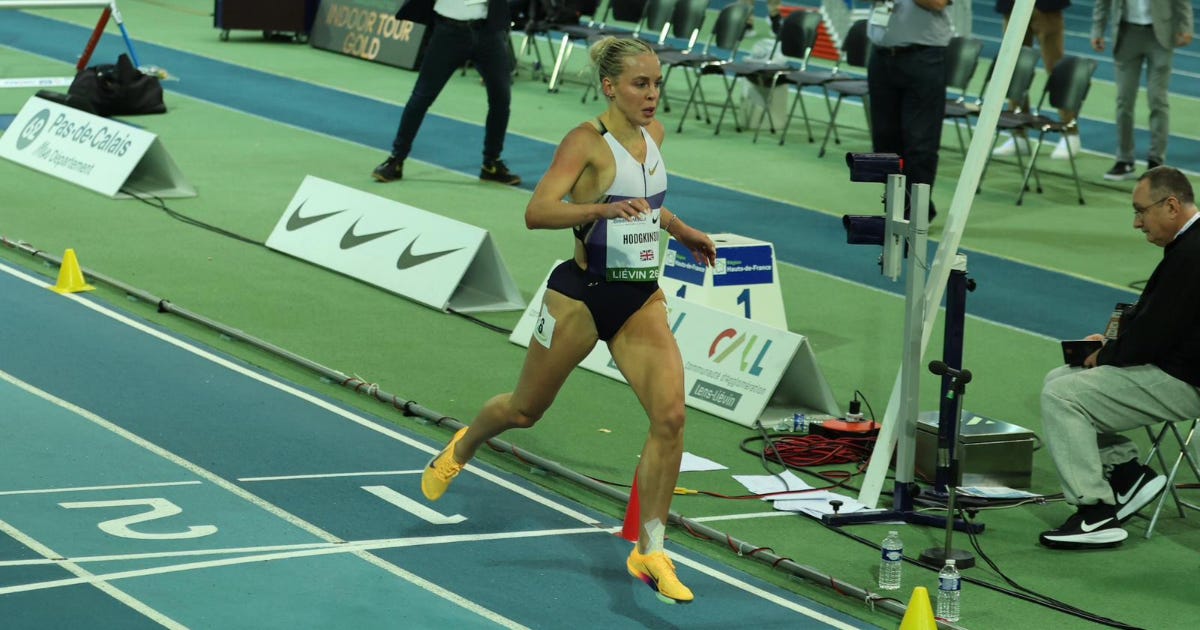
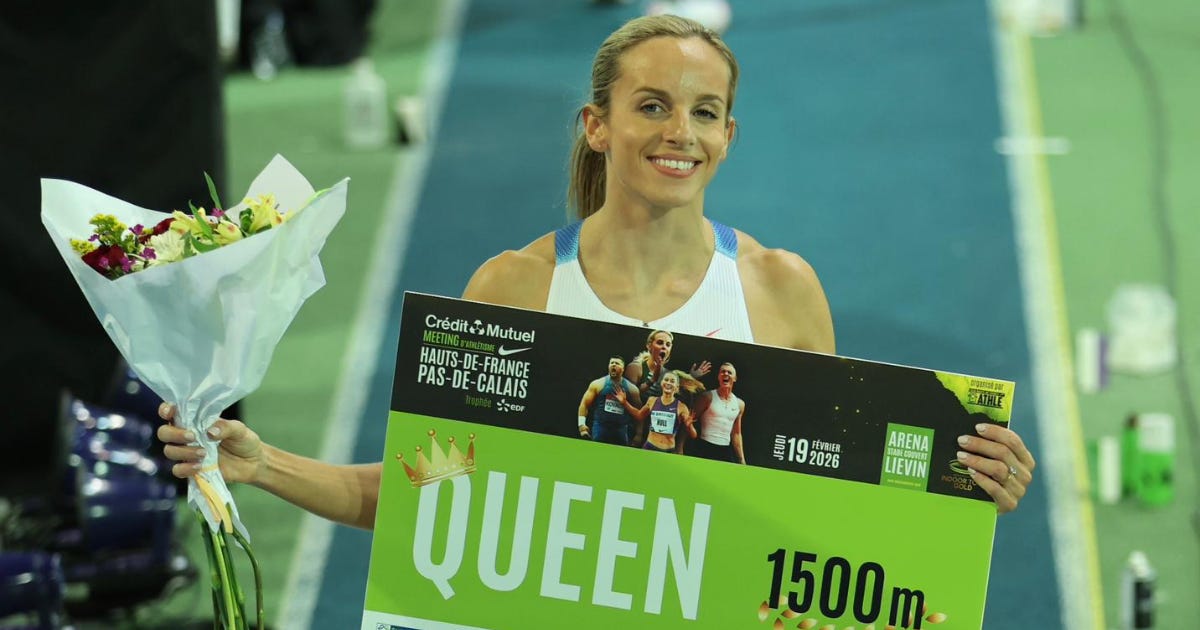
– At a meet with a much longer name that we will simply refer to as “Liévin,” Keely Hodgkinson set the indoor 800m world record—1:54.87—in truly dominant fashion. She finished over three seconds ahead of second place, last year’s Diamond League champ Audrey Werro.
– Also in Liévin, Georgia Hunter Bell put on a show in the 1500m, going 4:00.21 and finishing over a second ahead of Birke Haylom; Isaac Nader went 3:32.44 to take top honors in the men’s 1500m; 2000m specialist Jess Hull went 5:26.68 for the win; and Freweyni Hailu went 8:24.59 to win the 3000m.
– A non-comprehensive list of athletes who won their events in Torun and were not disqualified for making finger gun gestures: Devynne Charlton ran a world-leading 7.77 in the 60mH; Eliott Crestan continued his strong indoor campaign going 1:44.07 in the 800m; Agathe Guillemot took down Haylom and Hailu, going 4:00.64 for 1500m; and Joe Kovacs built some momentum heading into USAs this weekend, throwing the shot 21.92m.
– The NYC Half pro fields have been announced, and are headlined by defending champs Abel Kipchumba and Sharon Lokedi, who will have her hands full in particular with Helen Obiri and Agnes Ngetich also slated to line up on March 15th.
– At this week’s Boston University indoor barnburner, Foster Malleck went 3:33.39 to take the men’s 1500m; Heather MacLean won the women’s 800m in 1:59.59; Harvard’s Sophia Gorriaran set the NCAA 1000m record (2:37.72); and the Oregon men’s DMR squad bounced back from a DQ in Arkansas a couple of days earlier by doing what any one of us would have done—boarding a plane to a different time zone to give it another shot, and going 9:14.88, the fourth fastest time in NCAA history.
– And bad news for 95% of Masai Russell’s competitors… she is probably not cool with you!
Interested in reaching 20,000+ dedicated runners and track and field fans? Advertise with us here.
Making a threating gesture (finger gun firing) at an attendee in a business meeting gets you tossed, I don't see why it would be different for athletics. Flash the middle finger, same. Doing either at an official - don't show your face at this meet again. But then I come from an era when a sack or interception doesn't require the whole defense to race to the endzone to celebrate (2 min penalty for delay of game PLEASE).
What is the USATF discount code? I didn't see it in your show notes