

Sponsored by Unhinged
Your new pre-run fuel, in a bar you can eat.
Unhinged’s new caffeine + protein bar packs 75mg of natural caffeine (similar to an espresso) from real coffee, plus 11-14g of protein, 7-8g fiber, and 125mg of L-Theanine to hold you between meals or before/after a run. No sugar alcohols, no seed oils, and no preservatives. Only 2g of added sugar and now available in 3 flavors: Chocolate Coffee, Salted Caramel, and Peanut Butter Chocolate.
Grab a box of 12 for $36, or subscribe and save 10%. Use code CITIUS20 for 20% off your orders today at the link.
Compiled by David Melly, Paul Snyder, & Kyle Merber
Team USA Understands The Assignment 🗽
Happy November, readers! The leaves have turned, the clocks have changed, there’s a chill in the air… and the qualifying window for the 2028 Olympic marathon is officially open.
The 55th New York City Marathon will, in many ways, be looked back upon as the beginning of a new and intriguing chapter in the sport. In his first-ever marathon, Andreas Almgren looked like a savvy veteran en route to a flawlessly-executed 2:06:01 victory. Together with Yemaneberhan Crippa of Italy (second in 2:06:14) and Kamohelo Mofolo of Lesotho (third in 2:06:26), it was the first NYC Marathon podium without a Kenyan or Ethiopian since 1994, when Mexico swept the top men’s spots. In a city defined by its melting-pot culture, it was a fitting symbol of how increasingly global the international marathoning scene has gotten.
The women’s race featured more familiar faces, with Sheila Chepkirui reclaiming the top spot after winning in 2024 and finishing third in 2025. Hellen Obiri finished a surprising third in her fourth straight podium appearance, one spot ahead of 46-year-old Edna Kiplagat, who won the race an astonishing 16 years prior and is still a true contender at the highest level.
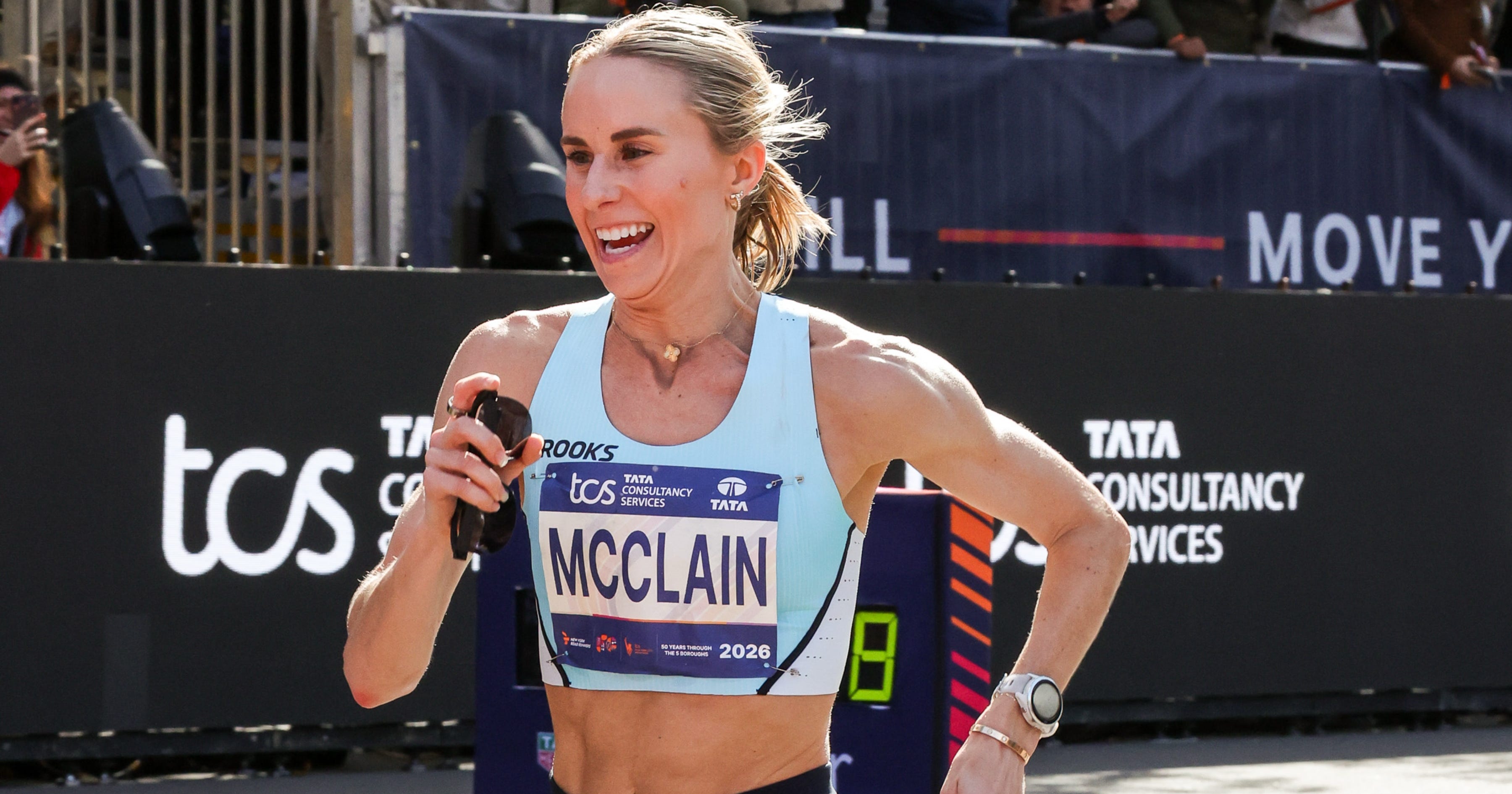
And of course, sandwiched in between Chepkirui and Obiri was someone who’d never finished top three at a World Marathon Major before: 34-year-old Jess McClain, who became the first American woman to podium in NYC since Shalane Flanagan in 2018.
McClain measured her effort through Central Park perfectly, letting Chepkirui burn the wheels off Obiri over the last mile of the race then pipping the two-time champ at the line, 2:24:42 to 2:24:43. But even before that, McClain was racing like a woman who belonged. Through 23 miles or so, she was comfortably and calmly locked into the lead group as it dwindled from 11 at half, to eight at 30K, to five with two miles to go. As Chepkirui and Obiri took control at the front to keep the pace honest and make the competition hurt, McClain hung tough until she was the last American standing—Carrie Ellwood would end up sixth and Weini Kelati seventh. Though McClain couldn’t quite match Chepkirui’s speed at the very end, McClain, whose PB is only 2:20:49, got the better of a four-time WMM champ (who also owns World titles on the track) in Obiri.
With her top-five run, McClain gets more than just a $60,000 paycheck. She also secures Team USA’s first automatic qualifier for the 2028 Olympic marathon, because NYC is a Platinum Label race. We don’t yet know the time required for LA28, but now McCLain has the comfort of knowing she doesn’t have to run another big one between now and the Olympic Trials.
On the men’s side, the closest any Americans got was Zouhair Talbi, who took sixth in 2:06:43 just nine seconds out of fifth place. Talbi was the top American in all three marathons he started this year, he’s also the only American to ever break 2:07 in the Big Apple and the fastest all-conditions marathoner in U.S. history with his 2:03:45 in Boston.
Not only did Talbi mix it up at the finish; he dictated the terms of the race in the middle miles. At multiple points from halfway onward, Talbi threw surges at the lead pack, opening up a small lead a few times that didn’t quite hold, but still sent a clear message that he wasn’t just racing for participation points. He was trying to win.
Talbi is, at this point, unquestionably the best American marathoner of the year. American record holder Conner Mantz ran fast in NYC, but his 2:07:27 was only good for 11th overall and fourth American. Others in the conversation include Clayton Young, Vinny Mauri, Charles Hicks, and two other top-ten finishers in New York—Ryan Ford (tenth) and Ahmed Muhumed, who finished a terrific eighth in his first crack at the distance. But Talbi has beaten all those guys except Mauri head-to-head this season. While he’s yet to land on a WMM podium, it feels like only a matter of time for the two-time Houston champ.
The most recent Americans to win a World Major are Des Linden in 2018 and Galen Rupp in 2017. In two of the last three Olympics, an American has medaled (Rupp and Molly Seidel). But not since 2004 has Team USA put multiple medalists on the podium, when Meb Keflezighi placed second and Deena Kastor secured bronze. With a pair of strong runs each in Boston and New York, Talbi and McClain have shown the ability to thrive in tough, championship-style races—the exact kind of skillset needed to deliver in LA.
Just as encouragingly, neither Talbi nor McClain is so far ahead of the pack that they’re the country’s only hopes. Should Young and Mantz make the team, they’ll have the confidence that comes from finishing top ten in the same race in 2024. Should Emily Sisson or Fiona O’Keeffe return to the circuit, they’ve both shown the ability to hang with the world’s best. And let’s not forget that both Kelati and Muhumed just finished top ten in their marathon debuts. In Muhumed’s case, it was the second-fastest debut by an American ever… behind, of course, Mauri, who also clearly has a sky-high ceiling.
The results from New York made the goal clear: Team USA can deliver two or more marathon medals at their home Olympics. The gap has shrunk between the best marathoners in the country and the best marathoners in the world, and the domestic competition has created a rising tide that’s lifted all boats. We still have to deal with the formality of qualifying at least five more runners and selecting a team, but every big race in the next 20 months will serve as a dress rehearsal of sorts for the biggest stage of all. And when LA28 arrives, the local entrants in the longest race of the biggest meet will be ready.
Edna Kiplagat Is An All-Time Classic 🎶
On November 15th, 1979, the number one song in America was “Still” by the Commodores.
With apologies to any Baby Boomer readers who may have enjoyed “Still” as their wedding song, for the bulk of our readership this is prime grocery store music: soul-tinged easy listening schmaltz with Lionel Richie’s DNA all over it. It’s not the best Commodores song, nor is it their best-known. And if you’ve heard “Still” before now, it was probably while waiting to get your flu shot at the local pharmacy.
It’s an old enough song with a sparse enough radio legacy that it’s become a fragment of pop cultural ephemera that makes the distance between the time of its release and the present seem enormous. If this song was popular enough to claim the top position on the Billboard charts, even if only for a week, then surely 1979 was a time so vastly different from our own as to defy understanding.
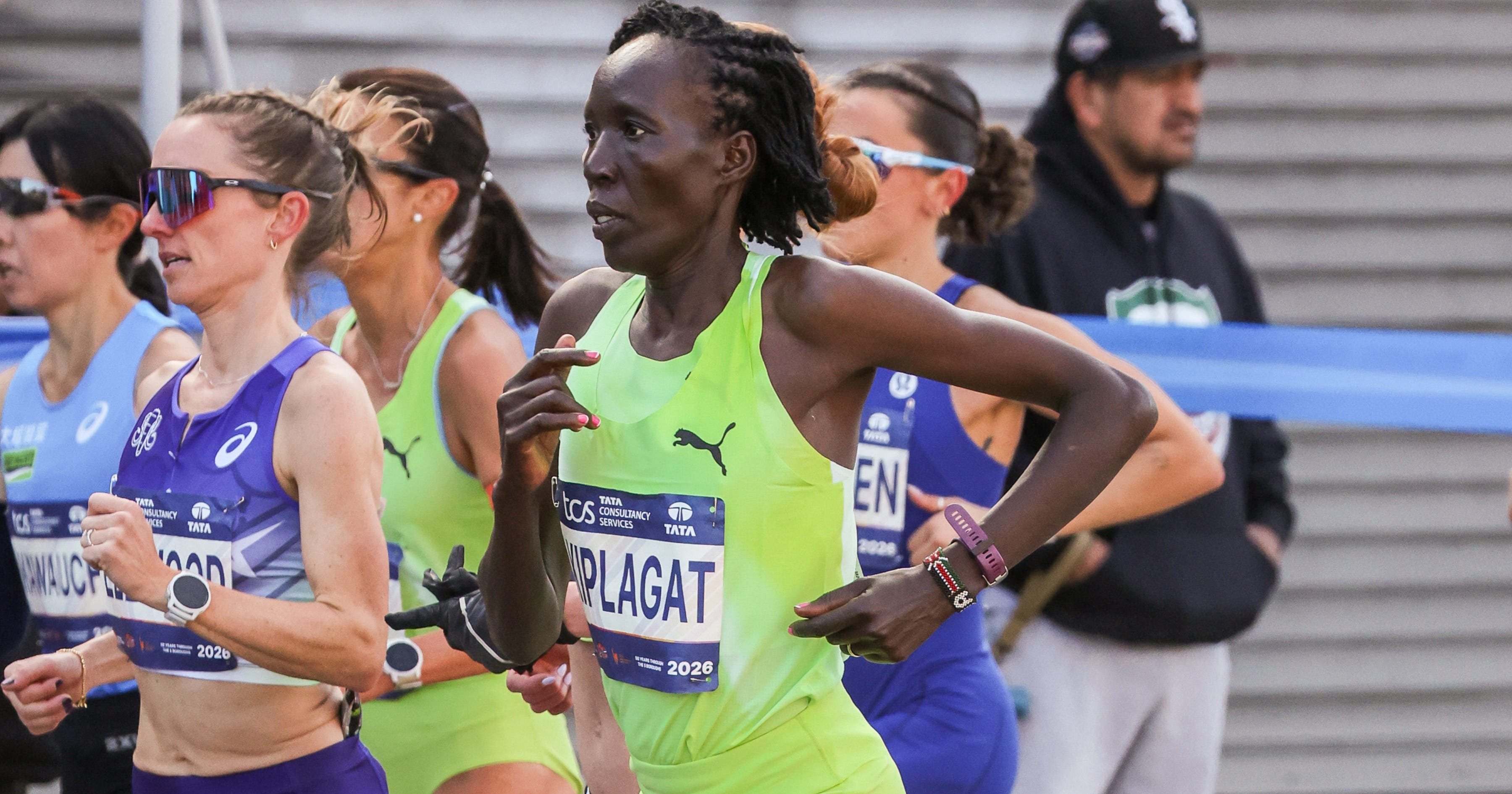
However, something else happened on November 15th, 1979 that ties us directly to the present: the birth of Edna Kiplagat, who, at age 46, just placed fourth in the 2026 New York City Marathon. (That’s right: Edna Kiplagat is “Still” going strong. Hold your eyerolls and please don’t unsubscribe.) The Colorado-based Kenyan is five years older than Eliud Kipchoge, two years older than Kenenisa Bekele, and heck, just six years younger than Paula Radcliffe, and she recorded two top-five finishes in international marathons this year.
Kiplagat’s World Athletics profile is really something to behold.
Her first listed results in the database are from 1996—a year before this past Sunday’s fifth-place finisher, Mercy Chelangat, was born. Kiplagat placed fifth at the World Cross Country U20 race in South Africa and nabbed a silver medal in the 3000m at the IAAF World Junior Championships in Sydney.
As we’ve discussed in this newsletter before, success at the junior level doesn’t always correlate to success against senior-level competition, and there wasn’t necessarily any early indication that Kiplagat would go on to become one of the greatest marathoners ever, let alone that she’d remain in contention for that accolade for about two decades.
For the rest of the 1990s, while the world frantically scoured lines of computer code in order to avert the Y2K disaster while basking in Cher’s triumphant return to the top of the charts with “Believe,” Kiplagat was more or less toiling away at about the same level as 1996. She placed well at a few more U20 global championships. She posted some—at least by today’s trackflated standards—solid but uninspiring marks on the oval, and entered the new millennium with a pedigree that maybe hinted at a career as a road dog, hustling the circuit to scare up some prize money here and there.
And that’s basically how she spent the early part of the 2000s: placing on the podium at 10Ks in U.S. cities that could generously be described as “third-tier.” She made her marathon debut in 2005, coming off a year away from racing, in truly unceremonious fashion—placing 10th at the Las Vegas marathon in 2:50:20, a time that wouldn’t have qualified for the 2008 U.S. Olympic Marathon Trials.
Then she didn’t race another marathon until 2010, after a half a decade of steadily improving results over shorter distances. She first won the L.A. Marathon in 2:25:38. A big jump from her previous outing over 26.2 but not quite a shot heard ‘round the world. That came eight months later in New York City, where, in her first ever World Major, she won the damn thing in 2:28:20. And from there it was—excuse the second bad joke—off to the races.
She won the World Championship marathon the next year, won it again in 2013, and placed second in 2017. She’s finished on the podium at nine other World Majors since 2010, including two wins at Boston, and another in London. And for most runners, a resume that includes five WMM fifth-place showings would be a huge bummer. But for Kiplagat, it’s just a footnote-style addition to her consistency over the past 16 years.
Other sports lend themselves to athletic evolution on the part of their longevity-blessed stars. Soon-to-be 42-year-old LeBron James has gone from high-flying first scoring option on championship caliber NBA teams to pass-first offensive glue guy on… well… championship caliber NBA teams. Justin Verlander’s final years in the MLB may have been a pale imitation of his three Cy Young campaigns, but he could still keep his ERA under 4.00 and throw 95 mph.
But running doesn’t really offer aging stars the benefit of switching up their style if they lose their fastball or ability to win on basketball IQ and a free-throw percentage. If you get slower as a runner, you are simply a worse runner. That’s what makes Kiplagat’s continued presence at the front of World Majors all the more impressive. She’s basically doing the same things at 46 she was doing at 30, and is far surpassing her output from her 20s: showing up at (typically hilly, non-rabbitted) globally competitive marathons and holding her own.
Particularly in an era where seemingly every great Kenyan marathoner is one doping bust away from falling from grace, it’s worth taking a little extra time to celebrate those like Kiplagat who have been really good for a really long time, doing it (seemingly) the right way and making both her home country and adopted home state proud for literal decades.
Is there a broader takeaway from what Kiplagat continues to do?
Maybe it’s “to have a long, fruitful running career, you’ve gotta ease into being great.” Maybe it’s “more men should take a year or two off during their competitive primes like so many top female marathoners do due to starting families.” Maybe it’s “your track times don’t have to define your success as a marathoner—some people were just born for the roads.”
Or maybe it’s simply this: Edna Kiplagat is an all-time classic, and no matter how many spins she gets, it never gets old. She’s easy like Sunday morning. She can run all night long. And she will always be our endless love.
Sponsored by kaizen

Race day is done, and now comes the question everyone asks: When should you get back to running?
Too soon and you’re running on fatigued legs. Too long and you’re rebuilding from scratch. Here’s how to find the sweet spot.
You Should Run A Marathon With All Your Friends 👯
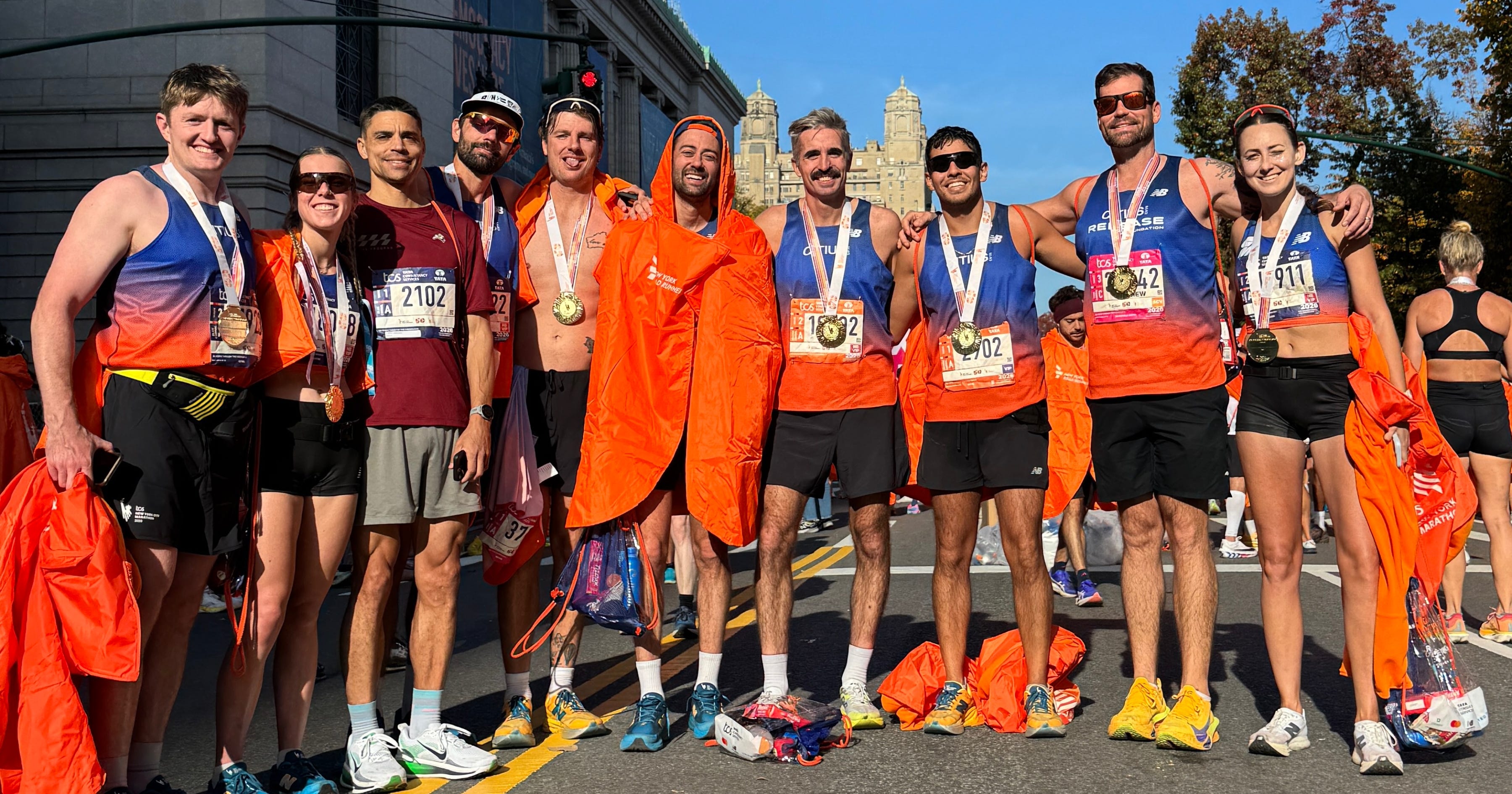
Kyle Merber reflects on running the 2026 NYC Marathon.
They say if you ever lose faith in humanity to visit the arrivals area at an airport to witness the reunion of loved ones. Running the New York City Marathon with some friends also does the trick.
This past weekend, thanks to our pals at New Balance, the Citius Mag team was able to suit up to run the five boroughs together in what was a truly memorable day for all of us. Like every one of the historic 61,146 finishers, each member of our squad had a unique story and their own challenges in getting across the finish line. Being able to experience some friends celebrating their first New York finish made it even more special.
In my personal journey, this was one of the roughest start lines I have ever had to make. A few months ago, my intention was to really send it in Chicago with a marathon training plan guided by Coach Galen Rupp and then to double back and run this one “just for fun.” Training for Chicago brought a spark back to running that had been missing for me. Some time in late July when I was waking up early to sneak out for a structured long run, I was reminded that the weekly rhythm of a training plan was a net-good for my life.
Instead, an injury derailed that vision and following six weeks of frustration and cross-training, I got a Hail Mary cortisone shot into my plantar in hopes of still making it to Staten Island. For the last two weeks leading in I ramped up my training aggressively through a return to running plan that involved plenty of walk breaks. Despite the sage advice of my closest advisor (my wife), a 50-minute run a few days before gave me enough confidence that I’d at least limp across the line. For the first time in my life, a race goal was no longer about a specific time—I just wanted to finish.
As a fan and commentator on the sport, the majority of my attention has historically gone towards the elites racing at the front of the race. In the middle of our own race on Sunday, the Citius team was sharing texts and split updates of what was happening in the lead pack—of course we had the stream up on a phone! And while so many of our think-pieces focus on how to get the middle of the pack to care about the front, I have not personally thought enough about how to get the front of the race to appreciate the middle.
Over the past five years, the depth of marathoning has exploded. In 2022, the 100th fastest man in the world ran a 2:07:14. Since then we have witnessed Kelvin Kiptum break Eliud Kipchoge’s world record, and then Sabastian Sawe’s successful limboing below the sub-two hour barrier. In 2025, the 100th fastest men’s time was 2:06:48. This year, with two months of marathon season left to go, that same benchmark has been lowered to 2:06:10. We haven’t even been to the mythical land of Valencia yet!
But all that has really been made possible because of the commercial explosion led by the everyday marathoner—the ones who are hitting the “Power Up” signs in Queens, and eating free pickles in the Bronx. A new report from Brand Finance estimates that the top 50 marathons in the world generated $6 billion for host cities, and many millions more for themselves. Because of that, it has become financially possible for more races to offer more incentives for the really cool stuff up front to happen.
Naturally, as the money goes up, so does the opportunity to take advantage of those financial incentives. As a perpetual optimist, it has always been my default to believe in an athlete’s performance, no matter how great, until proven otherwise. It’s the only way to truly enjoy the sport without driving yourself crazy. But that doesn’t mean the constant wave of top marathoners receiving suspensions hasn’t also taken its emotional toll on enthusiasm and fandom… even for me.
If it has been difficult to cope with as a fan, then I can only imagine the impact it has had on many of the clean athletes who have been directly hit by such news. My advice to them—and to anyone whose love for the sport has taken a hit recently—is simple: run a marathon with your friends in the middle of the pack. It may just restore your faith in humanity.
More News From The Track And Field World 📰
– In NCAA Power 4 conference meet action, at Big 12s the Colorado men prevailed over Oklahoma State, 36–38, with Cowboy Denis Kipngetich winning the individual crown, while Jane Hedengren’s victory led BYU to the team title over West Virginia; at Big Tens, Simeon Birnbaum and his Oregon Ducks prevailed on the men’s side, while Diana Cherotich and her Oregon Ducks won for the women; at ACCs, Louisville’s Elsingi Kipruto placed first while the Wake Forest men won the team race, and Hannah Gapes led NC State to the team crown with a solo win of her own; and at SECs, Alabama won the men’s and women’s team battles, Florida’s Kelvin Cheruiyot was the top individual fella, and Caren Kiplagat of Alabama won it for the women.
– We’ve said it before and we’ll say it again, it’s apparently the “Dash to the Finish Line 5K” and not the “Dash to the Finish 5K.” Anyway, Habtom Samuel (13:31) and Rachael Rudel (15:35) were your winners. Rudel’s story of coming back to the sport after eight years off is a particularly cool one.
– Up in Massachusetts, the men of Harvard put four in the top five at the Ivy League Heptagonal XC Championships to take the team title with 23 points led by Tom Gavenas in 22:56.8. The Princeton women claimed the title in the 6k while Penn’s Allison Lee took the individual victory in 20:14.0.
– Out West, CJ Albertson did the most CJ Albertson thing possible, winning the Two Cities Marathon in his hometown of Fresno, CA, on the same day as NYC in 2:08:28, a 13-minute margin of victory.
– Down in Arizona, Rob Molke (12:11:27) and Heather Jackson (13:48:23) won the Javelina Jundred, a very jilly 100-mile race. Another familiar face popped up further down in the results as 43-year-old Des Linden took ninth in the women’s race in 16:58:00.
– Ciara Mageean was at the peak of her career in the spring of 2025 when hit with the diagnosis of bowel cancer. In the two seasons before, she set national records over 800m, 1500m, and the mile, and her gold medal performance at the European Championships made her a household name in Ireland. Her passing on Sunday leaves a hole in the running community. A friend of Citius Mag, she was always generous with her time and thoughtful in her words. Our condolences to her family and friends who knew her best.
In our conversation with her from September 2022, in talking about the life of her longtime coach, Jerry Kiernan, she said, “If there‘s any lesson for people out there: don’t wait. Get in touch with those people.” Well said, as always.
Interested in reaching 20,000+ dedicated runners and track and field fans? Advertise with us here.
Always well written, witty and informative. Track world covered concisely and a damn good read.