

Presented by Sedona

What does a marathon actually do to you?
You’ll know your time by Sunday afternoon. You won’t know what the race took out of you, or what the rebuild is doing once you start running again. Sedona is a blood test for people who train: one at-home blood draw reads 1,000+ molecular signals and sets your baseline for the rebuild. Test again as the miles come back and see which signals tied to muscle repair and inflammation have settled, and which haven’t. Standard blood work reads a few dozen results. Sedona reads 1,000+.
Sedona is invite-only. Request an invite: founding members get it for $99 a month, price locked for six months, and a say in what Sedona builds next. The price goes up at launch. Change your mind before your kit ships and you pay nothing.
What Should We Watch For At This Weekend’s New York City Marathon? 🌉
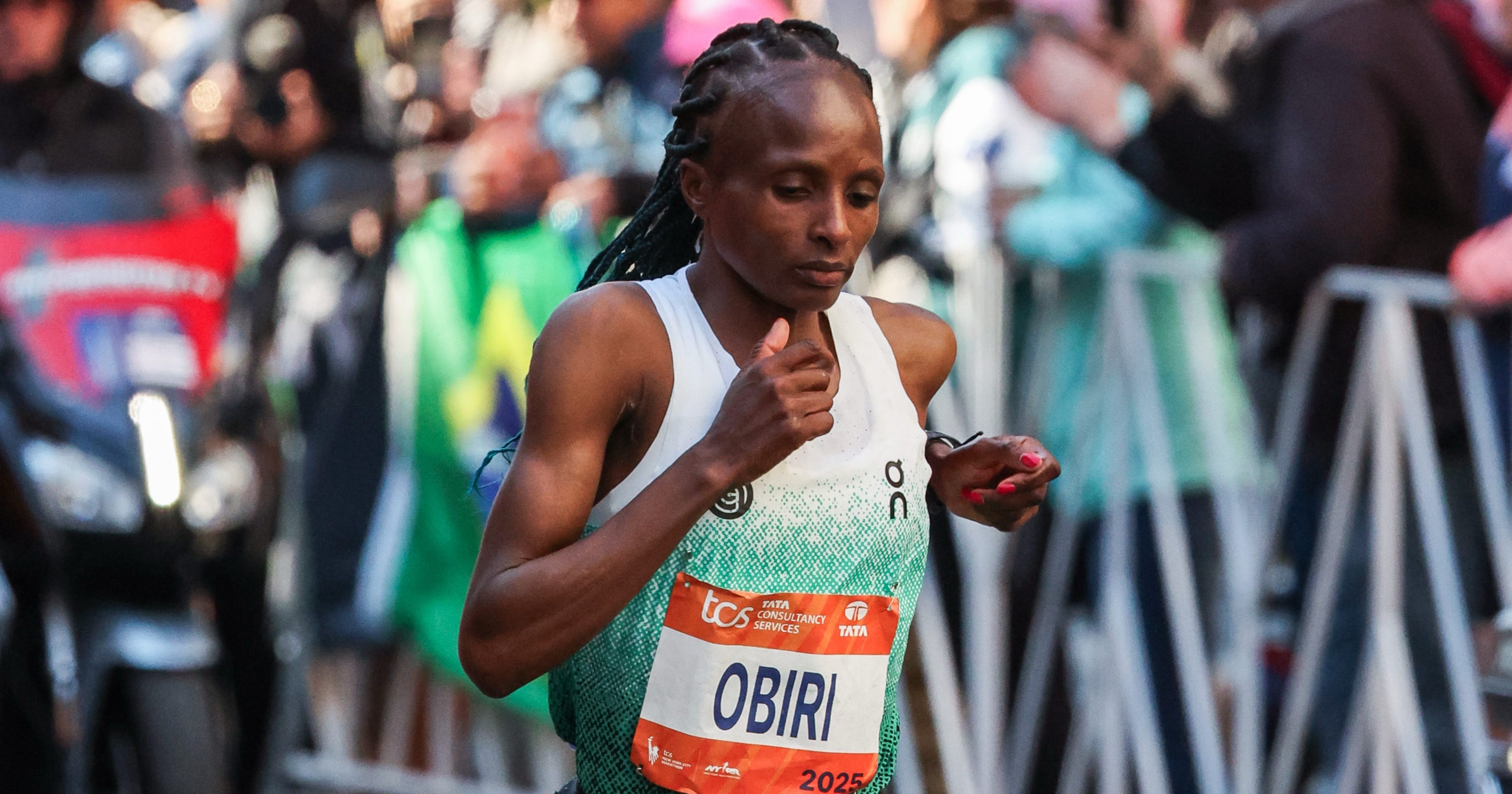
The final World Marathon Major of the now-seven-race series is set for this weekend. Two-time finisher Mayor Mamdani and several million of his constituents prepare to host the 57th edition of the New York City Marathon, the largest 26.2 mile race in the country and, depending on how London goes each year, the first- or second-largest in the world.
There’s plenty of intrigue in this year’s race—and not just the intra-CITIUS MAG battle between Chris Chavez, Mac Fleet, Kyle Merber, and Eric Jenkins that will have us all glued to our tracking apps. Defending champ Hellen Obiri will try to make history as just the fourth three-time champ in the race’s history, and Benson Kipruto will look to claim his fifth career World Marathon Major title, something only two men in history have done: Eliud Kipchoge and Wilson Kipsang. Repeat victories for either or both would solidify their respective cases for the best marathoners of the current era.
The American races-within-a-race have serious implications for both the U.S. power rankings and Olympic qualifying (more on that below). Plus, neither elite field is so top-heavy as to preclude the possibility of an American podium finish. So without further ado, let’s dive into the burning questions on everyone’s mind in the four days leading up to our Super Bowl Sunday.
Can anyone stop Hellen Obiri?
The marquee name in the women’s race is two-time NYC champ Hellen Obiri, back to try and win her third title in four years. With the withdrawal of Sifan Hassan earlier this fall, it feels like this is Obiri’s to lose. In the four years and eight marathons since her debut at this race in 2022, exactly four women total have beaten Obiri at the distance: Hassan, Tigst Assefa, Sharon Lokedi, and Sheila Chepkirui. The first three aren’t in the race, but Chepkirui has beaten Obiri before, on this course in 2024.
The difference, however, is that Obiri was coming back from a short buildup after the Olympics that year and Chepkirui has only one major title to Obiri’s four. That being said, Chepkirui won her spring marathonz—unlike Obiri—taking first in the Nagoya Women’s Marathon in Japan in March. The two Kenyans are 1-1 on both this course and over their marathoning careers, so this is a rubber match in more ways than one. The smart money’s on Obiri, but Chepkirui is not exactly a long shot by any means.
Will an American land on the podium?
On the men’s side, there are a number of fast entrants but no one truly stands head and shoulders above the crowd. Defending champ Benson Kipruto has the best recent resume, but he only finished third in Boston this spring. There are eight men with PBs between 2:02:16 and 2:04:56.
Most intriguingly, two of those eight are American. Zouhair Talbi, who was 55 seconds and two spots behind Kipruto in Boston, is the fourth fastest entrant in the field (if you count Boston’s point-to-point times). And American record holder Conner Mantz will take his second crack at NYC after finishing sixth in 2024. Mantz missed a spring marathon after getting stuck in a bit of an injury spin cycle, but last year he finished fourth in his record-setting run in Chicago, and a first WMM podium has to be high on both runner’s to-do lists.
This is the race to do it, too, as there aren’t a host of rabbits to take the 2:02 guys out hot and put the lead pack out of reach. A race that stays packed up until mile 16 or later, as NYC often does, will suit both Mantz and Talbi well, and if they can survive the final 5k through Central Park, they can pick off a critical place or two as runners who battled for the win pay the price.
How will the big debuts go?
Two of the brightest marathoning prospects in the game will be making hotly-anticipated debuts: American Weini Kelati and Swede Andreas Almgren. Both have already proven their mettle and then some over 10,000m and the half marathon, and both seem like the kind of runner who’ll thrive as the distance gets longer.
Kelati’s race, of course, will have all sorts of implications for the American Olympic Trials field, which doesn’t exactly look settled at the moment. 2024 Trials champ Fiona O’Keeffe pulled out of this race with an injury, American record holder Emily Sisson is currently pregnant, and Olympic bronze medalist Molly Seidel is having a heckuva time on the trails. Were Kelati to open with a run in the low 2:20s or be a factor in the top five, we could very well have a new favorite for St. Louis 2028.
Almgren has shown flashes of brilliance on the track, running 12:44.27 to win the 5000m at the Stockholm Diamond League in 2025 and front-running the European 10,000m title this year. But when he won the World Half title this fall in a European-record 58:06, it became clear that he’s barely scratched the surface of his true calling: the roads. Almgren is now the tenth fastest athlete of all time in the half, and the only athlete in the top 100 (yes, you read that right) born outside the continent of Africa. So it’s understandable that his marathon debut will be the most highly anticipated since Mo Farah—and maybe the most anticipated until the day we finally get Jakob Ingebrigtsen there.
Will we get our first Olympic qualifiers?
Coincidentally (or not, more likely), the qualifying window for the 2028 Olympic marathon opens Sunday. World Athletics has not announced the times required for qualification, but more importantly in the context of New York, a top-five finish at a Platinum Label race (which all World Marathon Majors are) will be considered an automatic qualifier.
That’s huge for the top Americans in the race in particular. Beyond Talbi, Mantz, and Kelati, others who probably have a giant “FIVE” drawn in Dry-Erase on their bathroom mirrors include 2:05 guys Ryan Ford and Joe Klecker, last year’s fifth-placer Annie Frisbee, and this year’s fifth-placer in Boston Jess McClain. Times generally go out the window in a race like New York anyway, but the appeal of stamping your LA28 qualifier within hours of the window open is obvious.
How will NYC affect the race for world #1?
As the final race on the World Marathon Major schedule, NYC often solidifies the final pecking order for the world’s best marathoners. This year’s London champs both have claims on world #1 that are hard to dispute. Sabastian Sawe made history with the world’s first sub-two and Tigst Assefa won her first of two WMMs this year. Assefa, who beat Obiri in London, is likely to maintain her pretty unbeatable resume unless Chepkirui or Obiri does something truly mind-boggling like run sub-2:15 in New York. But on the men’s side, no one has won more than one WMM yet this year, and if you’re a real freak who prizes consistency over flashy times, a winning run from Benson Kipruto, who finished third in Boston, or Deresa Geleta, who finished sixth in London, could move the needle.
If we’re being realistic, the real threat to Sawe’s claim comes from Boston champ John Korir, who’s set to defend his Valencia Marathon title in December. But strong runs from the top dogs in New York could certainly strengthen their claims to top-five rankings, either formally in the World Athletics sense or informally in the eyes of the public and newsletter writers everywhere.
Come hell or high water (or simply clouds and a bit of humidity), there will be plenty of narratives to follow in Sunday’s race. By the time the leaders hit Central Park, we may know a lot more about the cast and plotlines of the leadup to Los Angeles, both domestically and worldwide. The race itself and its outcomes are plenty interesting on their own, but this year’s battle in the Big Apple could set the stage for the next two years of marathoning in a big way.
Sponsored by Unhinged
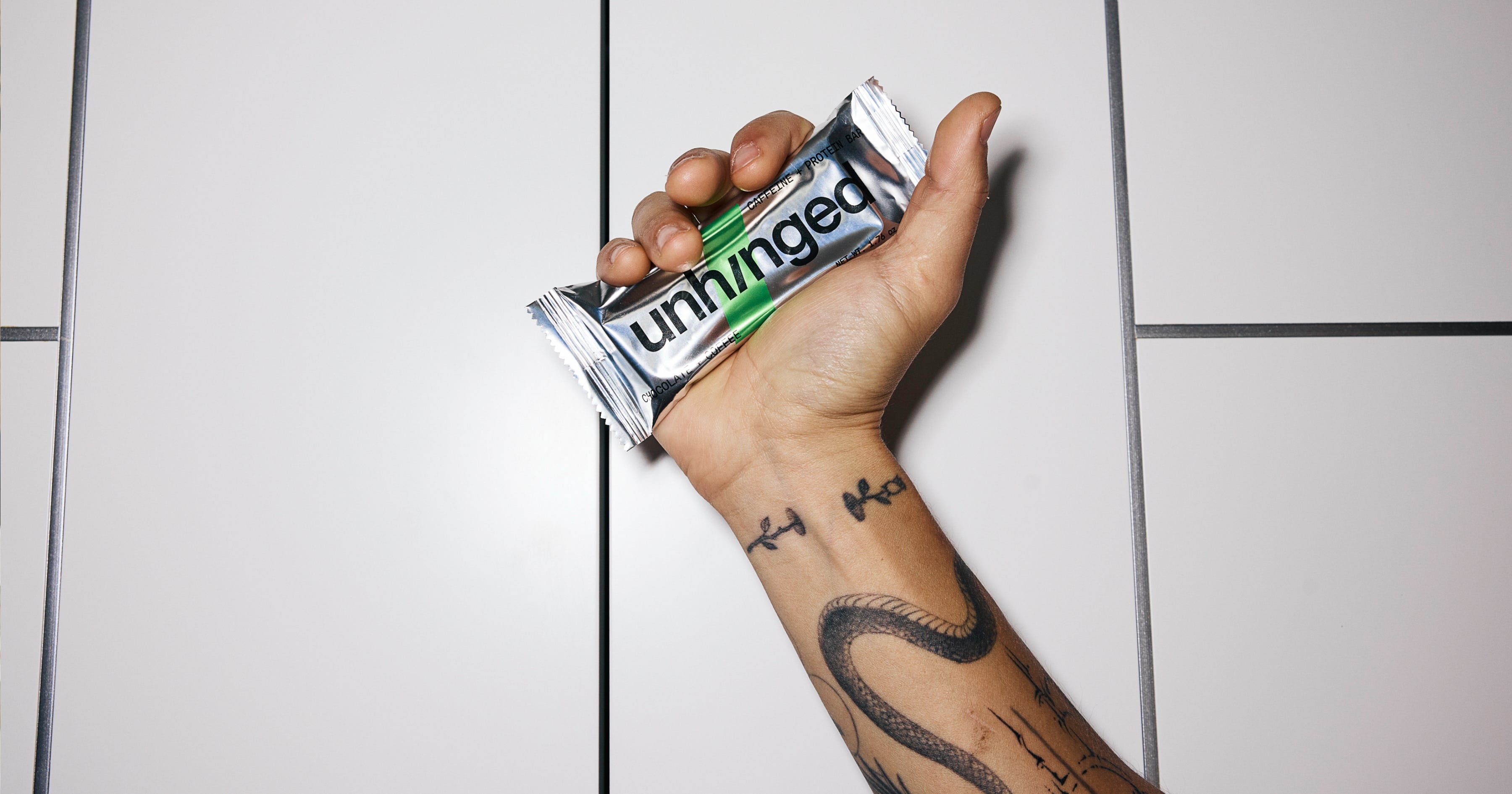
Your 3pm coffee, in a bar you can eat.
Unhinged’s new caffeine + protein bar packs 75mg of natural caffeine from coffee and coffee fruit (similar to an espresso), plus 11-14g of protein, 7-8g fiber, and 125mg of L-Theanine to hold you between meals or before/after a run. No sugar alcohols, no seed oils, and no preservatives. Only 2g of added sugar and now available in 3 flavors: Chocolate Coffee, Salted Caramel, and Peanut Butter Chocolate.
Grab a box of 12 for $36, or subscribe and save 10%. Use code CITIUS20 for 20% off your orders today at the link here.
Kyle Merber Remembers Coach Gags ❤️
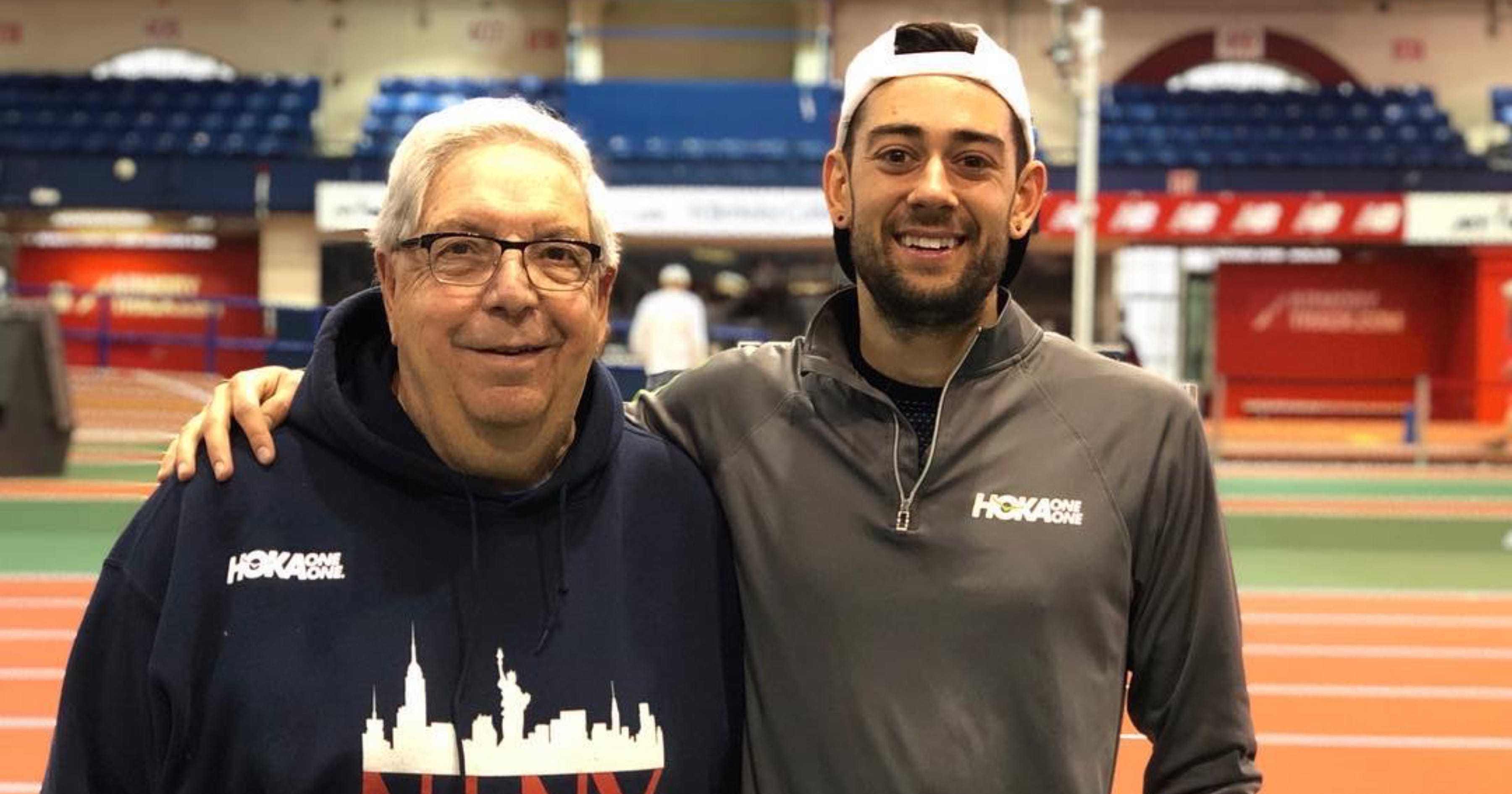
When I saw Gags at Icahn Stadium this summer as he was honored at the U.S. Championships, I figured that saying goodbye that day would be my last chance to do so. Surrounded by love and laughter from family, friends, fellow coaches, and dozens of his former athletes, it was no secret that the man we all knew as an indomitable force and a booming voice was making the turn onto the final straightaway.
I wanted to repeat the same words that he always bellowed to generations of athletes (“go to the elbows!”), but mainly, I thought of something he had told me many times: that he was proud of me.
Coach Frank Gagliano passed away on Sunday at 89 years old. Most men of that age would be fortunate to have a few friends still around to check in and express their gratitude, but Gags wasn’t most men. It was a familiar scene at Icahn—something I’d witnessed countless times, whether at the Penn Relays, The Armory, or Princeton—a steady procession of people waiting their turn to visit the Godfather to say thank you for a favor, ask advice, or just say hello.
Across a career that took him from Roselle Catholic, to Manhattan College, to Rutgers, to Georgetown, to the Enclave, out west to the Farm Team, then OTC, and finally back home to lead the New Jersey-New York Track Club, Gags coached a thousand athletes. Every one of them has stories to tell about the impact Gags had on their lives.
This is my story.
I first met Gags during the indoor season of my senior year at Columbia University. I jumped into a workout at the Armory with some of the guys on his team and experienced his coaching firsthand. Later that spring, I ran fast enough to get the attention of teams, agents, and brands. As a New Yorker, my first choice would have been to stay home and join NJ-NY. So I asked Gags if he would coach me.
He said no.
I had already committed to finishing up my collegiate eligibility at the University of Texas. Gags, always a fan of the NCAA and of keeping one’s word, told me to go continue my education in Austin and that he’d be waiting for me when I was done.
One year later, I asked again. This time, Gags told me to come home. The difference was that after a tough year of injury and underperformance as a Longhorn, I no longer had shoe companies banging down my door. NJ-NY could offer me a room in a house in Clinton, New Jersey, with six other guys and a stipend of a few hundred bucks a month. With Gags’s assurance that if I got a part-time job and worked hard I’d be alright, that was enough.
There aren’t many teams like the New Jersey-New York Track Club anymore, and that’s probably because there aren’t many coaches like Gags anymore. My “recruiting class” is not one you’d see join any professional roster today. Leading the way were 2012 Olympian Donn Cabral and two-time NCAA champion Robby Andrews, along with a couple of guys like me—runners who had a few big performances to their names and who never won anything above a conference title. But there were also many more you haven’t heard of who never qualified for an NCAA meet or even Regionals in some cases.
To Gags, it didn’t really matter how fast you were; it was about how much faster he could make you. His teams, for as far back as I’ve heard, operated sort of like an all-comers practice. If an athlete was willing to show up and consistently put in the work, he’d let them ride the train for as many intervals as they could hang for. If you never saw Gags in action, you probably think it’s hyperbole, but how fast you were really didn’t factor into the equation of how much he invested in you.
When I first joined the team in 2013, my running was not in a good place. At an early practice, I was falling off the pace, and Gags laid into me. Like, really, truly yelled at me. To say I did not enjoy that would be an understatement. When I was leaving practice that day and he tried to comfort me, I snubbed him. I was furious. Not just at him, but because my body was nowhere close to where it needed to be, and the frustration from the previous year was still raw.
When Gags called me that afternoon, we had a heart-to-heart. There were teammates of mine who needed that style of coaching and thrived off it. But I told him that I don’t respond well to being shouted at, and that he would never need to question my motivation or how badly I wanted to be great.
Despite having a roster of 40+ athletes, Gags heard me and adjusted the way we worked together. For the next seven years, I didn’t have a coach as much as I had a partner. I know I was high maintenance, but I liked hearing why we were doing certain things; understanding helped me believe in the process. As our relationship and trust grew, Gags would appease me by confiding the week’s plan.
A good coach knows how to respond to an athlete, and that’s what Gags understood. Putting strength and speed in a bowl and mixing it up to make a champion didn’t require rocket science. The training philosophy was simple yet logically progressive, and that was the beauty of it. But the true differentiator was the way he knew when to push and when to pull. It’s a long year, full of dozens of races and God knows how many workouts, and what Gags did best was know when it was time to ramp things up and when to just have fun.
I still have an old email saved where he wrote: “The big thing is you must do the little things with no intensity.” His most consistent reminder was to live life like a clock.
Once, during an early-season indoor meet at The Armory, I went out hard, blew up remarkably, and my last lap bordered on a walk. The next morning, a 6:00 AM voicemail was waiting for me: “Merber, you had a great career. I am proud of you for trying and appreciate all you’ve done for the team. Stop by practice tomorrow and hand in your jersey. Wishing you all the best in what comes next!” Then he cackled with laughter and hung up.
Running for Gags was like joining a benevolent fraternity, and to be known as one of Gags’s guys was a badge of honor. His legacy and influence won’t be limited to the training, because I’m sure most of his athletes remember him even more for the way he cared.
Looking back on our messages, we spoke more during the tough times than when I was running my best. After surgery when there was nothing to do but rest, it was nonstop. At a time when some coaches might forget about an athlete is when he stepped up—when we needed it most.
As badly as I may have wanted to run fast and win races, I also ran for Gags. In post-race interviews, his athletes would often say “we” because they knew they were never alone out there. And as the outpouring of love and stories from Gags’s life are shared this week, there is comfort in knowing that none of us are alone in missing him dearly.
More News From The Track And Field World 📰
– The always-speedy city of Valencia, Spain hosted its annual Half Marathon last weekend, where Spanish runners took 1-2 on the men’s side led by Rodrigue Kwizera (who is a Spanish citizen but in the process of transferring allegiance from Burundi) in 58:03 ahead of countryman Thierry Ndikumwenayo, second in 58:09. His time was faster than Andreas Almgren’s European record but not officially a Spanish mark in the eyes of World Athletics. Kenyan Sheila Chepkirui, but not the Sheila Chepkirui who’s running New York, won the women’s race in 63:51, becoming the sixth woman in history to crack the 64-minute barrier, one second ahead of the seventh, runner-up Diana Wanza.
– Also notable from Valencia: Tennessee alum Yaseen Abdalla ran 59:12 for eighth place overall in his debut at the distance. Abdalla represents Sudan internationally but was born in the U.S., making it somewhat confusing that the fastest an American has ever run over 13.1 is not the official American record (which is held by Conner Mantz at 59:17).
– Rocky Horror’s Frank-N-Furter would be proud! Jirata Dinki (2:05:26) and Zeineba Worku (2:19:45) took the wins at the 2026 Frankfurt Marathon this past weekend, completing an Ethiopian sweep. A little further down in the results, 38-year-old Betsy Saina, who represented Kenya in the 2016 Olympics before transferring allegiance to the U.S. in 2021, ran 2:33:41 to finish her first marathon in two years and qualify for the 2028 Olympic Trials.
– NYRR has revealed the professional start lists for the Dash to the Finish Line 5k, which is always held the Saturday before the Marathon, and tends to serve as a sort of feeder system to give marathon-curious athletes a chance to experience the atmosphere of Marathon Weekend.
– World Athletics has shared its qualification protocols for the marathon at the 2028 Los Angeles Olympics. The qualification standards won’t be announced until December, but for now, American fans should note that national Olympic committees will be able to reallocate spots to athletes who hit a much softer time standard. That means the U.S. Trials system lives to fight another qualification cycle!
– Six-time World Marathon Major podium-finisher—and one-time Tokyo champ—Ruti Aga has been banned for six years by the Athletics Integrity Unit after testing positive for a corticosteroid and producing a forged document during the investigation. Aga’s gotta be breathing a sigh of relief that her doping bust came during the same week as a much more high profile one…
– We’re of course referring to Peres Jepchirchir, who has been provisionally suspended after a pre-Sydney marathon test returned an adverse analytical finding for EPO. This one stings in particular. Jepchirchir is the reigning World marathon champ, the 2021 Olympic gold medalist, and a four-time World Major winner.
Interested in reaching 20,000+ dedicated runners and track and field fans? Advertise with us here.