

Sponsored by Suunto
Wear the same watch as the top American at the Chicago Marathon. Shop for the Suunto Run2 here.
Compiled by David Melly, Paul Snyder, & Kyle Merber
The State Of The Race Within The Race 🔎
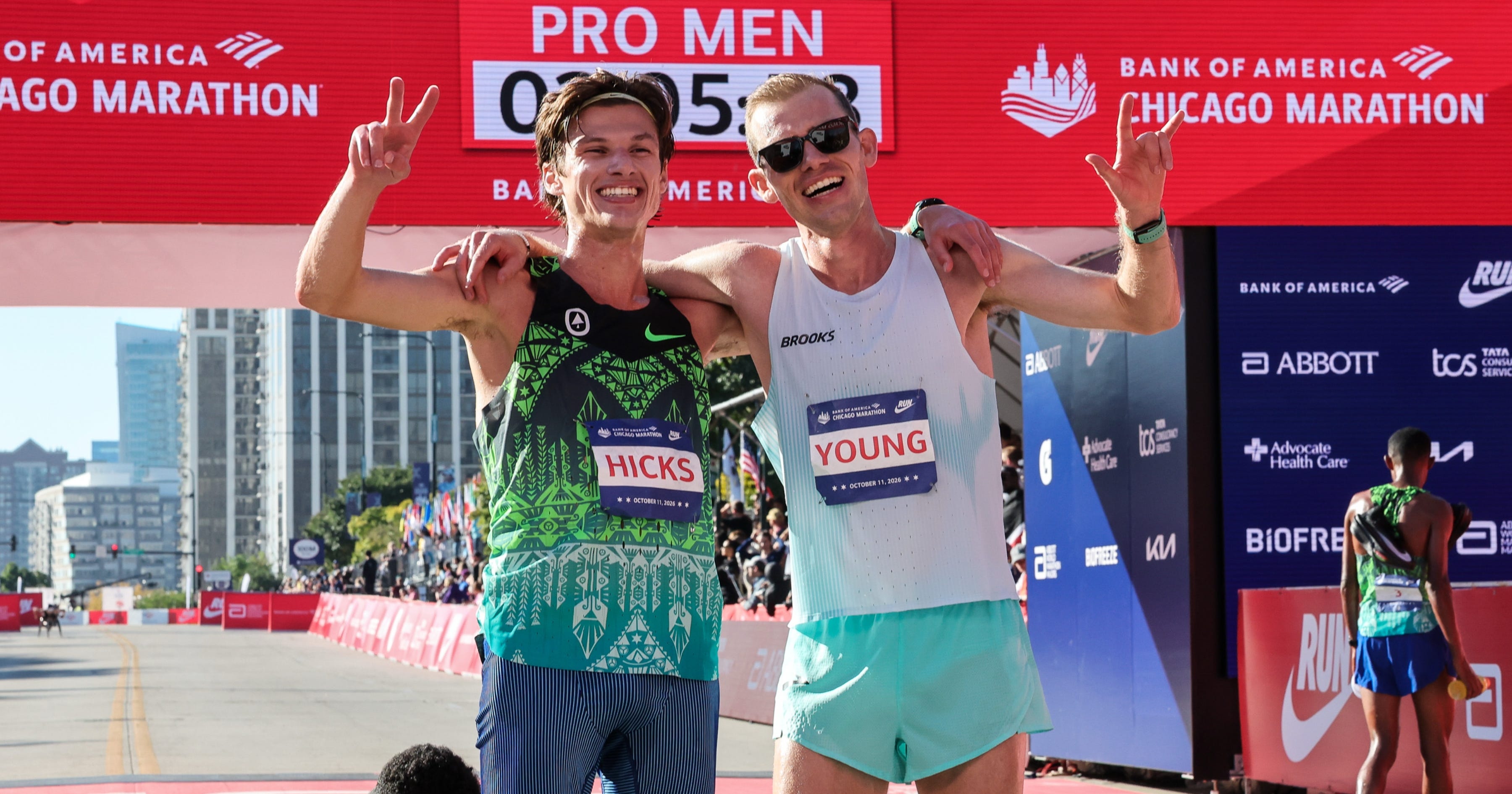
For many viewers, the defining moment of the 2026 Chicago Marathon didn’t come at the finish line. It didn’t feature any of the podium finishers. And no, it didn’t come during the cutaway interviews in the final stages of the women’s race.
The visual that will endure in the minds of U.S. distance running fans came around 100 minutes into the race, where at mile 22, three Americans—Clayton Young, Charles Hicks, and Vinny Mauri—were running stride for stride, trying desperately to cling to national-record pace while also battling for top domestic honors. It was a perfect encapsulation of what makes road racing unique. The trio was working together, against the course and the elements (in this case, oppressive humidity on a warm October morning), while also looking for any opportunity to break their competition.
All three men slowed down to varying degrees over the final 10 kilometers, but ultimately Young and his beat-up hamstring slowed the least. The 33-year-old crossed the finish line in seventh place overall and a new personal best of 2:05:23. Despite being a picture of top-ten consistency over the last several years, it was Young’s first top-American finish at a World Marathon Major after so many races behind his training partner Conner Mantz. (He also did the statisticians a favor by bettering his Boston time from this past April to become the second-fastest American ever behind Mantz on record-eligible courses, no asterisk necessary.)
One spot behind him was Hicks, who often looked the best of the group in the waning miles but ended up 12 seconds behind Young in 2:05:35. He’s now the sixth American member of the official sub-2:06 group (ninth if you count Boston times). At 25 years old, Hicks has now completed the NYC-Boston-Chicago trifecta in his first year of marathoning in stellar form, finishing sixth, seventh, and eighth in his first three cracks at the distance.
Yet he wasn’t the even least experienced top-ten finisher. Planet Fitness’s own Vinny Mauri made things really interesting halfway through the race, dropping a 14:28 5k from 20k to 25k to put himself in no man’s land and on 2:04 pace, and for about 20 miles, it looked like Mantz’s one-year-old American record was toast. Mauri’s move did eventually come back to bite him, however, as he had to stop and stretch out his hamstrings at least twice, providing a tantalizing target for Hicks, Young, and Japan’s Akira Akasaki to reel in.
Once caught, Mauri didn’t give up the fight entirely, staying at or near the front of that mini-group as long as he could. And even when he couldn’t, he didn’t crater too terribly—especially compared with fourth placer Jacob Kiplimo, whose attempt at a title defense ended with a 5:37 final mile after eventual winner Amos Kipruto broke him completely. Mauri hung on to stay in the top ten and finish under 2:07, clocking 2:06:45 for tenth—one spot ahead of Galen Rupp, who obliterated the American masters record.
Let that sink in for a moment. If you’re the skeptical type who saw Mauri’s solo debut run at the Glass City Marathon and stranger-than-fiction Strava account and thought to yourself, “this simply can’t be right,” pretend for a moment you’d never heard of Mauri before Sunday. A 25-year-old 13:34.03 5000m runner whose best career NCAA result was 18th finished top-ten in a World Major in his second marathon, running faster than Bill Rogers, Meb Keflezighi, or Dathan Ritzenhein ever did. Any one-hit wonder allegations are surely sounding pretty silly now.
What really makes that mid-race moment memorable is that it’s kinda the perfect encapsulation of the state of the U.S. marathon in 2026. Clayton Young — ironically the eldest of the group — debuted at the distance at 26, less than a year after graduating BYU (hold your jokes). Hicks too had barely let the ink dry on his Stanford diploma before signing up for his first marathon, even with an NCAA cross country title and a handful of All-American finishes on the track.
Marathoning used to be an old man’s game, the farm upstate you sent yourself away to once you’d squeezed every drop of fast twitch juice out of your legs on the European track circuit. However, American marathoning has gotten younger and younger in recent years, making the Scott Faubles and Molly Seidels of the world seem like trendsetters, not aberrations. And of course, Mauri is the strangest of all, a truly once-in-a-generation runner who cannot be categorized in any way. Yeah, he’s not the first runner ever to do crazy volume and intensity. Yeah, he’s far from the only pro marathoner who was a no-name in college. But somewhere around mile 16 of Chicago it became abundantly clear (if it wasn’t already) that this guy was special, and not just because he managed to stuff a pair of bowling balls in his half tights.
There have always been many pathways to marathoning excellence, but it seems like the variation in approach has only expanded over time, not narrowed down to a single best practice. There are Nike-branded elites mileagemaxxing under the watchful eye of Jerry Schumacher and unsponsored run-specialty salesmen asking the group chat for workout ideas, and the only time they meet up is mile 20. Part of why we as running nerds love the Olympic Marathon Trials is because it brings together 400 or so of those unique journeys to one start line, and there’s no single dominant strategy to guarantee a top-three finish.
Young, Hicks, and Mauri are about as different as three guys who all once stood in line for a port-a-potty in Stillwater, Oklahoma, could be. One thing they do have in common is being forthcoming in telling their own stories heading into race day, giving that mid-race battle all the more excitement with the benefit of context. Which is what makes it so much fun to cheer, debate, play favorites, construct villain narratives, or however else your fandom might manifest over the course of a weekend like Chicago.
So whether your favorite American marathoner is a dad from Provo with a YouTube channel, a 40-year-old four-time Olympian, or the guy on your local running club that only you know is the Next Big Thing, it’s a very exciting time to be a fan. The next World Marathon Major is 18 days away, and the next Olympic Marathon Trials is 18 months away. It’s time to lock in.
Sharon The Wealth 💸
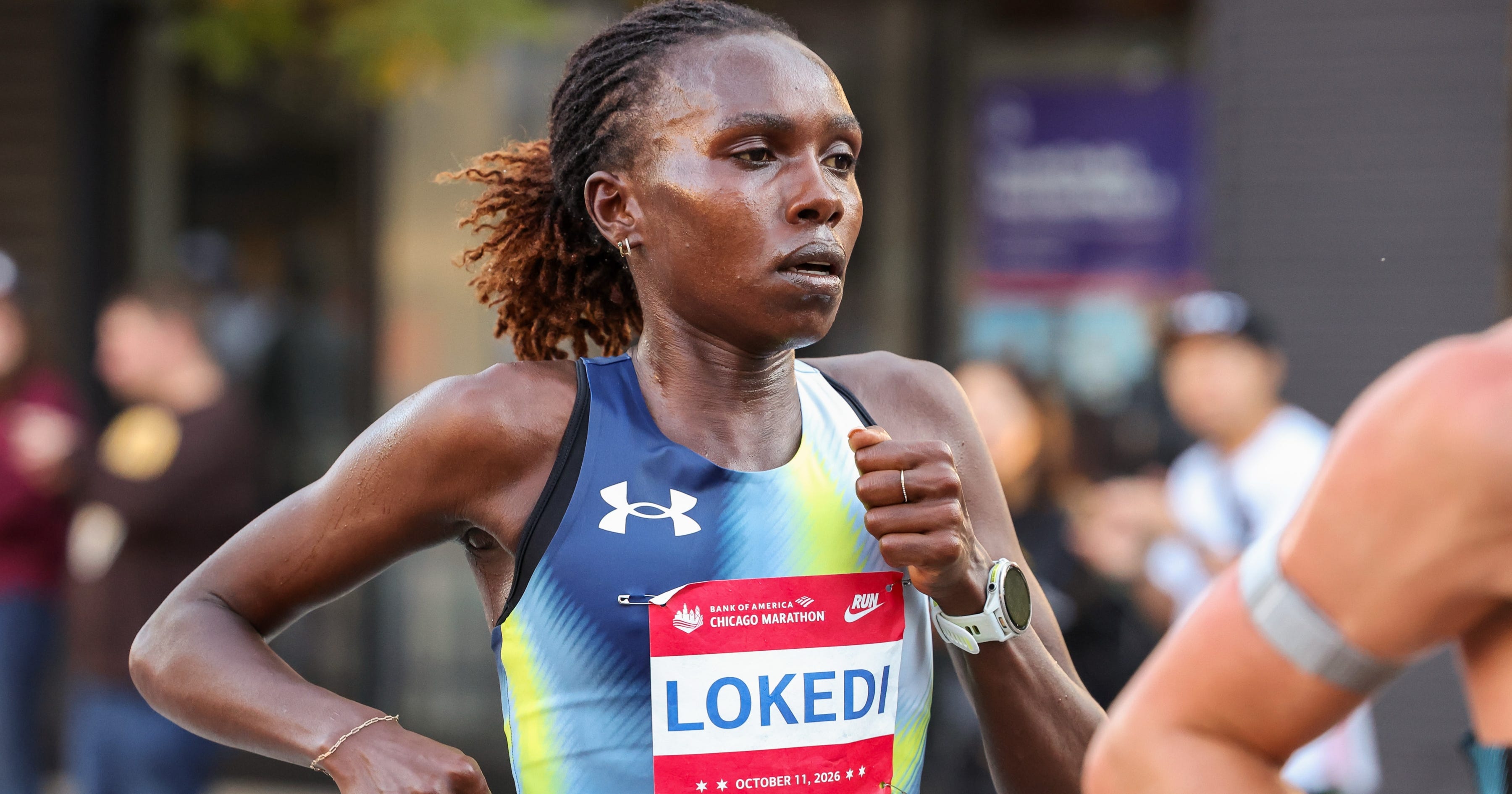
Heading into the final miles of the Chicago women’s race, another intriguing battle was being waged up front.
The field featured four women who’d previously won World Marathon Majors. Of those four, Sutume Kebede was never really in the race from the jump, dropping out around halfway. Early on, the two expected names were hammering five-minute miles alongside their pacers: reigning champ Hawi Feysa and 2019 champ Brigid Kosgei, also the former world record holder. Kosgei was coming off a resurgent victory in Tokyo this past spring, and it looked like the two 2:14 women were prepared to turn this thing into a record-chasing slugfest, humidity be damned.
Relatively quickly, however, Feysa and Kosgei seemed to realize they were out a little too quick, which allowed a chase group to link back up with them by 20km. Comfortably nestled into that chase pack behind her teammate and pacer Jacob Thomson was one Sharon Lokedi. Lokedi had eight career marathons under her belt already, but she’d never run a race like this.
Aside from her fourth-place showing at the Paris Olympics, the Under Armour-backed Kenyan has bounced back and forth between Boston and New York, with pretty flawless results. In just shy of four years of marathoning, she’s now got seven podium finishes at World Marathon Majors and three titles, the most recent being a picture-perfect title defense in Boston this past spring. She’s run fast on those tough courses—most notably clocking the Boston course record during her 2025 victory over friendly rival Hellen Obiri—but she’d never run a flat, paced marathon before Chicago.
2:17:22 on Boston is nothing to sneeze at, but it’s also not a time that pops out on an entry list in an era where 10+ women have broken 2:18 each of the last five seasons. When the annual world #1 conversation comes around, athletes like Lokedi and Obiri get knocked down a peg (perhaps unfairly) because they prioritize championship-style racing over time trials. So it’s commendable that both Lokedi and Obiri, who ran 2:15:53 in her first London this past spring, would relish the opportunity to switch things up and try a new style of marathon rather than fall back on the familiarity of the Boston-NYC double.
Before the race, Lokedi’s coach Stephen Haas said he thought she was in 2:12 shape, but you never know how that’s going to translate. Lokedi’s run 31:06 for 10km and 65:00 for the half, but setting out at such a hot pace might feel uncomfortably quick for a runner who’s more accustomed to a steady progression toward a fast finish. It was both smart racing and good fortune that she didn’t go out with Feysa and Kosgei and that they came back so quickly, putting Lokedi firmly in the mix for the kind of performance she historically has used to win: a blistering closing 5k, or even last mile.
By 18 miles, the pace and the conditions proved too much for Kosgei, who would end up a perfectly respectable third but wasn’t able to contend for her seventh major title. With two miles to go, Feysa and Lokedi had a full minute’s lead but were locked stride for stride. If there were live odds available at the time, Lokedi would’ve surely been the favorite given her track record of strong kicks. But in the end, Feysa was able to give Lokedi a taste of her own medicine, closing in a 5:00 mile to defend her title in 2:13:33, an 84-second improvement on her PB from last year. Lokedi was forced to settle for second, but she still filled in the missing piece of her resume: her personal best is now 2:14:07, placing her #8 on the all-time list.
Of the seven women ahead of her, only a few can really empirically say they have better resumes than Lokedi. The three that stand out are Ruth Chepngetich (ugh), Tigst Assefa (five WMM wins, six podiums, #3 all-time), and Kosgei (six WMM wins, ten podiums, #7 all-time). Sifan Hassan is also worth a mention, but her love for the track has kept her marathoning career shorter than her peers’.
Lokedi’s reward for switching it up (aside from what was surely a generous appearance fee and prize money) is that she’s now inarguably among the five best women marathoners of the current era. The only name on the list she’s never beaten head-to-head is Assefa, although they have a small sample size, having only raced once, at the 2024 Olympics. Following Assefa’s London-Berlin double and gutsy tendon-shredding 2:11:04 at the latter, it’s hard to argue anyone else is world #1, but just as hard to argue that anyone else is empirically ahead of Lokedi.
Stepping back, it’s a pretty wild career trajectory for the 2018 NCAA champion at Kansas who spent the first 3-4 years of her pro career hammering away at the track and short roads with no real breakthrough. Lokedi is, without a doubt, the most decorated marathoner to come up through the collegiate system since the days of Joan Benoit Samuelson and Frank Shorter. She certainly didn’t have the out-of-nowhere ascendance of a Vinny Mauri, but having three times as many WMM titles as NCAA titles is a pretty rare phenomenon.
Perhaps it’s hyperbole to say that Sharon Lokedi running Chicago was a bold risk to take, but it nevertheless delivered what we as fans want: the best athletes testing themselves in new and different circumstances in the primes of their careers. Even though she didn’t get the victory and complete her U.S. major set, she proved that she’s not a one-trick pony. If she returns to the streets of Chicago next year, it’d once again be hard to bet against her.
Sponsored by Olipop

Halloween’s iconic treat, now in a can. Olipop’s limited-edition Caramel Apple blends tart green apple with buttery caramel for full candy-apple nostalgia with just 5g of sugar, 6-9g of fiber and 50 calories per can. Grab it at drinkolipop.com and use code CITIUS25 for 25% off your orders today. 🍏
College Sports Goes Global 🌍
The first NCAA Track and Field Championships were held in 1921 at Stagg Field in Chicago, and one year after winning the Olympic gold medal for Canada, Earl Thomson of Dartmouth tied his world record of 14.4 in the 110m Hurdles. With that victory, Thomson became the first non-American to win an NCAA title in Athletics; granted, he was born in Saskatchewan and his family moved to California during his childhood.
Following the 1948 Olympics, Coach Jumbo Elliott of Villanova is credited with opening the door to mass-recruiting foreign athletes, notably from Ireland. In 1958, Crawford Kennedy of Michigan State, a Glasgow native, led his team to an NCAA Cross Country Championship with his individual victory. The next two years Al Lawrence, the Olympic Bronze medalist at 10,000m from Australia, would win the subsequent titles for the University of Houston.
Since 1958, the men’s NCAA cross-country champion has been won by a non-US citizen 40 times – that’s 59% of titles. On the women’s side, the first international athlete to win an NCAA Cross Country title was Angela Chalmers of Canada competing for Northern Arizona University in 1986. In total there have been 19 titles won by women who were not originally from the United States who have earned themselves a title over grass, mud, and hills. Since the NCAA has existed, top athletes have been putting the “international” in the “national” association.
Think of how difficult freshman year is for an average kid from the suburbs who moves into a dormitory at the nearest state school. Without Mom to cook dinner or Dad to help with homework, they’re thrown into a new environment with big changes and massive pressure. The common guidance among college coaches is that if a kid can match their high school bests as a freshman then it was a successful year. Now imagine that same experience when family is not just a drive away, when the food tastes different, and the language of the professor is not their own.
It’s incredible when athletes take a bet on themselves to uproot their lives and commit to chasing a dream. In the recent words of Mario Garcia Romo about his transition from Spain to the University of Mississippi, “I knew that moving to the United States would be one of the most challenging decisions of my life, I also knew it was an opportunity I couldn’t let slip away. Running is a sport where you only have a few precious years, and you have to make the most out of them.”
Kyle’s disclosure: Perhaps I am biased, since this is how I met my wife, who after two years contemplating the decision while attending college in her home country of Ireland, eventually decided to make a leap of faith to finish her degree at Stony Brook University. I am well aware of the sacrifices her family made for her to be there, and what an enormous change it was: when she got picked up at the airport the week before school started, it was also her first time in America.
Last fall the discourse surrounding international athletes in the NCAA heated up as the coaches of BYU and Oklahoma State traded barbs on the subject. The contrast between the two rival programs could not be more pronounced, as Ed Eyestone is largely focused on recruiting athletes within the state of Utah or of the Mormon faith, whereas Dave Smith scours the globe. Despite these different approaches, each school has won two NCAA titles since 2019.
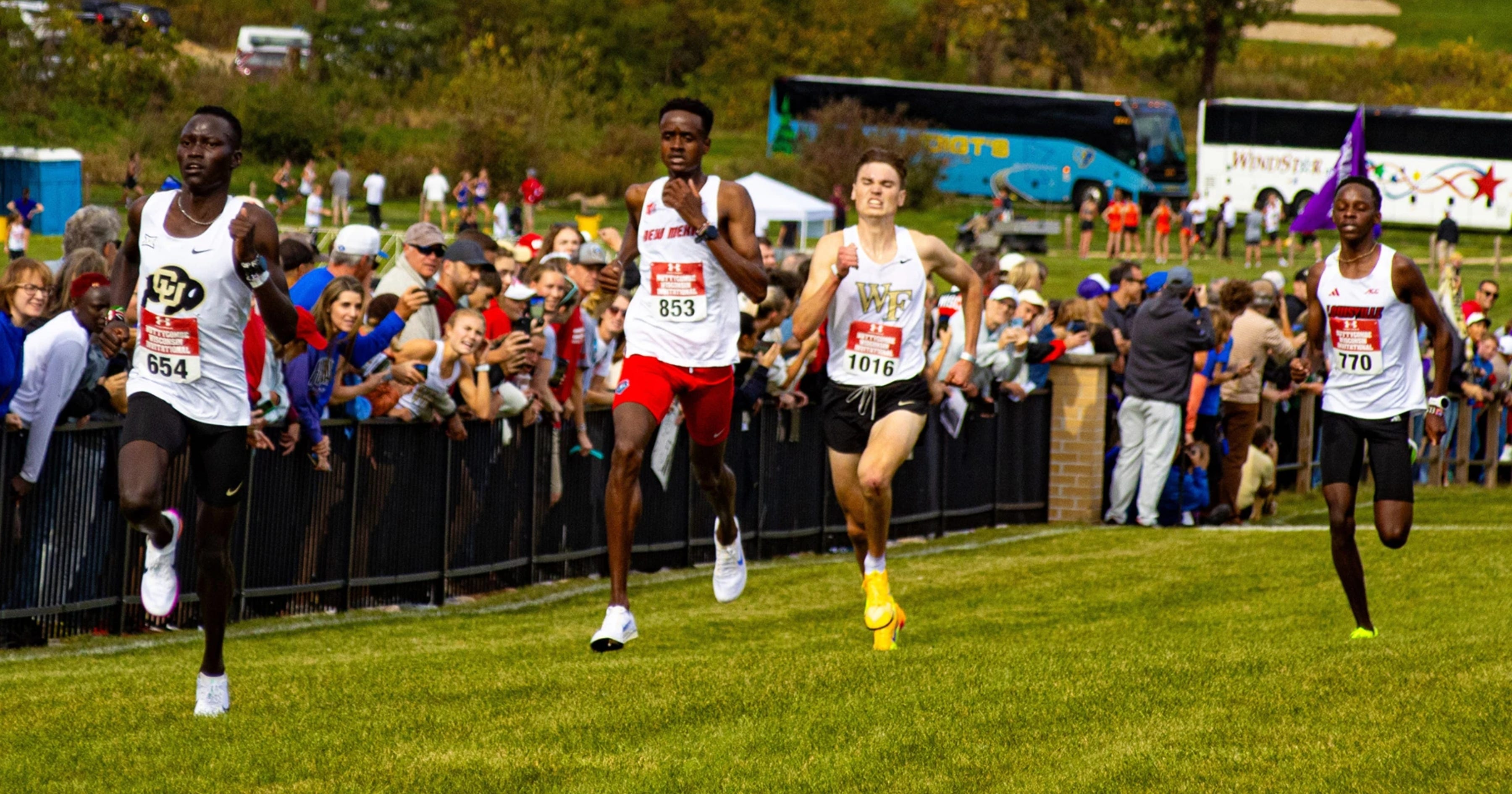
Conversations picked up where they left off last season again following the Nuttycombe Invitational in Wisconsin this past weekend. The New Mexico men won the loaded meet with five international athletes scoring for the Lobos, and West Virginia won the women’s race with four scorers coming from overseas. Both individual winners, Meshack Kipruto and Judy Chepkoech, are from Kenya.
At Nuttycombe, there were five American women in the top 25 and 15 in the top 50. The men’s side featured 22 in the top 50, and when you look at the historical data the trend is clear. In 2021, there were 33 Americans in the top 50 finishers at Wisconsin, and in 2016 there were 37. So while there is a long historical presence of international athletes in the NCAA, particularly at the top, the last decade has also seen an increase in depth.
Twenty years ago there were only a handful of schools with an international pipeline to recruit athletes from overseas. Iona University, a perennial podium team at the national meet, would wear shirts that cheekily had, “Assembled in the USA” on the back. Today, it is not uncommon for programs like Cal Baptist University to have 13 different countries represented on their roster. Practice is like a United Nations meeting.
With recruiting services like Townhall and Scholarbook now available to any college willing to pay, the barrier to entry and required effort is lower than ever. As a consequence of these middlemen, there were an additional 97 international athletes competing at last year’s NCAA Cross Country Championships. And yet it remains true that every one of those athletes still had to bet on themselves and take a big risk to be there.
The NCAA has been through an overhaul the past few years: first in the NCAA v. Alston, which allowed third-parties to pay athletes for the Name, Image, and Likeness, and then last year the landmark case of House v. NCAA permitted universities to pay its athletes directly in a direct revenue share. From the perspective of international athletes, moving to the United States was no longer strictly an academic opportunity – it was a career path.
What’s happening at NCAA XC meets is partially the result of decisions made to impact high-revenue sports like football and basketball. Having an increase in international runners is a byproduct of those rule changes. And as budgets are reassessed and roster sizes have become limited, the college coaches in non-money-generating sports are threatened by potential cuts. With their backs against the wall, many are choosing to fight for their survival by entering into the arms race to remain competitive. To rely exclusively on American recruits is a risk of falling out of favor with Athletic Directors whose primary interest is in winning within the rules.
This past week it was announced that the University of Oregon, a powerhouse program that is more than capable of handpicking the best Americans (and paying them) has added a certified stud to the roster. Ireland’s Nick Griggs will be joining the Ducks with seven European junior medals, a World Championship appearance, and two Irish national records already under his belt. He has run professionally for Puma for the past few years, but in the current Wild West of endless compliance lawsuits and NBA bench players returning to college, it’s far from unprecedented. At 21 years old, he is still well within his window of NCAA eligibility. Not to put any ideas in some higher-ups’ heads at Adidas and/or NAU, but maybe Hobbs Kessler is still eligible too?
One of the biggest issues that many take up with the current landscape of the NCAA is that many of the freshmen are not anywhere close to the age of a freshman. Fortunately, that is actively changing with the now effective 5-for-5 rule, which means eligibility clocks will start as soon as athletes enroll in a college anywhere in the world or during the start of the academic year following their 19th birthday, whichever comes first. With the remaining exceptions of military service and religious missions, the era of the 26-year-old collegiate athlete is over.
Although it is now operating more or less as a professional sport, in theory, the spirit of the NCAA should be about student-athletes chasing educational pursuits alongside their athletic ones. During the height of the pandemic, the NCAA temporarily waived the need for athletes to pass standardized test minimums. In 2023, that became permanent. English literacy exams or English-as-a-second-language classes are not universal admission pre-requisites. And in the revenue sports world, the rush of “reclassification” in football and basketball among American recruits means completing four years of high school isn’t exactly a requirement anymore either.
Until Congress passes comprehensive legislation establishing a clearer framework for the unique circumstances of college sports, the NCAA will remain a strange, inconsistent smorgasbord of ever-evolving recruiting and compliance policies. But even a clearer playing field won’t necessarily make U.S. colleges any less attractive to international athletes. The NCAA is the best in the world at developing talent and it’s no question that many would seize the opportunity to train at elite institutions with state-of-the-art facilities.
That doesn’t mean there aren’t some realistic changes that some of the people who read this newsletter are capable of making. One idea worthy of consideration is that the USTFCCCA should consider bringing back its “All-American” distinction that was removed in 2011 that considered the top American citizens at NCAA championship meets. It would be a great way to honor more worthy athletes if awards were given out at the end of the season to highlight both those who were “All-NCAA” in addition to “All-American.”
Next, in addition to an athlete’s year in school, it would be beneficial to also include their country in standard results pages. The NCAA is an international organization from the track and field perspective, and just as is the status quo in other international competitions, it gives fans a clearer understanding and potentially deeper rooting interest in those competing. In that same spirit, it would be beneficial to include athletes’ ages alongside their year in school. That is standard for athletes competing in other age-group championships like the U23 European XC meet and it helps provide context and appreciation to each performance.
The NCAA has always been international, but like many modern institutions, it’s also evolving at a breakneck pace. But evolution isn’t necessarily a bad thing. There’s potentially even an advantage for American kids to be racing the best earlier. There is a correlation between the United States’s improvement on the global stage in the Olympics and World Championships and the increase of international athletes now at the college level, as the gap between the level of competition shrinks. In the borrowed philosophy of the stoics, you can only control what you can control, and running fast solves most problems.
More News From The Track And Field World 📰
– Continuing on with the NCAA beat, at Nuttycombe the New Mexico fellas won the team title, while Colorado’s Meshack Kipruto nabbed a 22:30 individual victory; the West Virginia women—ranked #9 coming in—pulled off the upset team win, while Florida’s Judy Chepkoech was the first individual finisher in 19:19.
– Waseda University won the fastest Izumo Ekiden ever (2:07:51), leading a whopping seven teams under the old course record feat. Graham Blanks and his squad of ex-Ivy Leaguers placed third, the best showing by the American Nerd Brigade since they began fielding a team for this event.
– Rachael Rudel’s phenomenal year of road racing continued with a dominant and essentially solo 31:12 win at the Boston 10K for Women, a 10K for women in Boston.
– Eliud Kipchoge managed to nab a surprisingly fast ‘W’ at the most recent stop of his never-ending global marathoning good vibes tour, going 2:09:10 at the Melbourne Marathon at age 41 and 11 months.
– The 2027 U.S. Marathon Championships will be held in conjunction with the 2027 Chicago Marathon. More details will be announced at a later date, but for now, just know there will be more cameras to cover the top Americans, more prize money, more access for sub elites, and accordingly, more of that Chicago-y goodness we all know and love.
– In the Congratulations Corner, congrats to Grant Holloway, who got married, and congrats to Emily Sisson, who announced she is pregnant with her first child!
Interested in reaching 20,000+ dedicated runners and track and field fans? Advertise with us here.
Chicago handed that lead pack a physiology lesson, and swimming has a name for the condition: racing at 100% humidity with no exit. Evaporative cooling is the engine room of a marathoner's heat dump, and when October air saturates, the dump fails. That is the tax all three Americans paid over the final 10K, with Young surviving it best — 2:05:23, seventh place, on a beat-up hamstring.
Swimmers race inside that failure mode every time they get in. Water blocks evaporation entirely, so heat leaves only through conduction and convection into water cooler than skin. When a championship pool sits warm, core temperature climbs even in races measured in minutes — the water has quietly taken away the cooling and left the engine running.
Which makes your race-of-the-year snapshot a pool-deck question too: if humid air can tax a marathon, is water temperature the most undermeasured variable in a championship meet?