

Sponsored by Suunto
Built for marathons. The new Suunto Run 2 is what Emma Grace Hurley checks mid-workout and will do so on race day. It’s made for anyone chasing a breakthrough.
You get a 2,000-nit AMOLED display, up to 10 days of battery, dual-frequency GPS, and their Energy Sense feature, which shows how much effort you’re really spending before you hit your limit. It weighs just 35 grams. Check it out here.
Compiled by David Melly, Paul Snyder, & Kyle Merber
“Will The Record Fall?”: Chicago Edition 💭
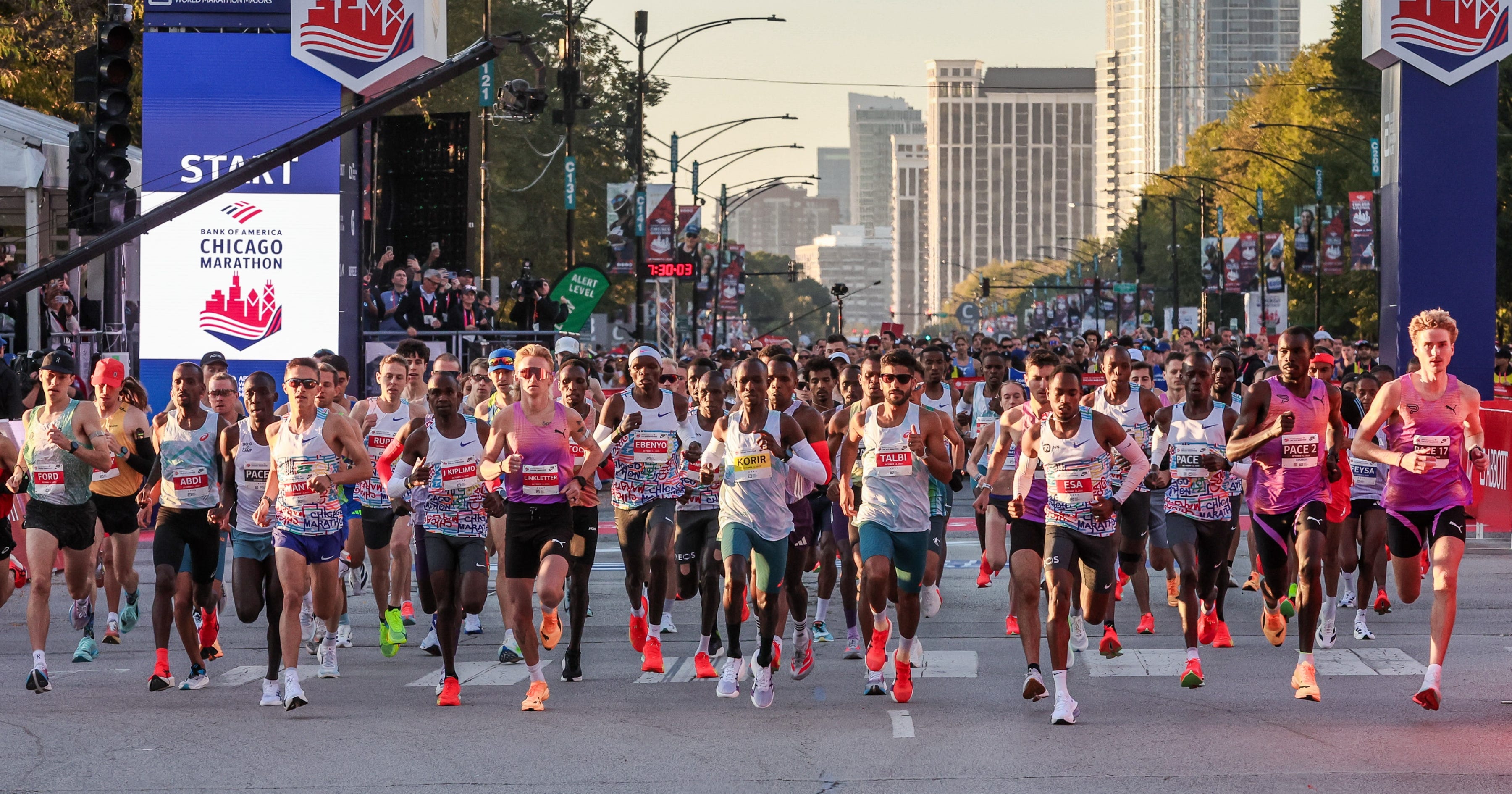
There are many reasons to watch a World Marathon Major. The distance’s biggest stars going head-to-head… the plucky Americans trying to take on the world and land on the podium… the hefty implications for rankings, qualifying standards, and Olympic prospects of athletes who only compete two or three times a year.
In a race like Chicago, there’s one more big one in particular: the clock.
Seven times in the race’s long and illustrious history has a world record fallen on the streets of the Windy City, thanks to its combination of flat course, strong competition, and well-paid pacers. Both the men’s and women’s current American records were set there; Conner Mantz’s 2:04:43 turns one year old on Monday. While race conditions are often favorable, the course is so historically fast that it doesn’t need to be a perfect 45 degrees and completely still for records to fall.
Record-breaking isn’t the be-all, end-all of any major marathon’s success or failure. (It is first and foremost a race after all, one with a prize purse north of $900,000.) But it would be ignorant to pretend like fast times aren’t a central part of Chicago’s sell. Athletes come to run fast, whether they’re looking to break two hours or five.
That being said, it won’t necessarily come easy this year. Currently, the forecast predicts temperatures in the mid-60s for most of the elite race creeping up into the 70s by late morning—about 20 degrees north of ideal. The wind and humidity won’t be a huge factor, but they won’t be negligible, either, at ~8mph and 60% or so, respectively.
The question then becomes, which records will live, and which will die? Of those that fall, who’s going to break them? That’s where we come in, breaking down each of the four major marks to chase and their likelihood of going down.
Women’s world record: 2:09:56
Oof. Well, on one hand, it’s physically possible for a woman to run sub-2:10 on this course, because that’s exactly what Ruth Chepngetich did in 2024. On the other… she was busted for doping shortly thereafter, and even in the immediate aftermath of her mind-blowing achievement, there was significant speculation about the possibility that her performance had been chemically enhanced.
It would be great to see this mark go, and while no woman in history has come within a minute of Chepngetich’s time, the two names atop the entry list have the talent and resumes to give it an honest try. Brigid Kosgei did break the world record in Chicago back in 2019, running 2:14:04 to take over a minute off Paula Radcliffe’s mark. She hasn’t improved upon her PB in the six years since, with some time off for motherhood and a few injuries thrown into the mix, but she’s squarely back on top in 2026 after her 2:14:29 victory in Tokyo this past spring. And somehow, she’s still only 32 years old. She’ll take on the defending champ, Hawi Feysa, who was something of a surprise winner last year in 2:14:57. Kosgei already has one over Feysa this year, as the Ethiopian finished third in Tokyo in 2:17:39, but if they stay close late in the race, that could be the extra juice needed to keep the back half close to record pace.
Sutume Kebede may be entering Chicago feeling like she has something to prove, given that she finished second behind Chepngetich in 2024 which arguably means she is that year’s rightful champion even if Chepngetich’s result still officially stands. She’s been more consistent in the 2:15-17 range, with her 2:15:55 PB coming en route to victory in Tokyo in 2024, but big breakthroughs have been shown to be possible in women’s marathoning recently.
Speaking of big breakthroughs, perhaps the most intriguing name on this list is Sharon Lokedi. The three-time WMM champ has bounced between Boston and New York, winning for the second time in Boston this past spring, but she’s never really taken on a fast, paced race, so it feels like an improvement on her 2:17:22 PB is nearly inevitable if she’s entering the weekend fully healthy and fit. 2:17 to 2:09 is a stretch, but then again so is anyone running 2:09 in this race, so if the WR chase doesn’t materialize, that could work out great for Lokedi coming up with both a fast time and another huge win.
Men’s world record: 1:59:30
It feels wild to suggest that Sabastian Sawe’s barrier-breaking run in London might not survive the year as the world record… and it probably will, but you can’t quite dismiss the prospect entirely with Jacob Kiplimo in the race. Kiplimo is now the third fastest man in history thanks to his 2:00:28 behind Sawe, and he’s also the defending Chicago champ, running 2:02:23 in just his second marathon ever last fall. When you consider that Kiplimo’s run 2:03, 2:02, and 2:00 in his first three efforts, it’s not totally insane to suggest that a further one-minute improvement is outside his capabilities.
The question will be whether he’s got the stuff to do it solo. Unlike the women’s race, which benefits from male pacers (and other elite racers, for that matter) all the way through, if Kiplimo is going to break the WR he’s likely going to have to push the pace himself in the latter miles. That’s not to say that someone like Amos Kipruto, the 2022 London champ and last year’s Chicago runner-up who ran 2:01:39 in London this spring, couldn’t hang with Kiplimo on his absolute best day, but without giants like Sawe or Yomif Kejelcha on the list, it’s not likely that multiple men on this particular start line will find themselves in sub-two-hour shape on the same day.
Women’s American record: 2:18:29
While Emily Sisson’s mark from 2022 is the oldest of the four records in play, it’s also probably the most likely to survive as no American women in the field are currently within two minutes of the mark.
There’s two main scenarios in which Sisson’s record gets broken. The first would be for one of the experienced racers to hit a home run on race day, with someone like Susanna Sullivan or Natosha Rogers daring to go out way under PB pace and finding a way to hold on. Rogers was the top American at this race last year, running a personal best of 2:23:28 for sixth overall, and she’s still relatively new to the marathon, with only three career finishes to date.
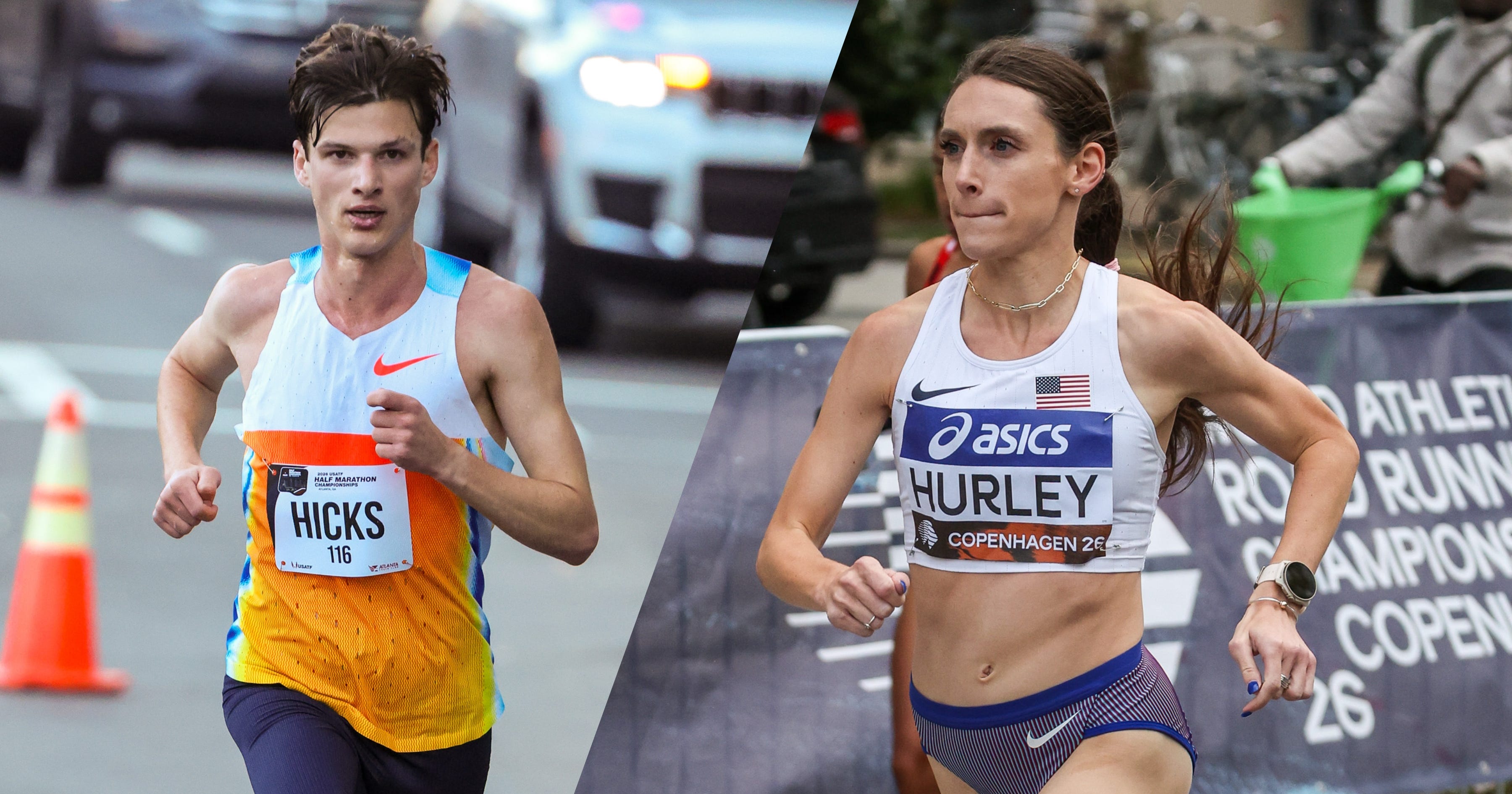
The other is less likely but not impossible: Emma Grace Hurley absolutely smashes her marathon debut. Hurley has been on an absolute heater across multiple road distances this year, winning the USATF 25K title, claiming top American honors at the Cherry Blossom 10 Mile, and taking fourth at the Falmouth Road Race. But perhaps the biggest indicator yet that she’s set for something special in Chicago came a few weeks ago in Copenhagen, when Hurley ran 1:06:23 for fifth at the World Half Championships to move to #3 on the U.S. all-time list.
In Denmark, she finished one spot ahead of American record holder Weini Kelati, who it’s safe to say is the most hotly-anticipated marathon debutante of the year when she toes the line in NYC next month. But Hurley could easily steal her thunder for the second time this fall with a big run in Chicago. 2:18 in her first go would be truly remarkable, but don’t forget that Hurley’s half marathon PB is now 30 seconds faster than Sisson’s, which she ran three months after her record-setting run at Chicago 2022.
Men’s American record: 2:04:43
We saved the best for last. On paper, the record that’s most likely to go has to be the men’s AR, with three entrants on the list having run within 71 seconds of Mantz’s time last year. Unless Galen Rupp has a late-career stunner no one saw coming or someone like 2025 breakout Matt Richtman takes another huge leap, if the record does get broken it’ll almost certainly come from one of the trio of Charles Hicks, Clayton Young, and Vinny Mauri.
Hicks has already run faster than 2:04:43, but he did so in perfect conditions at this year’s Boston Marathon, which isn’t record-eligible because it’s point-to-point and net downhill. At 25 years old, Hicks (who has dual British and American citizenship but grew up in Florida and switched allegiances to Team USA last year) is a baby in marathoning years, having debuted with a top-ten finish in New York last fall before his eye-popping Boston time. The sample size is small, but he’s shown he can hang with the best of ‘em. In his pre-race CITIUS MAG podcast interview, Hicks said he’s focused more on place than time in his goal setting, but any improvement on his seventh place from Boston at the WMM scale would necessitate running a pretty special mark along the way.
Young’s conversation with Chris Chavez was a little more concerning, as the 33-year-old Provo-based marathoner revealed he’d been diagnosed with a hamstring tear during his buildup. He’s still going to give it the ol’ college try, however, that’s a high-risk strategy that makes a DNF feel more likely than a PB. Young hasn’t finished outside the top ten in a marathon in his last seven outings, a streak that includes World Championship and Olympic appearances and a 2:05:41 in Boston. If he can power through the pain, recent history shows he’s competitive enough to be in the mix alongside Hicks.
Last, but not least, we have the enigma that is Vinny Mauri. It would stand to reason that a guy who can solo a 2:05:54 marathon debut with no pacers at the little-known Glass City Marathon in Ohio can run a minute faster in a setting like Chicago… but logic really doesn’t apply to anything about Mauri. The Notre Dame grad didn’t have anything on his collegiate resume that would suggest 2:05 capability before he did it, and he hasn’t run any tune-up races to show his cards in the months since. Instead, he’s logged comically high volume on the treadmill at his local Planet Fitness (more on that below), betting big that his unique self-coached training system will continue to pay dividends. There’s no way of knowing whether 40-mile days of triple workouts at five-minute pace is too much, because literally no one ever has done that before.
The only possible analog for Mauri is fellow Chicago entrant CJ Albertson, who’s made a perfectly respectable career out of his highly-scrutinized ambitious training loads, but Mauri has already surpassed Albertson’s 2:08:17 lifetime best on the first try. And unlike Albertson, who has been racing between three and six marathons a year every year since 2021, Mauri is far from a known quantity at this point. Both he and Richtman, who ran 2:07:57 in his debut at LA last year, will attempt to answer the big question of what exactly these anomalous performances mean in the larger scheme of things when they come completely out of left field.
So what will actually happen on race day? Unless the forecast dramatically improves over the next few days, we’ll somewhat pessimistically put the over/under at 0.5 records and hope to be proven wrong. Each one of these four scenarios in one way or another would require the stars to align, and banking on multiple sets of stars lining up on the same day at the same race feels unrealistically greedy.
If we’ve learned anything from the last few years, it’s that everything we know about marathon times can go straight out the window with one performance, whether it’s a 1:59 in London or a 2:05 in Toledo. When it comes to marathoning in 2026, everything is impossible until it happens. On Sunday, the best of the best will take to the streets and try their hardest to show the world the run they’ve been envisioning every step of every workout isn’t just wishful thinking; it’s record-breaking.
Vinny Mauri And Treadmill Training’s Ultimate Test 🏋
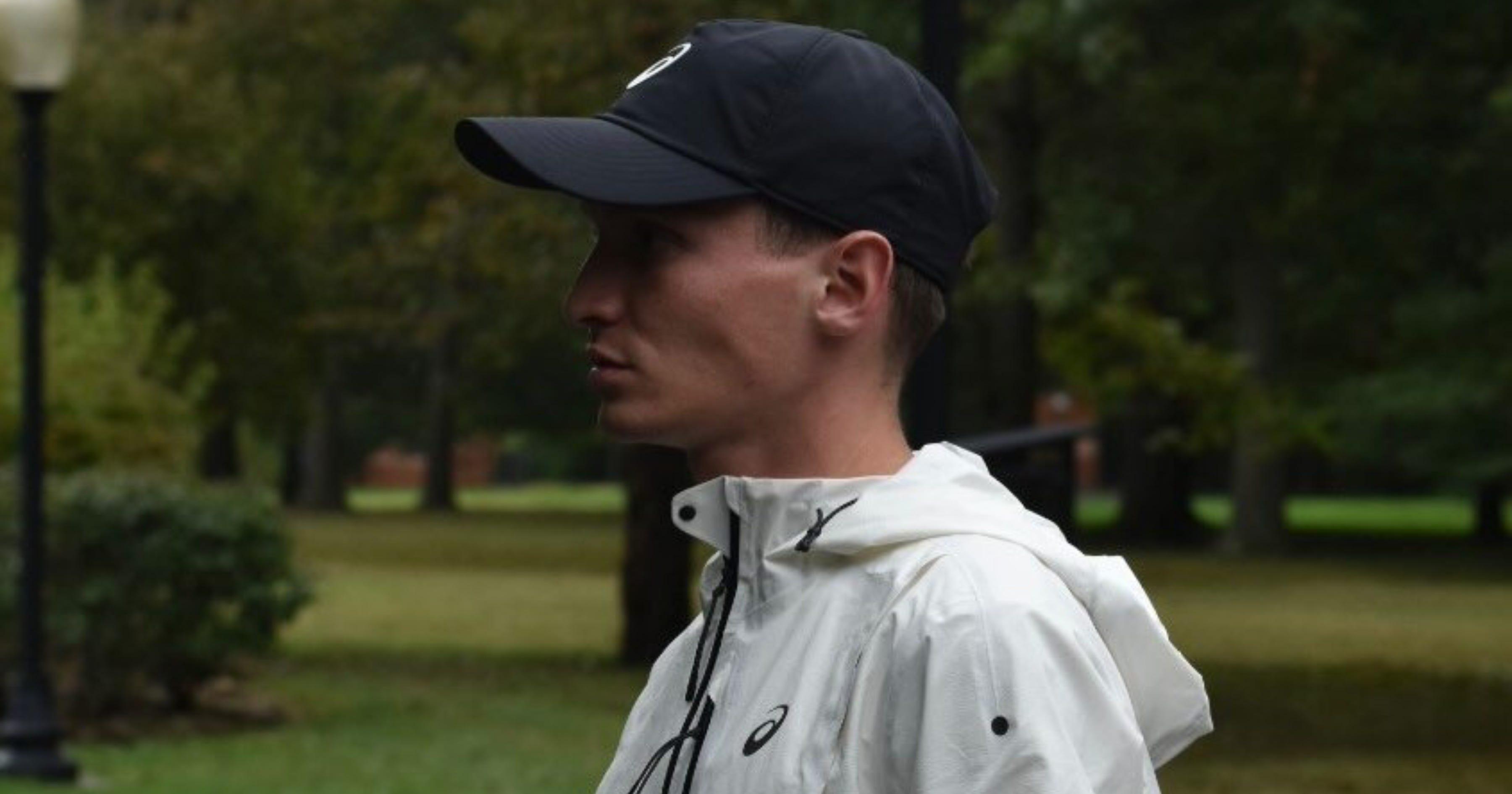
The treadmill is on trial this weekend in Chicago and Vincent Mauri has been appointed as its defense attorney.
Until April the most notable accolade on the Ohio native’s resume was a 13:34 to finish seventh in the second 5000m heat at the Valentine Invitational at Boston University. Now he is being held up as a likely candidate to break the American marathon record of 2:04:43.
How did this happen so quickly?
A 2:05:54 marathon debut—the fastest ever by an American—at the aforementioned Glass City Marathon changed everything. That performance launched Mauri into instant legend status, but his public training log on Strava has only added to the mythology.
Running over 130-mile weeks is nothing extraordinary anymore for the best distance runners in the world. Aided by shoe technology and encouraged further by the success of Kelvin Kiptum’s regular diet of 180+, athletes are exploring new thresholds to challenge their bodies. But for Mauri it’s the way he is running his high mileage that is turning heads.
East African distance runners have famously taken their easy runs remarkably slow with an emphasis on recovery. In contrast, Mauri rarely runs above six-minute pace for anything. But most remarkable is his short recovery during workouts. It would be a standard recommendation in many programs to take a minute rest for each mile of threshold work between reps. (For example, if doing 3 x 3 mile reps, then jog 3 minutes between.) Mauri takes between 20 to 60 seconds between his efforts.
A Mauri threshold session of 4 x 20 minutes might only include 20 seconds of rest between each rep—so short it almost seems pointless. How much can one’s heart rate fall in the blink of an eye?
Then there’s the single-day volume. He’s logged too many 30+ mile days to count, peaking at 45 in one day during this build. These figures become even more impressive (or maddening) when you factor in that the majority of this historic buildup has been done on a treadmill at Planet Fitness.
For most runners the treadmill is reserved for snow days or hotel gyms, but it’s become an increasingly more popular training tool for elite athletes. Mauri is not the only one in this race who relies heavily on treadmill running for the majority of their training. The treadmill marathon world record holder, CJ Albertson, will also be doing his best to defend the value of the training modality. And these two notable belt boys will be joined by the upstart Canadian Thomas Nobbs, who came out of nowhere to win the McKirdy Micro last spring in 2:09.25.
Treadmills were a routine part of Mo Farah and the Oregon Project’s training, and it has become increasingly used as a controlled environment for athletes training to specific lactate levels. If it works for Jakob Ingebrigtsen and the OAC, then it must work, right? Mauri appears to merely be taking this concept to its logical extreme.
But “marathons are about toughness,” you protest. “It’s about learning to grind and push yourself through the pain!” That’s how the marathon is marketed, at least. How are we to square that notion, which lauds athletes for braving wind, rain, and hills, with athletes running like lab rats? Maybe gaining fitness is more like a science than your high school cross country coaches would have led you to believe during their motivational pre-race speeches!
But rather than bemoan this potentially confounding development, let’s instead embrace it. For years fans have been saying the sport needs more storytelling, and there probably isn’t a better story out there heading into the weekend than Mauri’s. A guy who has never won anything of significance, nor beaten anyone you have ever heard of, has all of us on the edge of our seats believing he can take his body somewhere that no American has gone before. Because he’s probably run more sub-five minute treadmill miles than any American in history.
We know that running one pace on a treadmill is not the same as racing it outside, just like rowing on an erg is not the same as racing in a boat. One of treadmill running’s biggest proponents, Yaseen Abdalla, said something to this effect recently. He knows, Vinny knows, and we all know—but for some reason we still believe it’ll convert.
And yet, if Mauri runs well, then it’ll be so obvious why… it’s right there on Strava. Similarly, if he blows up or is a non-factor, suddenly everyone will have perfect 20/20 vision. All the signs will have been there. It was that damn treadmill!
But treadmills aren’t new. In addition to their ability to deliver a steady tempo basically forever, training exclusively on them comes with an additional training benefit.
At the 2000 Olympic Marathon Trials, a 37-year-old mother of two who worked as a pathologist did her training block on the ‘mill due to the unfavorable weather conditions in Anchorage, Alaska. On a warm day in South Carolina, somewhat ironically the Alaskan athlete was best prepared to handle the heat, and Christine Clark ran a personal best by seven minutes in an epic upset against a field of full-time professionals.
With warmer conditions expected in Chicago this weekend, and temperatures expected to rise from 61 to 72 degrees over the course of the race, there is one important variable to consider when making a prediction: there are online reviews complaining that the Planet Fitness in Warren, Ohio, sets its thermostat too warm: to 72 degrees.
Sponsored by Olipop

Your favorite fall treat, now in a can. 🍎🍂
Caramel Apple OLIPOP is now stocked in our fridges! With crisp green apple and rich caramel flavor, this limited-edition sip brings all the nostalgia of a caramel apple—sticky fingers optional. Grab a chilled can and get a taste of fall. 🤎
So You’ve Injured Yourself Before Your Big Fall Marathon… 🩼
You got out over your skis. You flew too close to the sun. You really stepped in it—literally or metaphorically. You did too much of one thing, or not enough of another, and now developed a running injury.
Big whoop, right? For members of the adult jogging population, health is a continuum on which we all almost always register some sort of injury. We do our best to keep our nagging ailments of choice at bay, occasionally hopping on the stationary bike or even (gasp!) resting when the enemy breaches the gates. Once our inflammation levels return to a manageable state, we hope back into training with foolish vigor and the confidence of the owner of a much younger, more supple set of tendons.
It’s a song and dance we’re all familiar with. By the time we enter our 30s, most of us intuitively know which recurring injury will pick up a full head of steam over the next couple of decades and become the Big One, possibly necessitating surgical intervention, a hydraulically-powered brace of some sort, or space-age advancements in the orthotics space.
But when—in a moment of divine inspiration triggered by ingesting 15 minutes of running influencer YouTube shorts—you registered for a fall marathon earlier this year, you weren’t considering any of that.
For the brief period of time between wiring several hundred dollars to a World Marathon Major and your first week of training for it, you feel young again, hubristically spry. Those first few weeks of early summer base-building transport you back to high school. Running is perfect and nothing can ever change that. Each weekly session of strides, you scrape away the decades of slow-twitch rust that have come to encumber your gait—maybe you even entertain the notion that you could take down your old mile PB… that is, once you’ve knocked this fall ‘thon out of the park.
A month later you introduce structured workouts, and with it, the first pangs of doubt. You hit your prescribed paces and complete your cool down without a noticeable limp. But the next morning when you pry yourself out of bed, your walk to the bathroom is certainly crunchier than it was the preceding morning.
Well, despite your little band exercises, your occasional foam rolling, your recollection that the Myrtl routine sorted out this sort of thing when you were a 20-year-old, what started out crunchy morphs into a perpetual niggle, and eventually, a definable injury that requires a handful of consecutive rest days and an out-of-pocket visit to the local running-focused PT who doesn’t take your insurance.
The prognosis isn’t looking good. “Okay, I probably won’t PR but I’ll still race,” you bargain with yourself. “It’ll still be a nice stepping stone effort.” You begin thinking nonsensical things like “I’ll treat it as a tempo,” and you might even sign up for a second marathon a month or two after your initial target race.
A week later you realize you were lying to yourself. Your goal race may still technically be completable. But you’ll be on ice for a month or two after that. So you’re faced with a decision.
Do you reframe, focus on getting healthy enough to shuffle-jog for 26.2 miles, and treat your once all-consuming obsession race as a fun parade through a mid-sized or major city? Big marathons can be incredible experiences even if you don’t have specific time-based aspirations for them—just ask the vast majority of the people who finish them.
Do you take your lumps and walk away from this particular plan? You can consider your abandoned entry fee a small donation to the elite athletes’ prize pool, make yourself physically ill from excessive Zwifting, then hit the ground running—with an overdeveloped aerobic system—for some early spring road races.
Or do you defer to next year (many races, like the New York City Marathon now allow this—the deadline to do so is October 31st, just FYI!) and risk repeating the exact same scenario again? In the immortal words of fictional mathematician Will Hunting, “You played a hand and you f***ing lost. Some people would have the sack to lose a big hand like that and still come back and ante up again.”
Whichever road you hobble down, just remember two things:
One, that autumn is a tragically short and beautiful time of year, so even if you’re hunkering down for a desperate surge of cross-training, spend some time outside soaking it in… something you can do without running. Go for a walk, touch a pumpkin, hear the leaves crunch beneath your feet.
And two—relatedly—running is supposed to be fun. Unless your livelihood depends on it, you can and should take a break if every step you take is a source of mental and physical anguish. There will be other races. And maybe, just maybe, you’ll be healthy enough to enjoy racing one.
More News From The Track And Field World 📰
– Emily Venters secured her second U.S. championship of the 2026 road racing season, this time over 10k. Venters comfortably won the TC 10k—part of the Twin Cities Marathon weekend—in 31:09. Per the Fast Women newsletter, she’ll race next in the Valencia Half. Aidan Troutner won the men’s race in 27:40. And if you were to score the race based on groupings of people with loosely rhyming first names, Troutner was also the team champ—he was joined in the results by Graydon Morris (11th), Aidan Matthai (27th), Caden Schneider (29th), and Jayden Zywicki (32nd).
– The NCAA XC season continues unencumbered—unless you had plans to race in Bethlehem, PA, last weekend as half the Paul Short Run races were cancelled due to dangerously hot weather on Friday afternoon. Elsewhere, Arkansas freshman Braelyn Combe took the win at the Razorbacks’ Chile Pepper XC Festival in 15:59.0 for 5K and the Notre Dame men dominated the Joe Piane Invitational with a 22-point team score. It wasn’t just a home meet romp, however, as the NC State women controlled their team race with a 39-point victory led by individual winner Hannah Gapes in 15:22.6.
– Gideon Kiprotich (59:34) and Joyciline Jepkosgei (1:05:40), both of Kenya, broke the tape at the Cardiff Half in Wales.
– At Romania’s Runsylvania International 10k, Ethiopia swept both podiums; Khairi Bejiga won the men’s race in 27:01 and African Championships 10,000m bronze medalist Asefu Abreha (30:16) took top honors for the women.
– Recording artist and pole vault world record holder Mondo Duplantis will sit out the 2027 indoor season.
– Duplantis’s fellow Scandinavian recording artist and world record holder Jakob Ingebrigtsen added yet another hyphenate to his epitaph: running festival organizer. And as part of the Runfest Norway fun, he competed in the road 1500m (would that be stylized as “1.5k?”) and 5k, of course winning both—he went 3:40.7 and 13:26.
– World U20 400m and 4x400m champion Jayden DeLeon has announced he is foregoing competing for LSU in the NCAA and will instead compete as a professional going forward.
– If you’re looking for more reading this morning, World Athletics put out a very interesting profile of 400m superstar Collen Kebinatshipi, who thinks the world record is well within his sights and breeds dogs on his farm in Botswana during his offseason.
Interested in reaching 20,000+ dedicated runners and track and field fans? Advertise with us here.
Hi! Big fan of the blog. I've noticed the substance has stopped coming to my email and I've checked the settings and unsubscribed and resubscribed but wanted to let you know -- I don't know if this is happening to others. Thanks and keep up the great writing.