

Sponsored by Suunto
A breakthrough is shaped long before the finish line. It’s built in decisions made early enough to matter. Hold, or push. Adjust, or recover. Every one of them gets easier when you can see clearly. What your effort is costing. Where your pace is taking you. How much you still have in you.
Thirty‑five grams on your wrist, from the first kilometre to the last night’s sleep. Readable in full sun, at full stride. Numbers steady enough to build a race plan on. So when the finish comes into view, you already knew it was coming.
If you’re in the market for a new watch, check out the Suunto Run 2 here.
Compiled by David Melly, Paul Snyder, & Kyle Merber
Assefa’s Was Just The Latest In A Proud Lineage Of “Near-Misses” 🚨
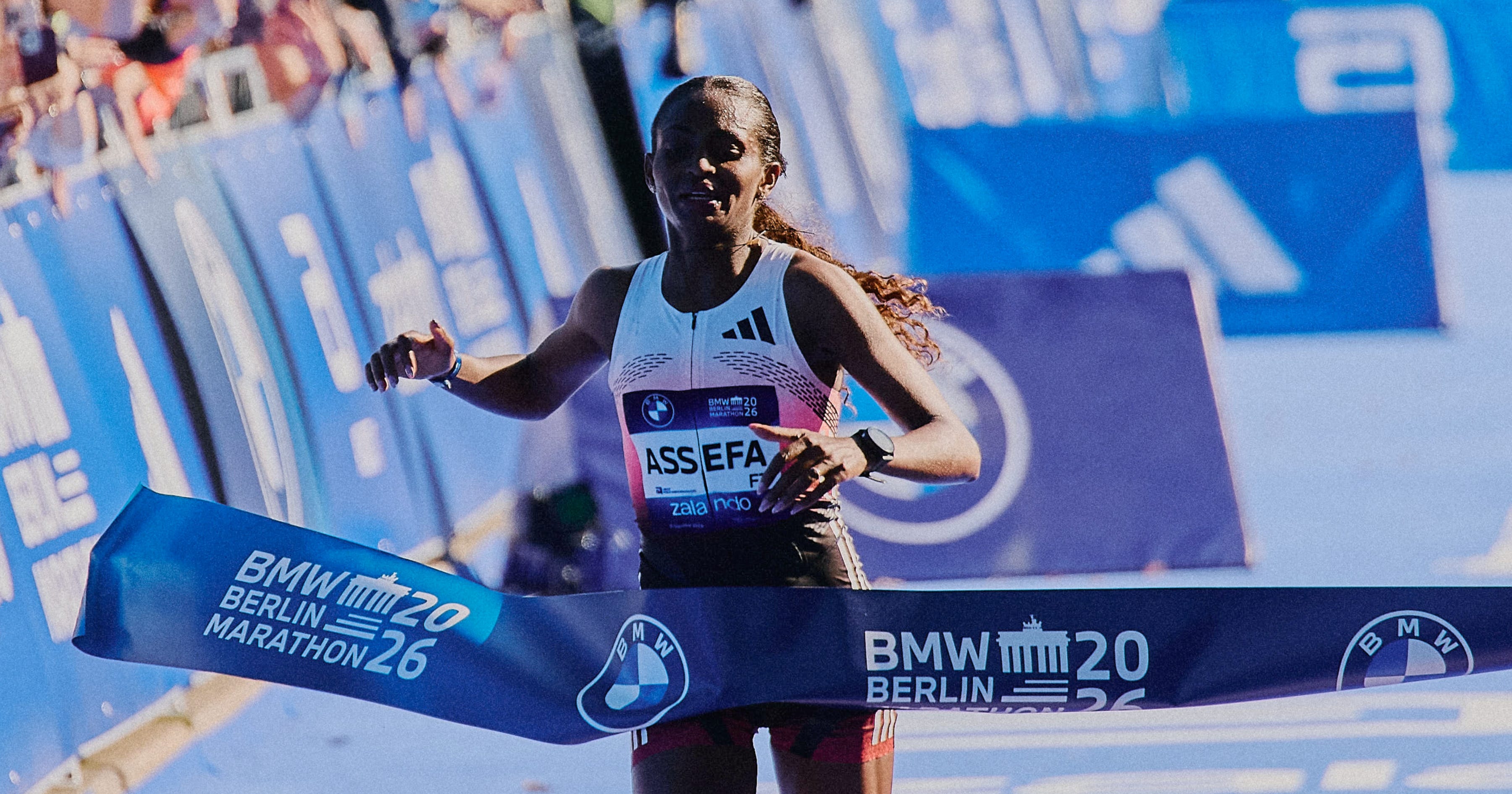
There are certain world records that will have special significance when they are eventually broken: the women’s 400m, 800m, 3000m, and of course, the marathon are among them… for hopefully obvious reasons.
On Sunday morning in Berlin, Tigst Assefa was so painfully close to wiping away one of those marks. Ruth Chepng’etich’s 2:09:56, one we’d all like to say good riddance to from the books, was well within reach. Assefa hit the halfway mark in 64:57 before continuing a slow and steady acceleration.
Over the past five years, Assefa has a strong claim as the greatest marathoner in the world, and her fifth World Marathon Major victory (third in Berlin), only further solidifies her position at the top. But with less than two kilometers left in the race and still surrounded by a supportive pack of male pacers, a rupture of her Achilles tendon derailed any plans for post-race celebratory beers atop the podium.
Despite grimacing through the final mile-plus with a pronounced and obviously painful limp, Assefa still won the race by almost six minutes. And this was not a weak field! The second and third place finishers, Bedatu Hirpa and Dera Dida, are now the 21st and 22nd fastest women all time, having both dipped under 2:17—still 90 seconds ahead of the American record.
Willis Reed. Kerri Strug. Kobe Bryant. Curt Schilling. Tiger Woods.
Athletes become legends when they perform under distress, and few can hold a candle to the achievement and grit that Assefa demonstrated in Berlin. If instead of being born an Ethiopian distance runner, Assefa played quarterback for the Dallas Cowboys, then there would already be dozens of statues being commissioned across the state of Texas.
Fortunately, every elite athlete knows there is no better place to suffer an Achilles injury than in Germany. Unfortunately, eccentric calf raises won’t be enough to fix this injury. Her recovery is slated to be more than six months following the immediate surgery, however, Assefa’s run will go down as one of the greatest sporting achievements in history among those of us who have ever experienced even the slightest bit of tendonitis.
The thing about near misses like this one is that Kelvin Kiptum’s 2023 London Marathon, Eliud Kipchoge’s Breaking2, or Faith Kipyegon’s 1500m at the Monaco Diamond League in 2022, were all once painfully close, as well… but temporary.
It wasn’t quite the same level of heroism for Guye Adola, but he also had a pretty memorable day. The 35-year-old was the oldest athlete in the elite field, and he used his hard-earned wisdom to secure a second Berlin victory and improve upon his personal best from 2017. His time of 2:02:50 makes him the 13th fastest marathoner of all-time. Had he done that nine years ago it’d have been a world record. Not quite a near miss unless he has a time machine!
Assefa, fortunately, has time on her side. Despite having enjoyed a career that stretches back to Diamond League 800ms as a teenager, she’s still just 29. She also has talent on her side: after her first major injury disruption, she ran 2:15:37 in her second marathon ever. Four years later, her sixth fastest marathon performance is 2:16:23, and her second 2:11 in Berlin makes her the only woman in history to break 2:13:00 on multiple occasions. With a resume like that, today’s near miss could very well be tomorrow’s home run.
Keep Talking The Talk, Jakob 🗣️
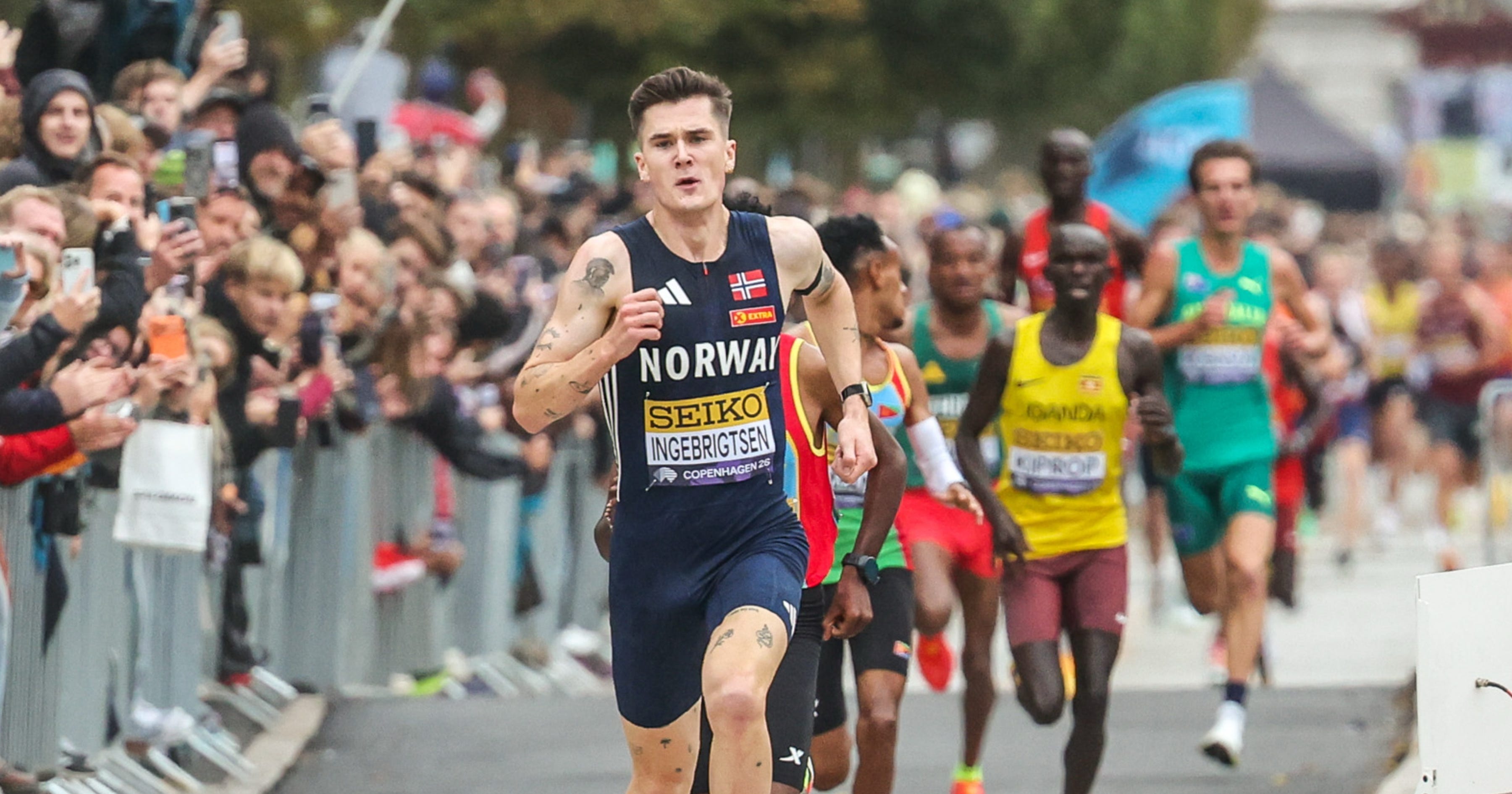
Don’t it always seem to go that you don’t know what you got ‘til it’s gone?
In the front half of the 2026 season, track and field was really missing Jakob Ingebrigtsen. The persistent Achilles trouble that had shortened parts of his 2024 and 2025 campaigns reared its ugly head, requiring the nine-time global medalist and five-distance world record holder to undergo surgery in February. That meant that for the better part of the summer, Ingebrigtsen wasn’t taking the lead of every Diamond League 1500m, but perhaps just importantly, he wasn’t walking through every mixed zone.
As has been well-documented by this newsletter, Ingebrigtsen is one of the sport’s most prolific racers on the track and talkers off it (often in direct opposition to his grand rival, Josh Kerr). Among other unfortunate impacts of Ingebrigtsen’s injury, the lack of direct reaction to Kerr’s world-record run in London surely deprived us of a memorable soundbite or two. Ingebrigtsen is, after all, both the indoor mile WR holder and the man who came closest to taking down the previous outdoor mark before Kerr got to it first.
Of course, the Norwegian superstar isn’t always making headlines in direct opposition to his Scottish counterpart. Whether it’s voicing his desire to get every single distance world record, offering what some considered to be excuses after losing, or speculating that he himself may be on the autism spectrum, a Jakob Ingebrigtsen interview is never boring. Even when pressed to consider the very nature of his rivalry with Kerr, Ingebrigtsen dropped this heater in the Telegraph in January:
“I don’t know why he is so interested in me, but I guess it’s because I’m the one to beat. I respect my competition and my opponents but that’s what they are. If I can do what I am able to do, and try to focus on my own things, and do that as good as I can, it’s irrelevant who I am standing beside. I’m on my own mission.”
You don’t get that sort of bravado from many others in track and field. This sport and those who follow it love hard work and humility, even at the expense of entertainment. It’s easy to understand why many athletes are far more risk-averse than Ingebrigtsen when it comes to talking with the press. Just look at the recent collective crash-out on track Twitter when Melissa Jefferson-Wooden simply said she aspires to be the greatest of all time on the Night Cap podcast. That wasn’tt exactly a radical statement from a professional athlete, and yet, all the most annoying people on the Internet had plenty critical to say about it. It’s hard out here in the comment section.
So whether it makes you love him or hate him, the fearlessness with which Jakob Ingebrigtsen steps in front of a microphone was sorely missed during his injury. But then he returned, winning the European Championship 5000m in a lethal kick, and with his winning ways came the sh*t-talking.
Basking in the glow of his seventh European title, Ingebrigtsen was asked about Kerr skipping the UK-hosted championship. He didn’t mince words. “I definitely think it is ruining the sport if we are not participating,” he responded, leading to another round of inflammatory headlines along the lines of JAKOB SAYS JOSH IS RUINING THE SPORT.
In just his fourth race back, Jakob found himself a little miffed at the pacing and racing situation in the Brussels Diamond League final. In a fiery post-race mood, he summed up the experience as “racing against a bunch of cowards” and referred to “everyone in the race, me included” as losers. That didn’t take long.
In a matter of hours, Camp Ingebrigtsen tried to fix up that that little PR snafu by clarifying his comments, but in his apology, he still maintained that Olympic champ Cole Hocker “acted cowardly” by bringing his own pacer than not chasing the rabbit when the gun went off. It seems the drama between Hocker and Ingebrigtsen was later resolved with an in-person, off-the-air chat, but the overall message was clear: cocky Jakob was back, baby.
In the leadup to World Ultimates, middle-distance fans and drama-lovers around the world were salivating at the advertised reunion between Ingebrigtsen, Kerr, and Hocker in the 1500m, the first time the trio had raced head-to-head in two years. Kerr, of course, had to respond to Ingebrigtsen’s earlier comments, pleading that he was “not a robot” and carefully selected his races to maximize performance while staying healthy. (Ironically, it was Ingebrigtsen who ultimately prioritized his health over the competition, dropping out of the 1500m after winning the 5000m in Budapest.)
With the books now closed on the 2026 season, the return of Jakob Ingebrigtsen like a proverbial tornado ended up being one of the most memorable and closely-followed narratives of the entire year, even if it was largely confined to a month or so of racing. In that short period of time, it reminded us of three key elements in selling sports as mass entertainment:
Rivalries drive views. There’s only so much interest you can mine from one athlete vs. the clock; a time-trial race only plays out one way and the barometer of success is often the binary “did you, or did you not, break the record you’re chasing?” Personality-driven rivalries can be entertaining week in and week out, with endless permutations and a lore that grows with each race.
Races are short. There’s only so much a broadcast can do with three and a half minutes of racing. If you want people to stay tuned before and after, you need to give them something else to watch. Whether that’s online interviews or social media chirping, it’s a critical part of the draw of any sport broadcast.
Keep ‘em coming back. Part of what made the last month on the 1500m circuit so entertaining was the next race always being around the corner. Will being called out for not leading change Hocker’s race strategy? Will Josh and Jakob shake hands at the finish? It’s not enough to have drama after one race; you ideally need the next big matchup to be coming up soon to strike while the iron is hot.
And perhaps at the end of the day there’s a secret, important fourth lesson: it’s not that serious. Everyone we’re talking about here is making rent by running in circles, not by going to war or performing open heart surgery. Perhaps that’s a lesson that Ingebrigtsen has learned as he’s matured as an athlete and person—he hadn’t always matched his fiery rhetoric with humor in his younger years. Now married and a father at the ripe old age of 26, Jakob isn’t afraid to inject a little levity, capping his World Ultimate experience with a joke Instagram caption under a photo of him and Kerr chatting on the infield.
Jakob Ingebrigtsen is many things, but here’s a few he’s not: Bland. Cautious. Dull. He’s hardly the most polished political presence on the circuit, and thank goodness for that. If you want to hear an Olympic medalist stick to the script and ruffle no feathers, there’s literally hundreds of hours of press conferences and podcast interviews to choose from. But after a few long months without the Jakob Ingebrigtsen Media Experience in our lives, it’s a welcome relief to see one of the best talkers in the sport back at the top of his game. Keep it up.
Major Marathons Are Work, Not Play 👋
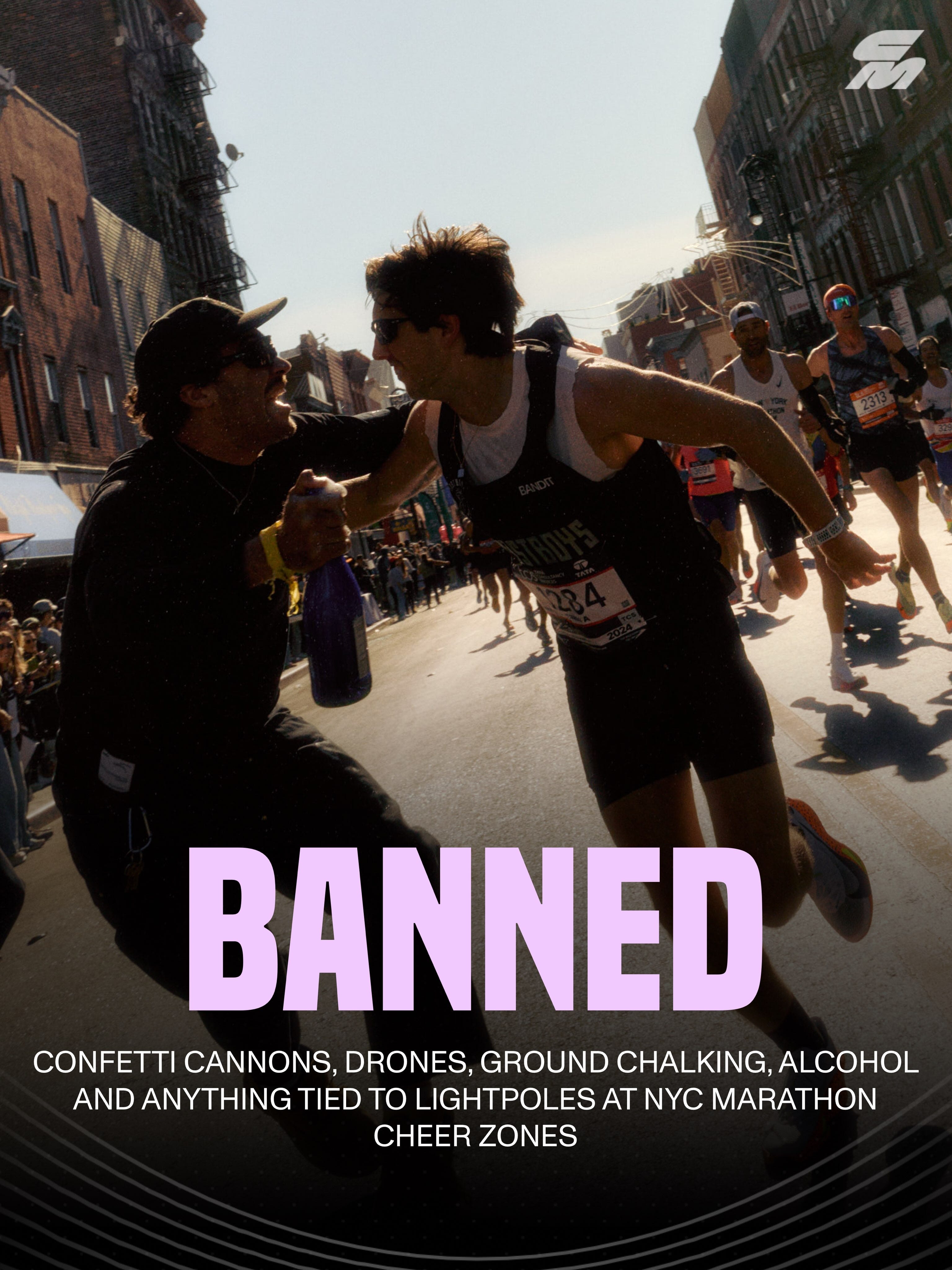
Everyone knows marathons are hard, whether they’ve run one or not. Covering 26.2 miles as fast as you possibly can isn’t exactly a casual sort of weekend pastime, and between fancy carbon-plated shoes, travel fees, luxury fueling, and skyrocketing race entries, it can be a pretty darn costly one as well.
Putting on a marathon race is hard as well. The larger the marathon, the larger the challenges that come with it. Two of the largest races in the country this week made headlines for policy updates that reflect the enormous scale and constraints that putting on a major race requires. Yesterday, the New York City Marathon announced a number of restrictions in place to on-course spectating, including a prohibition of unauthorized cheer zones, limits on decor like chalking and banners, and re-upping bans of things like drones and alcoholic beverages.
The same day, Boston announced that the cutoff for its famous qualifier program was a whopping 5:17 under the posted marks, meaning men under 35 now officially have to run under 2 hours and 50 minutes to BQ. The last time Boston increased its qualifying marks by five minutes across the board, there was an uproar of discourse around elitism, fairness, and accessibility of the sport… and within a few years, the de facto cutoff is more than five minutes faster than that.
In many ways, both updates are a sign that the latest running boom is alive and well. Running brands having a huge customer base that is growing in both size and passion is good for everyone, from elite athletes to lowly newsletter writers and everyone between who makes some part of their living in the sports economy. A lot of people want to run Boston! And a lot of people want to cheer for New York! Those are both great signs of the overall health of the industry, even if it forces race organizers to make decisions that are not universally adored.
Common-sense safety and crowd control measures are part of every major road race, essential to ensuring that anyone who participates or watches can have a good time. In particular, restrictions on party accessories like confetti, streamers, balloons, and banners make a lot of sense in a city that’s not just a race course, it’s also, y’know, a place where millions of people live, work, and pay taxes. Ensuring that today’s fun is not tomorrow’s expensive mess is an important stewardship role of any host organization. And technically, it’s always illegal for civilians to fly a drone in New York City.
Now that we’ve gotten the necessary nerdery out of the way, remember, watching sports is supposed to be fun.
Anyone who’s ever been to an SEC tailgate or a World Series parade can tell you that a huge component of fandom has nothing to do with what’s happening during the sporting event itself; it’s about the party before and after. Watching marathons like Boston or NYC is an event in and of itself, even if you have no interest in elite marathoning or personal connection to the athletes on the course, because of the atmosphere and celebratory air they bring to a community. So while it’s incumbent upon race organizers to keep everyone safe and partying responsibly, it’s also their job to make their event a must-attend even for those who aren’t paying an entry fee.
Plus, the easiest way to get marathon-averse, -avoidant, or -antagonistic New Yorkers—not a small subset of the five boroughs’ 8.5 million cranky citizens—on board with the race that annually shuts down the city is to conjure the warm fuzzy feelings of this past summer’s Knicks NBA title, and the collective sense of ownership in the city it brought. Even the most jaded first-time basketball viewer found themself whistling “New York, New York” as they strolled around. Everyone tolerated a bit more sporting-induced debauchery in the interest of a rarely-felt sense of civic togetherness. A respectfully rambunctious marathon Sunday has that same potential!
Just this past summer, we learned a lot of great lessons about what does and does not work for successful, massive-scale sporting events, when 16 cities across North America played host to World Cup matches. The general sentiment was positive, while popular opinion and economic impact varied significantly across each host city. Surely there will be months, if not years, of study by economists and marketers on the best practices, but the main early takeaways are that the more an event is accessible, high-energy, and festive, the better experience fans have.
With that in mind, the best bet for improving the New York viewing experience is to close more streets and open more containers. Turning the whole city into a FanFest-like atmosphere benefits businesses, residents, and visitors alike, and being an intense stickler for the appropriate locations and manner in which fans can be fans isn’t a winning strategy.
It’s also worth remembering that steep qualifiers and week-long urban takeovers are hallmarks of the World Major Marathon experience—but not the marathon experience more broadly. There are many small and medium-sized road races across the country ranging widely in distance, scale, and tone, from Disney World 5ks to elite-performance events like the Marathon Project.
Even at their enormous scale, Boston and New York will never be the right race for every runner. So why pretend like the sum total of American marathoning comes down to a few high-profile events? The silver lining to the capacity constraints, while understandably frustrating for Boston aspirants and near-missers, is that it creates and protects space for all the other races in the ecosystem to offer different kinds of experiences. Qualifying for, and running in, Boston is a dream come true for many—but that doesn’t mean it has to be the sole focus of any individual running journey or of fans writ large.
It takes a lot of effort to make a major marathon happen, whether that comes in the form of weekly long runs or hundreds of race-day volunteers. That’s why it’s important to keep the joy of road racing alive, both inside and outside the bounds of the World Marathon Major system. All work and no play makes Jack a grumpy marathoner, as they say. So let’s remember to keep running fun, both for ourselves and for everyone who cheers us on.
More News From The Track And Field World 📰
– For all this talk about the track season being over, it maybe wasn’t actually over? The 20th running of the Asian Games—hosted in Nagoya, Japan—showcased some rock solid, season-concluding performances from countries we don’t often see shine on the global stage. Yujie Chen lowered her own area junior record in the 100m, winning the title in 11.06; Salwa Eid Naser won the 400m in 49.20; Winfred Yavi won the 5000m, 10,000m, and 3000m steeple; Yan Ziyi got javelin redemption with a dominant win (70.46m); Thailand’s Puripol Boonson won the men’s 100m and 200m in 9.90 and 19.88, the latter an area record; and Rumesh Pathirage won the men’s javelin at 88.55m.
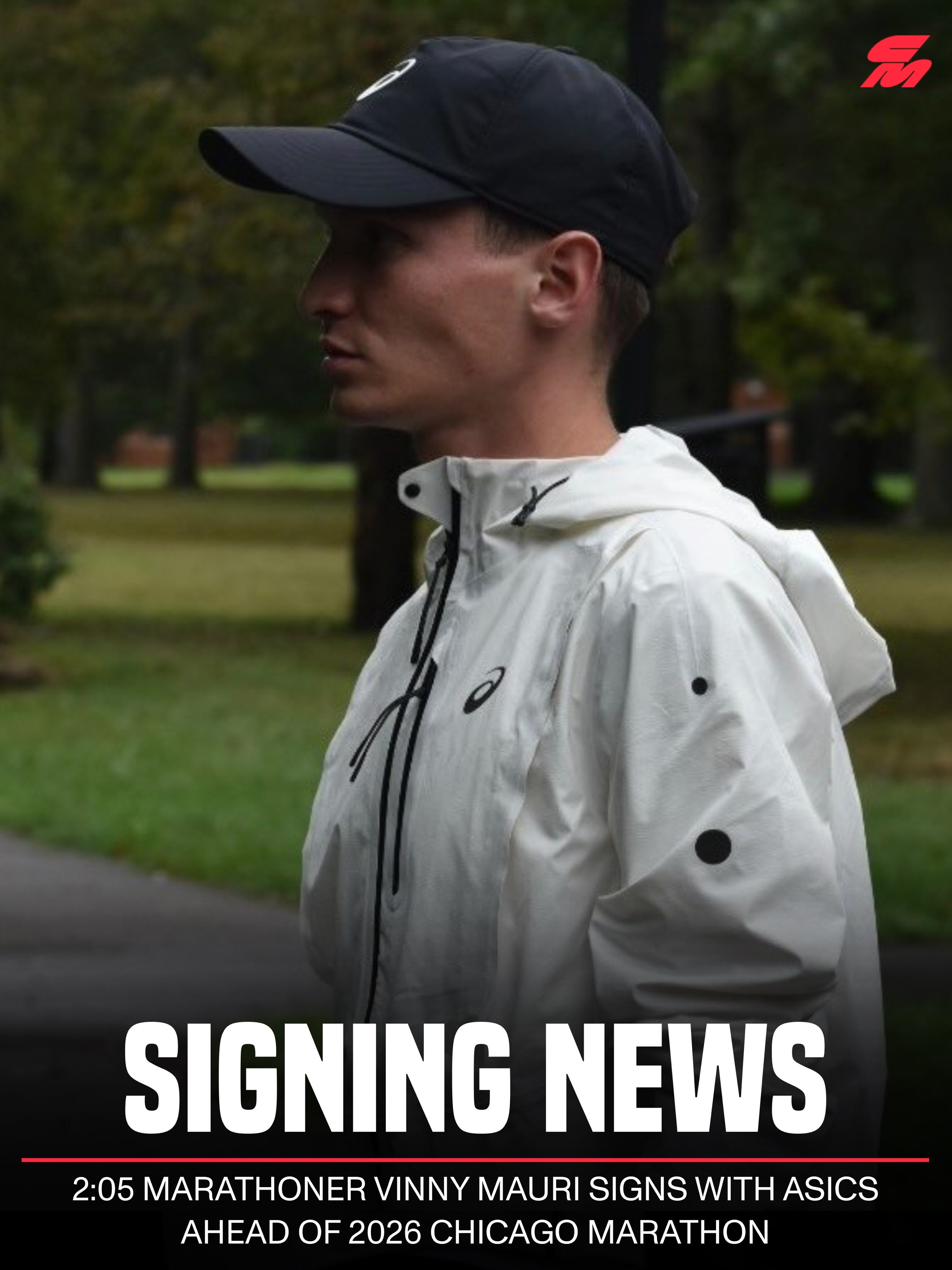
– Planet Fitness member and 2:05:54 marathoner Vinny Mauri has signed with Asics.
– NCAA cross country action continued to heat up this past weekend, with the highest concentration of ranked teams lining up at two meets: the #2 New Mexico men upset #1-ranked Oklahoma State on their home course at the delightfully named Cowboy Jamboree—additional shoutout to the unranked Stephen F. Austin Lumberjacks on their fourth-place showing, which required beating #21 Tulsa and #5 Oregon; #3 BYU took the women’s team title over #15 OK State and #2 New Mexico; At the Princeton Meadows Challenge—which, if we’re opining about meet names, sounds like a mall walking competition—Alabama’s #4-ranked men’s and #10-ranked women’s squads took home both team titles.
– Mt. SAC is expected to host the 10,000m and multi-event portion of the 2028 U.S. Olympic Trials on May 20th and 21st of that year. (The rest of the track and field Trials will still take place in Eugene the following month.)
– The Athletic Integrity Unit was busy! Olympic 100m hurdles silver medalist Cyréna Samba-Mayela has been provisionally suspended for whereabouts failures, and Philemon Kiplimo Kimaiyo got popped for using a diuretic, and is now serving a two-year ban.
Interested in reaching 20,000+ dedicated runners and track and field fans? Advertise with us here.
Best Lap Count in a while.
If you want to see real grumbling about exclusionary races, check out the ultramarathon scene.
“Close more streets and open more containers” please advise where the Lap Count cheer zone will be for the NYC marathon and I’ll start spreading the news 🥰