

Sponsored by Suunto
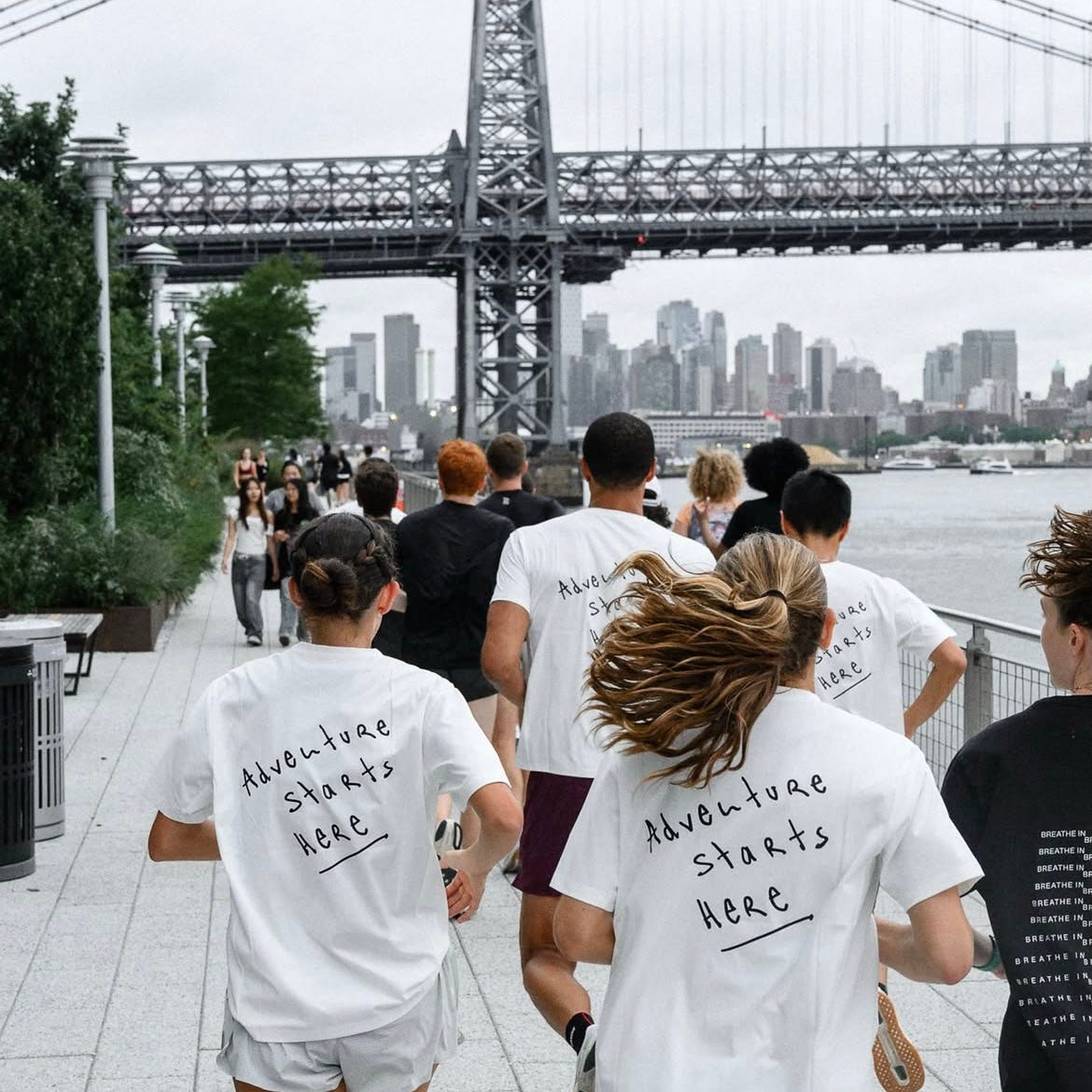
We teamed up with Suunto to launch the Run 2 and invited a dozen 2028 U.S. Olympic Marathon Trials qualifiers and hopefuls in New York City to get the first look, on a run along the Brooklyn waterfront with us.
Shines brighter. Runs longer. Tracks better. The Run 2 is built specifically for road running and the marathon, for anyone chasing a Trials standard, a personal best or a comeback.
Most of the athletes at the launch are chasing sub-2:16 or sub-2:37 while working full-time jobs and logging 100-mile weeks. Putting them first on the Run 2 continues Suunto’s support of American marathoners on the road to St. Louis in 2028.
If you're in the market for a new watch, check out the Suunto Run 2 here.
Compiled by David Melly, Paul Snyder, & Kyle Merber
The Ultimate Gamble Pays Off
A lot can change in three days— just ask a certain well-known carpenter.
In this case, the biggest change in the track and field landscape between the beginning and end of the three days of competition was that the concept of a World Ultimate Championship became reality. First sold to us by World Athletics in 2024 as an answer to the question “how do we keep athletes invested and fans tuning in during a non-Worlds year?” the pitch deck became a living, breathing, cash-dispensing Hungarian circus last weekend, and the general sentiment thus far is that it was a success.
The inaugural “World Ultimates” had all the key elements of a successful pro track meet: big names, a packed stadium, and a compact, entertaining TV broadcast. It wasn’t perfect by any means, and we’ll get into that later. But no one was expecting it to be. After the fits and starts of Grand Slam, ATHLOS, the TrackTown Summer Series, and any other number of imperfect but well-intentioned efforts to make track cool and popular outside the Olympics, there hasn’t exactly been a long history of new events knocking it out of the park on the first try.
So World Ultimates exceeded (admittedly middling) expectations. How did they do it?
The simplest, and most visible, answer comes down to the athletes themselves. World Athletics recognized that it was worth bending over backwards to get big names in attendance—ideally competing—and took a number of important steps to secure marquee talent, whether it was making Noah Lyles a “creative advisor,” letting Mondo Duplantis perform a pop song, or handing out “exceptional invite” wild cards to the folks who may be inclined to skip otherwise.
As a result, World Ultimates looked distinctly more like an Olympic championship than a Diamond League final. Athletes with huge followings like Sha’Carri Richardson, Josh Kerr, and Keely Hodgkinson, who aren’t exactly weekly stalwarts on the pre-existing circuit, showed up to Budapest in top form. Given the choice to skip the meet entirely, attempt a Worlds-style double, or do something in between, people like Julien Alfred, Gabby Thomas, and Jakob Ingebrigtsen still felt like it was worth their time to show up in at least one event. As a result, the meet didn’t feature a ton of upsets, but that was largely due to the top-end talent all showing up and dominating.
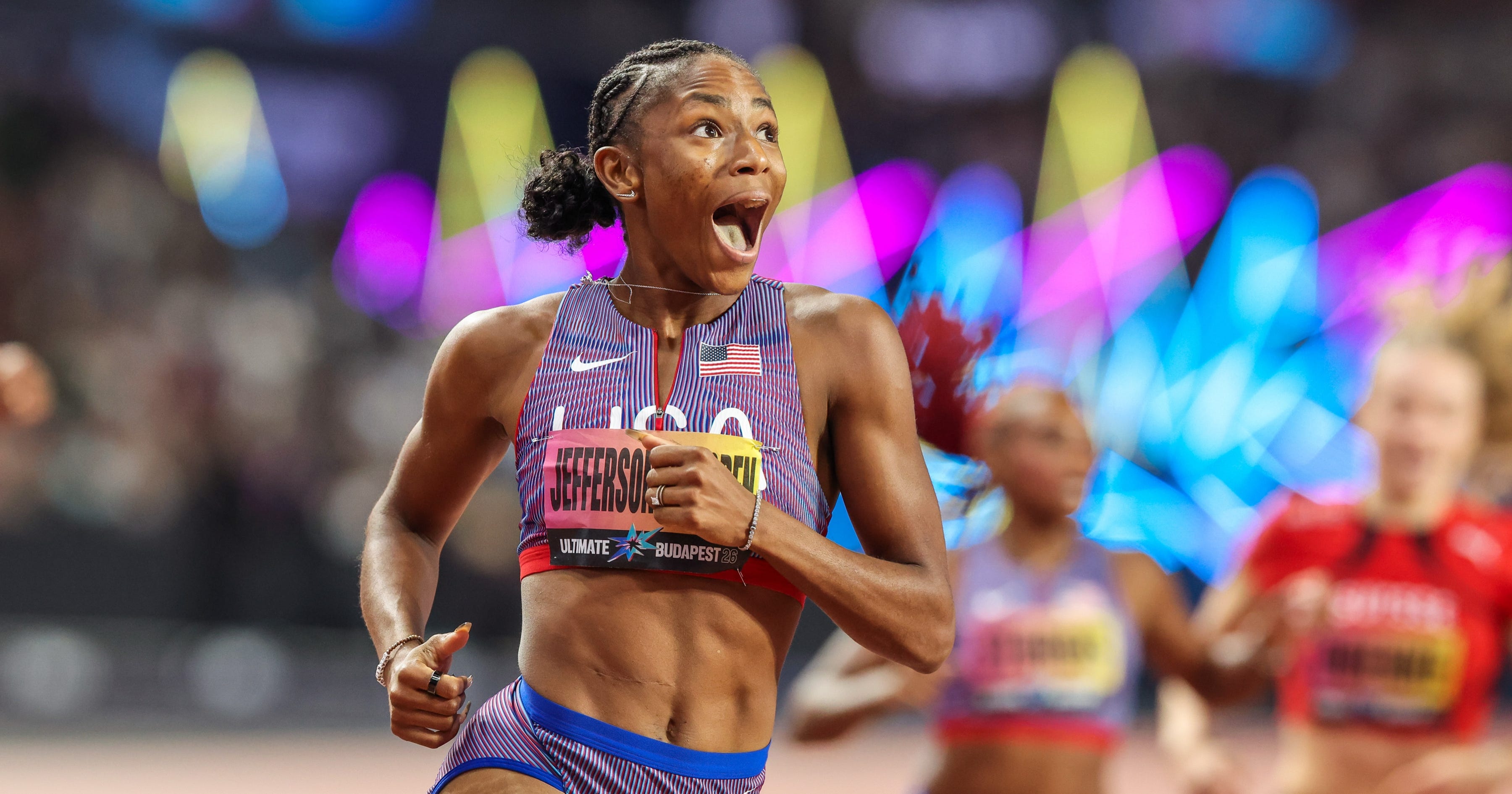
There are two athletes in particular to whom Seb Coe should be sending a gift basket (along with their $300,000 checks): Melissa Jefferson-Wooden and Kenny Bednarek. It’s one thing to have compelling narratives and close races, but track and field is still at its best, spectacle-wise, when the sprints are really fast. (It’s surely rubbed many Diamond League meet directors the wrong way all summer that the world leads in the women’s 100m and men’s 200m were still held by a pair of college kids.)
MJW’s 10.63/21.47 and Kung Fu Kenny’s 9.85/19.52 (plus a dethroning of World champ Oblique Seville) lent as much credibility to the meet as any of the pomp and circumstance. While we all dream of a day when times don’t matter at all, relative times do, and if the results from Budapest had paled in comparison to, say, a run-of-the-mill midsummer Diamond League, that would’ve taken some of the shine off the victories.
Giving fans something fun to watch also comes down to presentation, and here World Ultimates again delivered a mixed, but mostly positive, product. A lot of hay has been made of the “prediction” graphics, whether it’s predicting Josh Kerr to finish 13th in a 12-man 1500m or Marileidy Paulino to have less than a coin-flip chance at a 400m victory during her undefeated season. Did they ask someone’s grandma to drink a bottle of wine and then ask ChatGPT for those graphics? Sure seems that way! But the trial-and-error process does include, well, errors, and it’s highly likely we won’t be seeing those (at least in that form) again.
On the bright side, the broadcast was well-shot and densely packed, with few commercial breaks and the focus largely upon the action on the field. The beauty of a three-day championship is that, in order to get all of the finals into nine hours of television, you need to cram them in. 28 of the 40 items on the schedule were finals, and because the 100m, 200m, and hurdles semis were on the same day as their respective finals, they didn’t feel like nearly as much of a time-filler.
If there’s one nitpicky critique, the U.S. broadcast still focused understandably, but unnecessarily, on the upcoming Los Angeles Olympics and included some NBC hallmarks like an interstitial feature on Sydney McLaughlin-Levrone’s journey to motherhood despite her total absence from the program. (At least Usain Bolt was in the stands, so highlighting his legacy at other parts of the broadcast sorta made sense.) Our nickel’s worth of free advice is that framing the next two years of professional track and field around “here’s what this means relative to LA28” won’t build the desired hype, and will instead make everything else seem small in comparison to the Olympic behemoth.
Speaking of trial and error, the “not everybody gets a trophy” attitude was a bold, and probably necessary, step toward making track and field an exciting TV product. But like the other attempted innovations, it wasn’t perfect. Frankly, it didn’t really feel like anybody missed the 10,000m. But it feels like the steeplechase could’ve easily slotted back in, especially in a straight final, to make the event feel a little more completionist. There’s really not two ten-minute windows across three days that couldn’t be filled with an event where falls are common and both world records are within reach?
The field event schedule and format was ostensibly designed to deliver a more exciting viewing experience, but the field events felt… pretty much the same as always: crammed in between track races and not exactly portrayed in order. The 8-8-4-2 series cutdown in the throws and horizontal jumps didn’t really leave a lasting impression beyond knocking hammer throw world leader Ethan Katzberg out of the competition early. If the goal is to deliver short competitions and save a little on prize purses, the best bet may be to keep the small fields, give everyone three attempts total, and add events like the shot put back into the mix.
The last, most ineffable component of the World Ultimate’s recipe for success is the act of making meaning. All the money and talent in the world goes for naught if the meet doesn’t feel significant. Budapest and its flashy stadium full of 20,000 fans helped hugely. Recreating the vibes of 2023, which was generally considered a smashing success of a World Championships, made earning the title “Ultimate champion” feel comparably weighty. If there’s one small critique here, WA needs to stop trying to get cute with the trophy/bracelet combo as prizes. No one was complaining about handing out medals before, and the lack of an official podium only created confusion about what a second- or third-place finish signified. Differentiation for its own sake isn’t a winning formula, and in the long term, it’s probably in everyone’s best interest to have World Ultimates hand out gold, silver, and bronze just like any other championship to prioritize legitimacy over novelty.
Here at the Lap Count, we respect effort. It’s better to have tried and failed—and best to have tried and succeeded! A lot of time, money, and energy went into making the first three days of World Ultimates a success; the key now is to keep that same “let’s try something new” attitude toward adapting, evolving, and honing the concept to something that’s truly sustainable over time.
It’ll be a tough needle to thread for the next edition to follow the Olympics in 2028, but it also presents a great opportunity to create genuine momentum for enduring fan interest. If done well, World Ultimates will be where Olympic champs head after LA instead of Dancing With The Stars. World Athletics has something real on their hands, and whether or not we’ll be talking about “Ultimates” decades into the future will depend on what they do with it.
Earning $150K The Hard Way
World Ultimates had a huge prize purse, with $150,000 for first on down to $2000 for 16th. Despite that, it was a little weird that there weren’t silver or bronze medals—or their equivalents in obelisk form—given to the runners-up and or third-place finishers at World Ultimates.
Perhaps that’s the innovation that saves track and field… the elimination of what one could technically argue are the world’s most prestigious “participation trophies.” For the sake of this section, let’s go ahead and give into that crankish notion. In our increasingly zero-sum world, it truly can feel like if you ain’t first, you’re last.
But we’re also living in an era of unquestioning celebration of getting one’s bag. And whoa buddy, you better believe we’re gonna gas up one athlete in particular who got paid in Budapest, despite not actually winning a race.
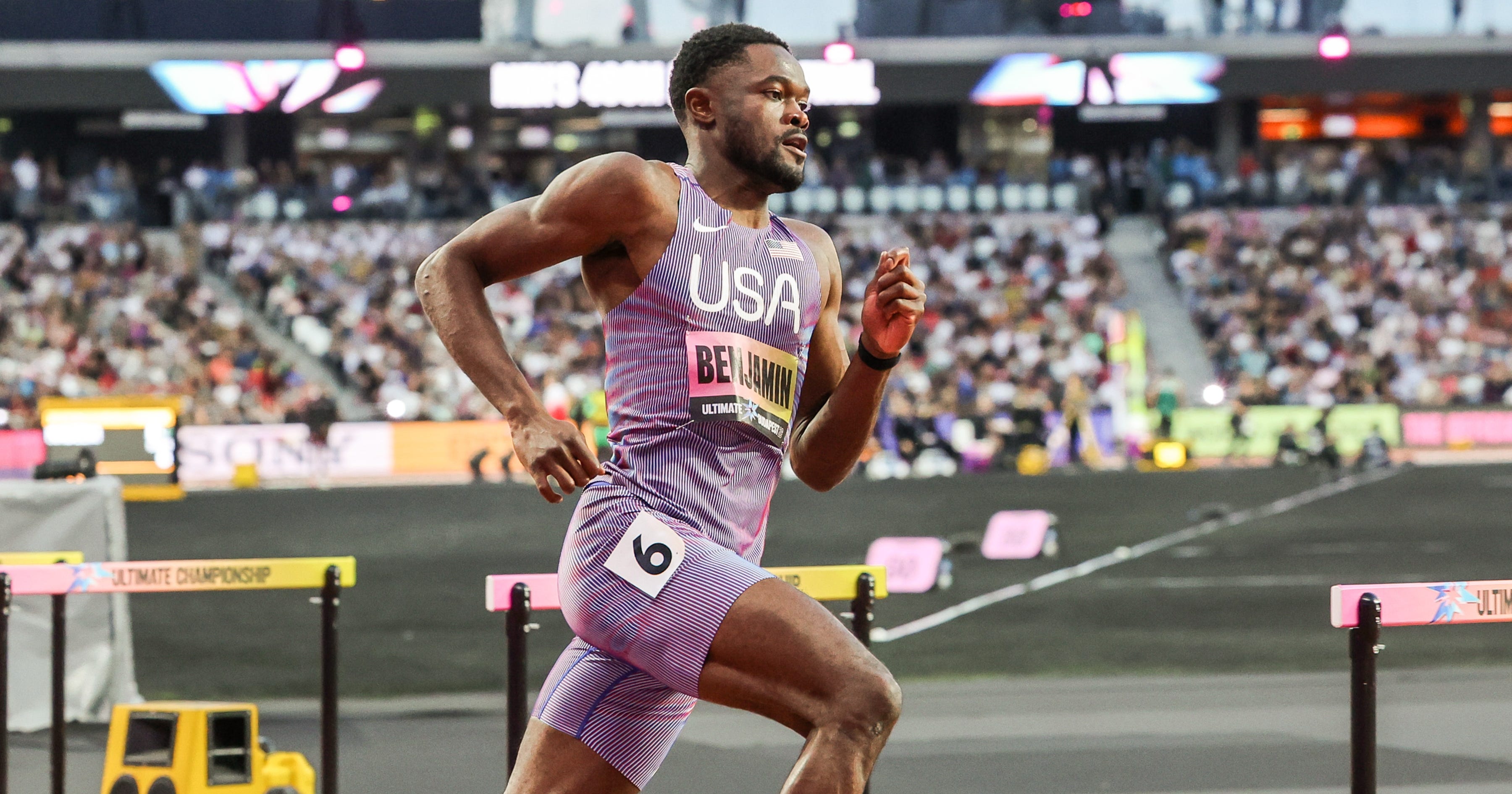
We’re talking, of course, about Rai Benjamin, who—as Noah Lyles pointed out—earned $150,000 the hard way.
On Friday at 7:19pm, local time, Benjamin clocked a comfortable 44.28 in the semis of the open 400m, placing third in his heat. His roughly 23 hours of rest would be the most he’d get all weekend. At 6:18pm the following day he went 44.15 in the final to finish second behind Collen Kebinatshipi, beating every 400m specialist at their own game except the Motswana who has been on a historically great tear this season. At 7:57pm Benjamin was then summoned back to the track for the semis of the 400m hurdles. He ran 47.49—light work for the American record holder, even with two 400m efforts already in his legs within the preceding 25 hours—for second in his heat behind Alison dos Santos. Then on WUC’s final day of action, at 6:36pm, Benjamin had to hurdle again. Given that he was facing another man on a historically great tear in dos Santos, even in posting a season’s best of 46.40, Benjamin finished second.
That’s 1,600 meters worth of racing in a span of just under 72 hours. Only athletes who contested the 5000m covered more ground, but certainly not at the tendon-shredding effort at which Benjamin did. In terms of damage self-inflicted to one’s body, his accumulation of effort takes the cake. And he was summarily rewarded for it! Ka-ching!
We’ll drop the facade here. The reason Benjamin’s busy weekend was so cool wasn’t that he walked away with $150,000. It was that the reigning Olympic and World 400m hurdles champ very publicly challenged himself and found a way to keep the sport fresh and interesting for himself.
Femke Broeders-Bol’s pivot to the 800m provides one archetype for athletes in this position: total reinvention in a different, also brutal event. But Benjamin’s approach might be even more dastardly: hamstringing yourself by running rounds and finals of every event you’re legitimately world class in at one, condensed competition.
Benjamin wasn’t the only athlete who doubled in Budapest. Melissa Jefferson-Wooden and Kenny Bednarek doubled his payday through the more conventional 100m/200m doubles, and three distance runners (Cole Hocker, Jess Hull, and Freweyni Hailu) pulled off the 1500m/5000m combo. But Benjamin’s ambitious endeavor sent two clear messages with larger implications.
First, in the moment, the World/Olympic champion helped boost the credibility of the event itself. By putting his body on the line rather than taking the safe approach, Benjamin was implicitly saying that Budapest was worth more than just a standard appearance. In a year where plenty of folks took the entire season off, or skipped USAs, or danced back and forth between committing and withdrawing from various high-profile meets, he did more than show up; he showed out.
Second, Benjamin sent a broader message on behalf of hurdlers everywhere. While he claims that his season-long dalliance in the flat 400m was just for fun, it also helped push back on the false narrative that the 400m hurdles is a place where failed sprinters retreat. King Ben is choosing to hurdle when he clearly could be a world-class athlete in either, or this year, both events. And not only that, but he didn’t use his duels with Kebinatshipi as an excuse to dodge newly-minted world record holder dos Santos. The long-awaited reunion of the “Big Three” in Budapest for the first time since the 2025 World final was one of the highlights of the event, made possible by Benjamin’s commitment to facing his rivals head-on.
When the best in the world perform well in their signature event, it generally appears effortless. But with repeated exposure, we lose an appreciation of just how special that is. So credit to Benjamin for giving us something new to take in, while reminding us that to be at or near the top of your event, it takes a truly miserable amount of effort.
Kyle’s View From Budapest
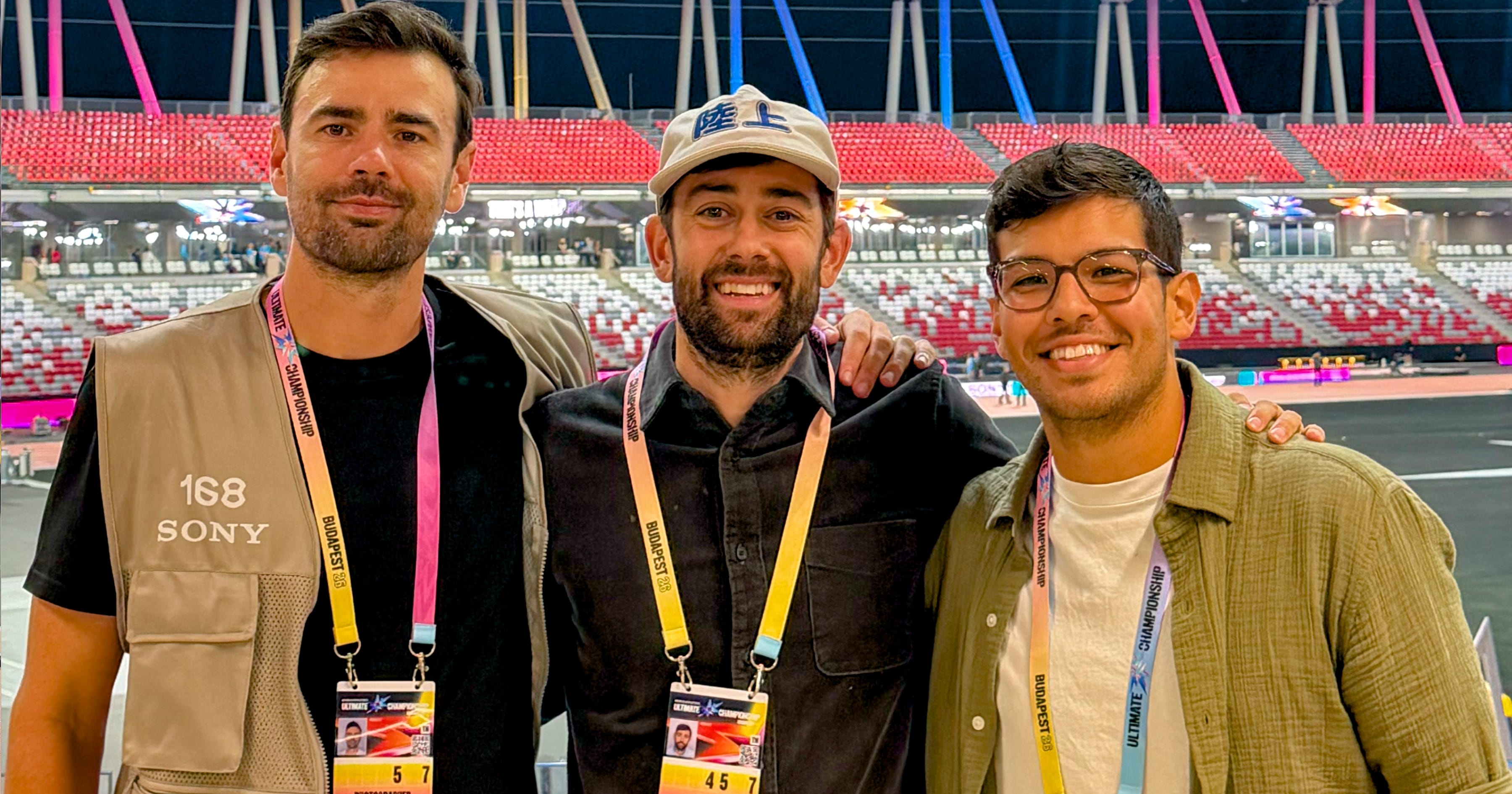
To paraphrase Billy Joel… It’s still track and field to me.
Some fans seem to forget that no matter how it’s dressed up, repackaged, branded, and ultimately presented, if you bring together a bunch of track athletes for any sort of athletic competition, it’s going to be a track meet.
Which is great news for the writers and readers of this dorky newsletters, because we love track and field. For most of us, enjoying a race doesn’t require neon lights, a painted infield, odds-based predictions, video packages, or new camera angles. Hell, the TV can be muted and it’s still fun! Which is why it’s important to remember that you aren’t the target audience for any of these innovations.
But even if you strip away the flashy visuals and ambitious scheduling, the World Ultimate Championships was simply a fantastic track and field competition. Which was crucial, because the event really needed to live up to the hype!
From when it was first announced, I felt that the novel event slated to be held in Budapest was a must-attend. That’s partially because the 2023 World Championships was an all-time sporting event, and the opportunity to relive that was a no brainer. And it’s also because it was instantly billed by critics as World Athletics’s answer to ATHLOS and Grand Slam Track, critics who asked a handful of very valid questions:
1. Does the sport really need this?
2. How will it be different from a World Championships or Diamond League Final?
3. Why are certain events being excluded?
Not only did World Ultimates need to blow people away, it needed to satisfactorily answer these questions. By Sunday, the general fan sentiment—both those in the stadium and watching at home—was that the meet was a productive step in the right direction. And now with the experience behind us, we are in a better position to answer those three concerns with more qualitative information to guide us.
First, yes, the sport really does need this. And by “this” I mean that it needs the energy and commitment to keep evolving, because the landscape of how sports are consumed has shifted significantly in the last decade.
Athletics has the advantage of being one of a few truly global sports. That was an inherent advantage for a long time because most professional sport leagues were concentrated to certain regions, but that’s no longer the case. While talent in the NBA becomes increasingly more international, the NFL is exploring European-based franchises, and the English Premier League teams are hosting matches in the U.S.
As phones become permanently imprinted in our palms and as attention spans wane, what it means to follow a sport is now condensed to watching highlights on Instagram and following content creators. Few sports are better positioned to capitalize on this trend than the one that only takes ten seconds to begin with.
There will always be the die-hard fans that are happy to sit down for three hours in front of a television to consume an entire meet. But that’s not the entry point for the ones we hope to win over. To succeed on that front, it starts digitally and at some point hopefully transitions into an interest in live events. Fans and athletes have been asking for change for a long time, but have a tendency to resist it when it comes. That’s why World Athletics needed a sandbox environment to test things out and the World Ultimate Championships provided takeaways that can now be applied elsewhere.
And that right there is one of the biggest differences for the World Ultimate Championships—World Athletics fully owns it. The event sits outside of their contract with Dentsu, and the Diamond League Final is 15 independently owned and operated meets. The leadership in this sport knows what direction it needs to go, but you try getting that many stakeholders to agree to follow your lead. Additionally, because the financial health of the organizing body is so dependent on its Olympic stipend, there are limitations to how much Coe and Co. may be willing to depart from the status quo. Remember: it was only a few years ago that mixed relays and repechage heats were being added to the Paris programs because more track equals more tickets.
On to question number two—that’s still a bit murkier. Despite our impulse to expand track, it’s obvious that the World Championships and World Ultimate Championships should not coexist in the same year… and neither should WUC and the Diamond League Final. WUC coming just a week after the DL final made things felt like a rerun at times, and outcomes would have been merely identical had it not been for the few athletes who skipped out on one to focus on the other. Come 2028, it’d be prudent to combine the two. The Diamond League point system is a good idea in theory, however, the athlete selection is riddled with conflicting interests and stars only have to run a couple to qualify. In practice, the World Ranking system is a more inclusive and accurate representation of identifying top athletes and it does a more effective job of establishing a purpose to the regular season.
And now onto perhaps the touchiest topic: the most controversial decision to not include every possible track and field event. It’s been a tactic employed by basically every new venture in our sport. While I enjoyed only having to take a couple days of PTO to attend the three-day event, I would also have found a way to watch every morning and evening session if it went on for three weeks straight. But my willingness to plan my vacation around a track meet isn’t what World Athletics was concerned with. Unfortunately, to fit the entire program into a shorter window and to pay athletes a $10 million prize purse, you have to make cuts. It sometimes feels like the sport as a whole is a sinking ship, and in order to stay afloat a few people are being sacrificed to save the rest.
For all the talk of more storytelling in the field events, it felt like that promise still came up short. Some new graphics, fewer athletes, and slightly different formats made things move quicker. But there still wasn’t undivided attention being placed on early attempts, and as always, there was a focus on the highest or final attempts. As a track guy, I have always found that pole vault and high jump were the easiest to follow because of the natural progression of raising a bar. And if you were building a venue from scratch for the long or triple jump then no one would have ever suggested putting it inside a gigantic oval stadium, which suggests there are opportunities to get creative.
Despite the lack of fan zones, medals, or a mass-participation race, the World Ultimate Championships still felt pretty much like a World Championships, and the athletes certainly enjoyed it. That’s because it was a fan-first event, and when you put the fans first then the athletes get rewarded.
For anyone who has been following this newsletter for the past few years, you know I have long supported creative change and finding new ways to progress the sport. When I was approached by Grand Slam Track in 2024 to join the venture, those intentions were something I could rally behind. Although that didn’t work out for reasons that were well outside my control, it is good to see that so many of those original ideas are now in action. Hopefully they can be sustainably executed for many years to come because this track and field thing is pretty great, and deserves the world’s attention more than once every four years.
More News From The Track And Field World 📰
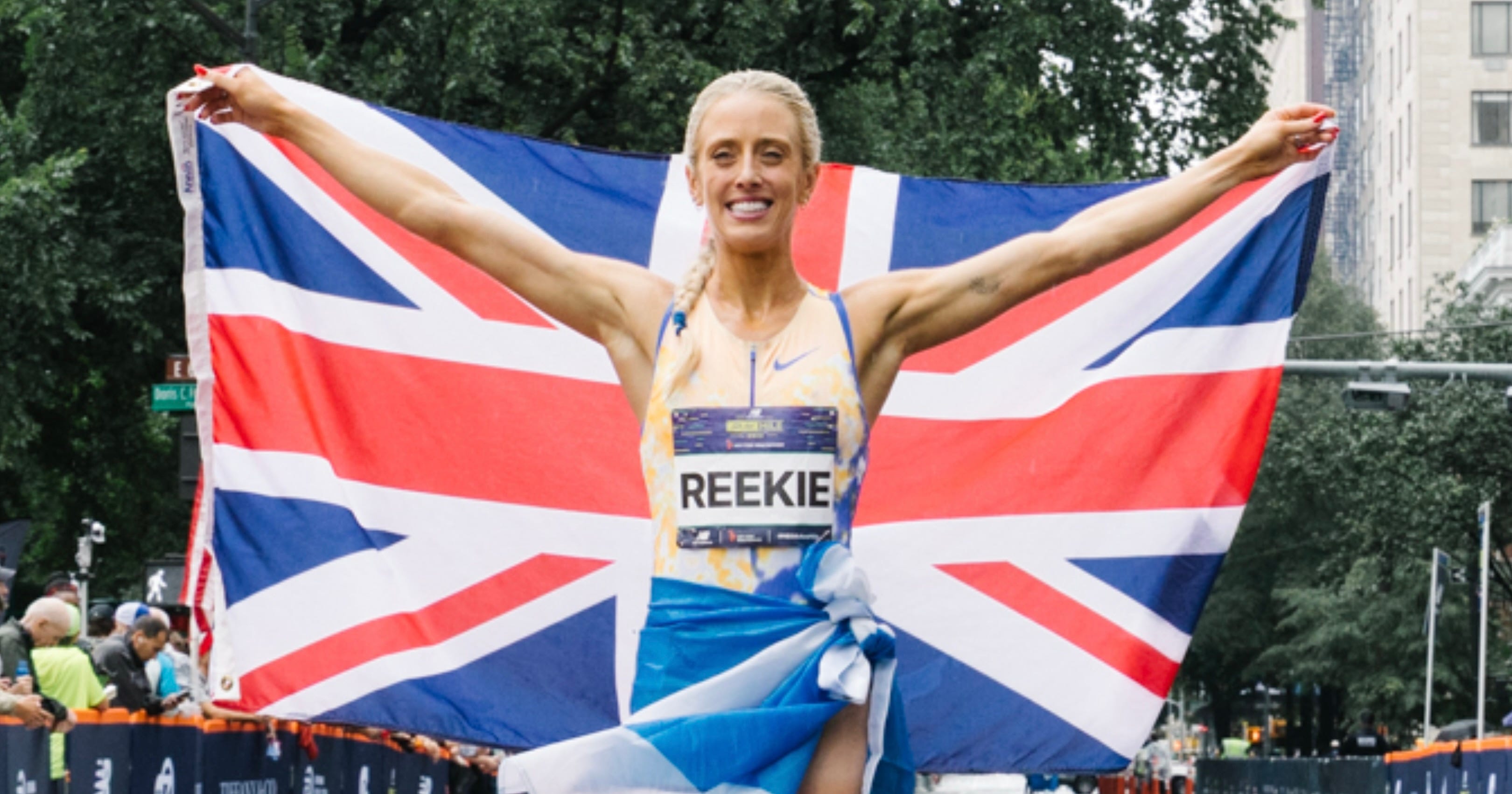
– Just as a friendly reminder, the World Road Running Championships are set to get underway this weekend in Copenhagen.
– And another friendly reminder: ATHLOS’s sole 2026, London-based meet will go down on Friday. Alright. No more reminders for this newsletter, friendly or threatening.
– At the 5th Avenue Mile, Jemma Reekie established a new course record, breaking the tape in 4:13.8; Marco Langon capped off his first professional season with a win of his own, going 3:45.0.
– Zouhair Talbi became the first American man to ever win at the Great North Run, going 59:47, while Brigid Kosgei impressed with a nearly two-minute victory over the field in 1:06:15.
– World Athletics has announced that Nairobi, Kenya, will host the 2029 World Championships, while Munich, Germany, will be the site of the meet’s 2031 edition. The Nairobi—which sits nearly 6,000 feet above sea level—news was likely bet with a collective “let’s go” from sprinters and field eventers, and a loud groan by distance athletes.
– And, lastly but hardly leastly, congratulations to Emma Coburn on the arrival of her second child!
Interested in reaching 20,000+ dedicated runners and track and field fans? Advertise with us here.