

Moroccan And Rolling ⏱️
Lap 275: Presented by New Balance
Presented by New Balance
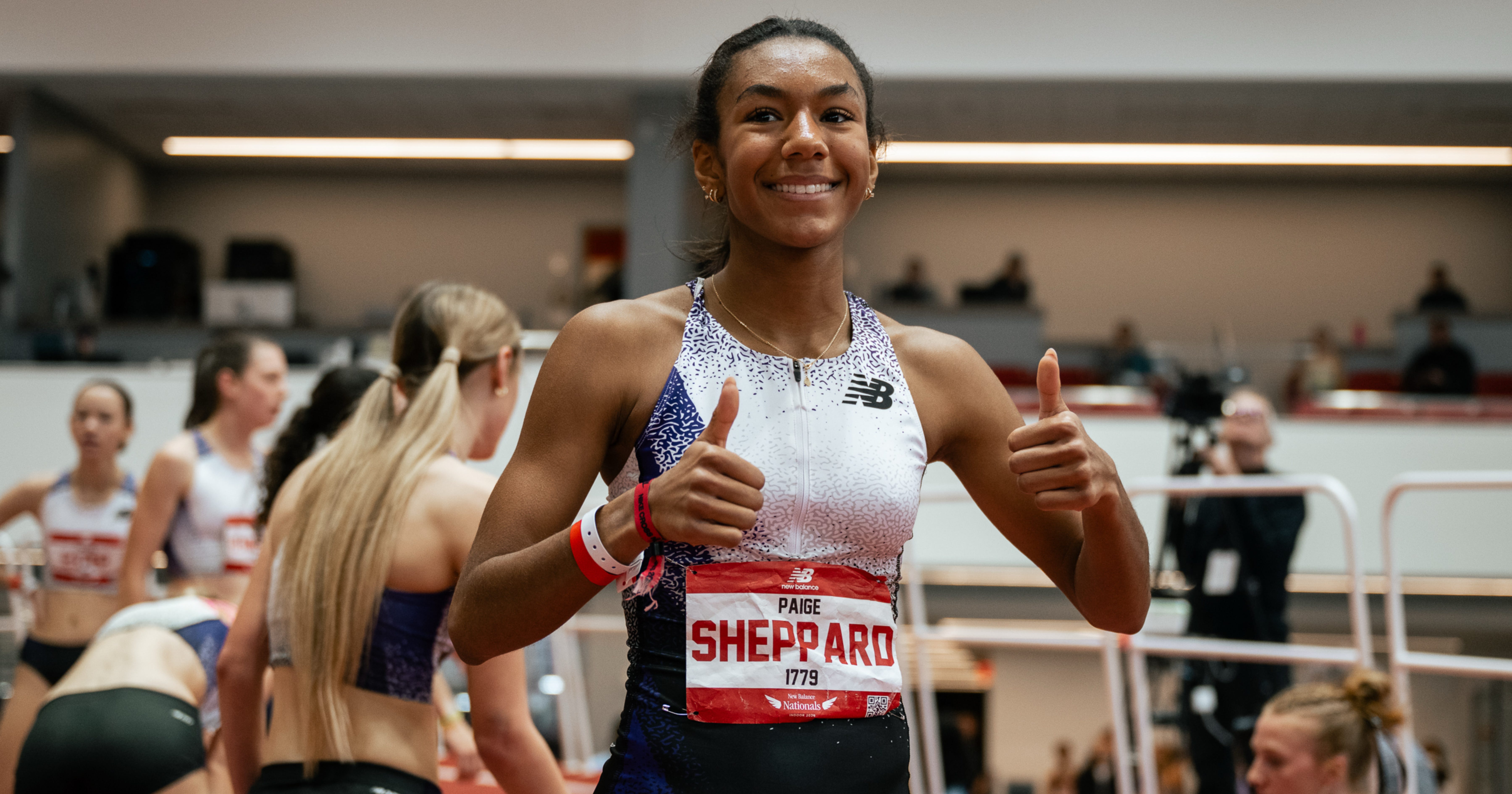
Union Catholic (NJ) junior Paige Sheppard is one of the nation’s brightest middle distance stars. Sheppard, a New Balance NIL athlete, has won numerous New Balance Nationals titles, currently has the fastest 800m time in the country, and ran a U.S. No. 8 all-time 1600m days after recording this interview at 4:28.77.
Sheppard sat down with CITIUS MAG to breakdown her postseason plans, talk about how she’s grown as a racer, and give insights on her early decision to commit to Stanford.
The following excerpt has been lightly edited for length and clarity—the full interview is coming soon!
CITIUS MAG: The 800m has been what you’ve been focusing on individually this year. Going back to your tactical 2:05.07 win at Arcadia over a great athlete in Braelyn Combe, what did you learn from that race?
It kind of taught me that just because I won indoors last year, doesn’t mean that every race is necessarily mine—there’s going to be opportunities where it’s going to come to the line and I’m gonna need to really dig deep. There’s gonna be races like that where it’s gonna take a lot more grit.
With the World Junior Championships coming to the U.S. in August, you’ll be targeting the U.S. U20 Championships as your main postseason goal. When you’re approaching a meet like this with some slightly more experienced athletes you’ll be racing, how does the preparation from a training and tactics perspective vary?
I’ll probably call back to my mindset when I ran the USA Championships during the indoor season. The thing that I told myself is that I had nothing to lose. I knew the pressure wasn’t on me, it was more on the rest of the field because they were going up against a high schooler. I was just out there to have fun. That mindset will definitely shift a little bit because I do really want to make the team this time, so I’ll be going in with a little bit more grit, and just go out there and do what I know I can do.
A few weeks ago you announced your commitment to Stanford. What made Stanford stand out as the choice for you?
I don’t know exactly what I want to do in life, but I’ve known since freshman or sophomore year that Stanford was where I wanted to go. I’d never been to that part of California or anything, but it was just kind of calling to me. I got the opportunity this year before Arcadia to see Stanford. The environment and how they all supported one another, cheering each other on during reps at practice, it was an amazing feeling. That and the better weather compared to Jersey after such a harsh winter all led me towards that was where I wanted to be.
Before we go, talk me through what your shoe rotation for a week of training looks like as a New Balance athlete.
Right now I’ve been wearing the Ellipse a lot, and not even just the one shoe but all the different colorways. I think what’s so great about the New Balance shoes is that they’re really stylish and they go with a lot of different outfits. I actually just got a pair of shorts last week that match the Gabby Thomas Ellipses that are pink, so it’s really fun to put together outfits. So the Ellipse right now has definitely been a big strong runner, but the SC Elites are also great for long runs or workouts, and the 1080s are always great for an easy run.
Compiled by David Melly, Paul Snyder, Kyle Merber, & Paul Hof-Mahoney
It’s Time To Stop Sleeping On The Rabat Winners ⏰
With the third edition of the Meeting International Mohammed VI d’Athlétisme in Rabat in the books, the Diamond League season is officially 20% complete. And while the early action on the circuit can sometimes struggle to attract all the big names, we still saw some familiar faces in Morocco. Valarie Sion won her 21st Diamond League discus competition. Kenny Bednarek looked supremely relaxed while dropping a 19.69 200m and blowing away a strong field. Yared Nuguse picked up the fifth DL win of his career in the 1500m, more than any other American distance runner. And of course, hometown hero Soufiane El Bakkali capped it all off with a win in the steeplechase, his sixth in nine years at this meet, running the second fastest time of his career in the process.
And yet, there were also notable absences. After two wins in China, Shericka Jackson skipped out on the 200m this time around, as did Masai Russell in the (non-DL) 100m hurdles. There’s no sign yet of Femke Bol or Keely Hodgkinson on the circuit, which takes some of the shine out of the 400H and 800m lineups but opens the door for other performers. And after dropping a sub-44 in Xiamen, World champ Collen Kebinatshipi wasn’t on the 400m start line this time around, which led to Jacory Patterson defending his title from last year and claiming his fourth career DL victory.
The glass-half-empty crew will look at this as a negative—in a year where regular-season racing should have greater emphasis, where are all the stars? It’s a valid point. But the silver lining of that half-empty mixed-metaphor glass is that Rabat was full of breakout performances from athletes who’ve been really, really good for a while but haven’t gotten their time to shine.
Over the last two seasons, Emma Zapletalova has improved her 400m hurdles PB from 54.28 to sub-53. The 26-year-old Slovakian secured a World bronze in Tokyo last September, finished second behind Bol in last year’s DL final, and holds the flat 400m national record for Slovakia as well as over the hurdles at 50.76. But until Sunday, she’d yet to pick up a Diamond League victory. Not only did she win in Rabat, she ran 52.82 to handily beat Anna Cockrell, set the world lead, and crack the top-20 all-time. For the front half of the 2020s, the Femke-Sydney dominance of the event pretty much sucked up all the air—Diamond League or otherwise—in the 400m hurdling room. But Zapletalova has been in the mix for a while now and that win felt long overdue.
Similarly, Swiss 800m phenom Audrey Werro had a breakout moment or two in 2025, most notably winning the DL final in front of a home crowd in Zurich. But she’s also done a lot of running in Keely Hodgkinson’s shadow. Werro finished second in two of the most consequential races of the indoor season: Hodgkinson’s record-setting run in France and the World Indoor final, where, of course, Keely again emerged victorious. You’d be excused if you missed the fact that, in the World final in Torun, Werro became only the second woman in 20 years to break 1:57 indoors… because, of course, she was a full second behind Keely’s 1:55.30 win.
But Werro is 22 years old and just opened up her outdoor season with a 1:56.56 win over Tsige Duguma and, just as notably, reigning World champ Lilian Odira. As an 800m runner, Werro is of the “go out really hard and hang on” variety, which can get you in trouble in championship-style races. But in the rabbited DL format where everyone wants to run fast, it’s got a much better success rate.
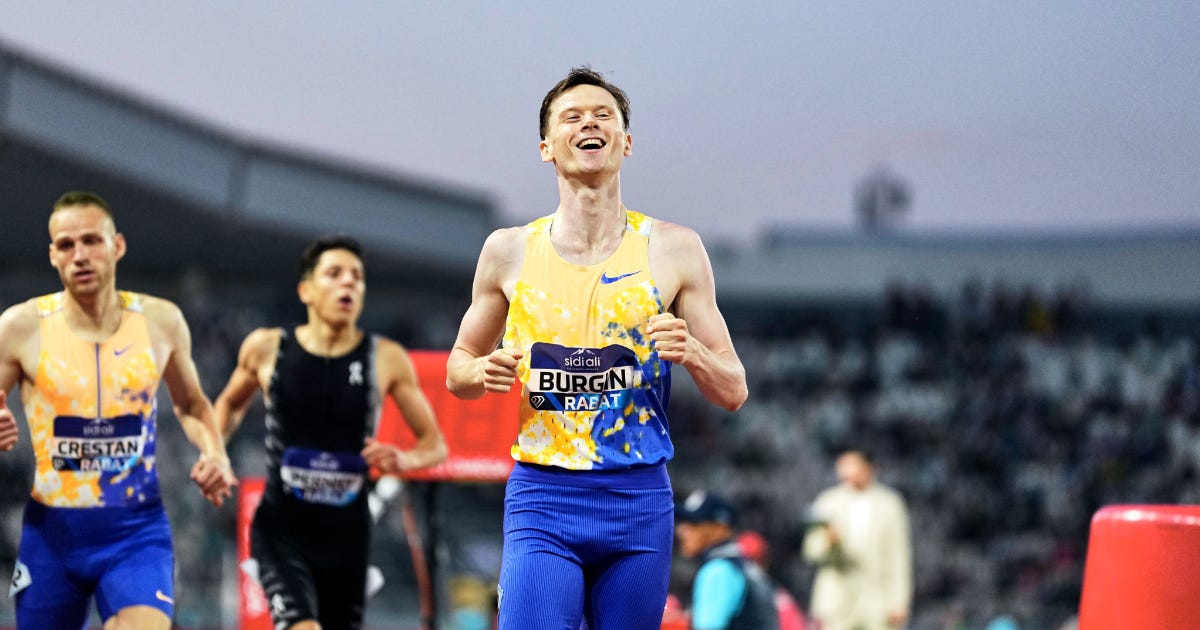
Speaking of… Odira wasn’t the only 800m World champ to fall in Rabat. Emmanuel Wanyonyi losing was probably even more surprising, given that his chief rival Marco Arop wasn’t in the race. Instead, it was 24-year-old Brit Max Burgin who got the better of him. It’s hard to say Burgin “sneak-attacked” the field, because he was out front from the gun, but that’s what it felt like. Burgin was the only guy to go with the rabbit as the rest of the field hung back, and by midway through the second lap when Wanyonyi started his move, the gap was too much to overcome.
Burgin was rewarded for his bravery with his second-career DL win, but his first since his breakout run in London in 2023. He’s one of those guys who may not be on the tip of most non-British fans’ tongues, but he’s been in the mix for a while now, finishing sixth at the Olympics in Paris and sixth in Tokyo last year. While he’s just 2-8 against Wanyonyi head-to-head, both of those wins came in Rabat as last year Burgin finished second to Wanyonyi’s third when both men lost to Tshepiso Masalela. Wanyonyi fans shouldn’t be too worried, however, as the Kenyan started last year with two 800m losses before picking up four wins in a row and, eventually, the World title.
The last, but certainly not least, first-time Diamond League winner was Cambrea Sturgis, who took the win in the 200m in 22.21. Shaunae Miller-Uibo was the pre-race favorite but got a very poor start and ended up fourth, which meant that Sturgis’s biggest competition ended up being fellow American Kayla White, who took second in 22.28. Sturgis, you may remember, was the 2021 NCAA champ over 100m and 200m, but since turning pro she hasn’t seen the same level of success. She’s only made a U.S. final once (finishing fourth in the 200m in 2022), and until this season she hadn’t run close to her 10.87/22.11 PBs in over three years.
But Sturgis has been on another level so far in 2026, finishing first or second in 11 of her 12 open races this season. She set a PB in the 200m at the Kip Keino Classic, running 21.93 on Gabby Thomas’s heels, and ran her fastest 100m in three years last weekend. She’s been on quite the Tour de Africa, as Morocco is the fifth country on the continent she’s raced in over the last two months. Now she’s won her first Diamond League meet, arguably the biggest win of her professional career to date.
The absence of other top athletes doesn’t diminish any of these performances by any means; it merely clears the way to appreciate excellence that’s been skimming just below the surface. Just as importantly, it adds new wrinkles to season-long narratives that could otherwise get a little repetitive. Next time Shericka Jackson or Keely Hodgkinson toes the line, they’ll be racing a rival that’s coming off the confidence and good vibes of a big win. And next time Cambrea Sturgis, Audrey Werro, or any of the other big winners out of Rabat take on the top dogs in their respective events, they’ll do so knowing without a doubt that they’ve got what it takes to contend.
“Après Moi, Le Déluge:” Steeplechase Edition 🌊
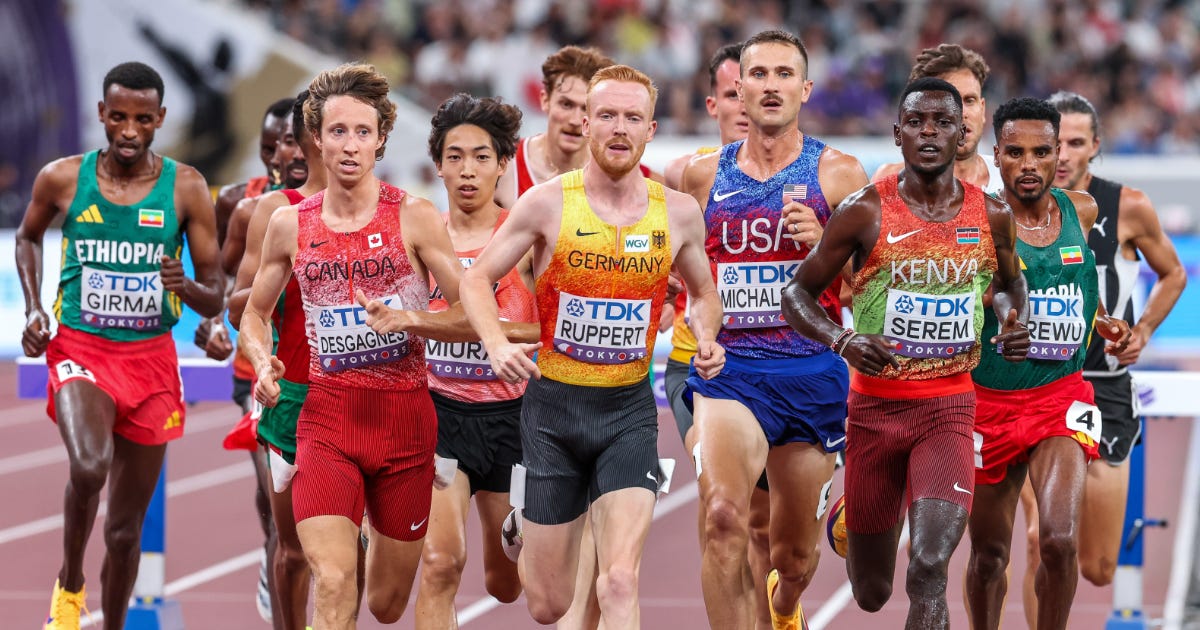
The biggest steeplechase news out of Rabat wasn’t Soufiane El Bakkali getting back to his winning ways. It also wasn’t World champion George Beamish finishing 13th, albeit in a perfectly respectable 8:16.30 season opener. It was runner-up Frederik Ruppert.
Just like he did at Rabat last year, Ruppert used a strong last lap to reel in, but not quite overtake, El Bakkali and got a big PB in the process. Unlike last year, however, where the winning time was 8:00.70 and Ruppert ran 8:01.49, this time the 29-year-old German knocked another 3+ seconds off his best, clocking a 7:57.80.
That time landed Ruppert at 12th on the all-time list, and he, along with third-placer Simon Koech, joined the still-small club of sub-eight-minute steeplers that now has 15 members. Most notably, however, Ruppert became the first man not born in Africa to crack the barrier.
Of those 15 sub-eight runners, ten are Kenyan (eleven if you count Saif Saaeed Shaheen, who was born in Kenya but represented Qatar internationally), two are from Morocco, and only one, surprisingly, is Ethiopian. That one, of course, is world record holder Lamecha Girma, who’s run ten full seconds faster than the second-fastest Ethiopian in history.
After Mahiedine Mekhissi-Benabbad and Evan Jager both got tantalizingly close, running 8:00 in 2013 and 2015, respectively, it seemed like a matter of time before an American or European broke the barrier. When Jager took his fateful fall over the final barrier in Paris en route to his 8:00.45 PB, it seemed like a foregone conclusion he would be the guy… alas, the cruel track gods had other plans. Instead, it took nearly eleven more years and a guy from a different continent.
Since 2015, 15 of the 20 American and European Olympic distance records (men’s and women’s 800-10,000m) have been broken. The ones that haven’t are Wilson Kipketer’s and Jarmila Kratochvílová’s European 800m marks, Bernard Lagat’s 1500m American record (depending on what you count), and both men’s steeplechase marks. In the age of supershoes, Wavelights, and bicarb, the men’s steeplechase has remained a stubborn outlier to the trend of past times getting blown out the window.
It’s not a steeplechase problem: the women’s sub-nine list has gone from one name to 17 in the last decade, and eight of the fastest marks have been run since 2024. In 2020, running 9:27 would get you on the U.S. all-time top-10 for women; now that cutoff is 9:10.72. In the same race as Ruppert, Matthew Wilkinson moved up to U.S. #7 all-time with his 8:09.56 run, but only one of the six men in front of him (Kenneth Rooks) ran his PB this decade. By comparison, every member of the women’s top-10 ran her PB in the last eight years, and seven of the ten did so in the last three.
Does bicarb simply not work on American men’s stomachs? Do European men respond differently to carbon-spike technology? If you look at the trajectory of all the other mid-distance and distance events, that certainly doesn’t seem to be the case. Unless we’ve discovered some sort of crazy scientific anomaly where the combination of running, jumping, and splashing affects one gender and one regional subset in a totally different way than every other athlete and event, a simpler explanation must be true: we’re overdue.
The steeplechase is one of those events where big time jumps are possible, and in championships they’re downright common. Look at Ruppert last year, going from 8:15 to 8:01 in one race. Or Doris Lemngole deciding to take the kid gloves off and improve the NCAA record from 9:15 to 8:58 in one season. Kenneth Rooks’s silver-medal winning run in Paris was a nine-second PB; Courtney Frerichs’s 2017 Worlds breakout was a 15-second improvement. Other men will follow Ruppert under the barrier, and it might not even be someone who’s particularly close at the moment.
The 800m and 1500m have gotten faster not just because of technology but because more races are paced for faster times, and more fields are full of athletes who have both the belief and capability to run in the 1:42s and 3:20s. For the better part of the last decade, the men’s steeplechase on the elite international level has been El Bakkali, Girma, and then a huge gap, which can create race-within-a-races where the chase pack has no help from rabbits. But just like Faith Kipyegon and the women’s 1500m, the rest of the world is starting to be able to stick closer to the frontrunners for longer, and the times will follow.
In Rabat, Frederik Ruppert became a Roger Bannister of sorts, and in the next year or two, Bannister’s famous words—“après moi, le déluge,” French for “after me comes the flood”—will start to feel true. The number of Europeans and Ethiopians under eight minutes will not stay at one for long, and an American sub-eight is coming sooner than we might imagine.
What’s In A World Ranking? 📝
As evidenced by recent changes to the voting procedure for the end-of-year awards, World Athletics has proven itself to be a governing body that listens to its constituents. That’s why after now having a week to fully digest the new standards and qualifying procedures for 2027, this newsletter is now more prepared to dive into the implications and perhaps make a couple suggestions.
To quickly recap the updated system, there key takeaways:
The standards are harder
Rankings are more important
Meet quality matters
In its press release, World Athletics noted that they’re targeting 40% of qualifiers to earn their spot via entry standards. Using the 2027 standards, last year’s qualifiers would have been achieved by 32% of the full World Championship field—meaning there is a big bet on another significant increase in depth, or that 40% number is a bit facetious. The world rankings only became relevant in 2020, and every year a greater emphasis has been placed on them. Like boiling a frog, the infrastructure of the sport is slowly changing without everyone recognizing it.
Why is World Athletics walking further and further away from entry standards? Because they’re not stupid. The sport is better when the top athletes are competing against one another regularly. And when an athlete can time-trial a qualifier at an indoor college meet in December and then disappear until championship season, that’s bad entertainment. At the same time, they want to protect the stars and guarantee that they’ll be on the biggest stage at the end of the season, so expect the various wild cards to remain (and possibly expand).
While the headlines focused on the eradication of the BU Indoor Track, it’s not a targeted attack. Instead, all races on 200m tracks will no longer be eligible for standards nor will meets categorized below the “C” designation (they still will count for ranking points). The goal here is to consolidate the number of meets athletes are competing in.
By rearranging the incentives, World Athletics has made their stance clear: athletes are competing at way too many different meets. It’s difficult to follow where everyone is and it’s easy to avoid competition. Imagine a perfect world where every top professional competed in the same 10 meets—you would always tune in.
But there is an obvious problem with the finite number of lanes on a track. Chasing standards was also about accessibility. Any time, anywhere… if you’re fast enough you could prove it and make it to the big stage. This is different from other sports, where no matter how many home runs one dude might hit in a rec softball game, he doesn’t get to play in the World Series.
So here are three suggestions to improve on this gradual realignment of the sport:
Eliminate time standards entirely and replace them with an auto qualification quota. The issue with depending exclusively on rankings is that an athlete exploding onto the scene won’t qualify. Think about a guy like Cooper Lutkenhaus at the U.S. Championships, who ran the fourth fastest time in the world, but then wouldn’t qualify for Worlds. Instead just declare the top 10 time performances as automatically qualified.
Add a bonus to the performance score set in non-rabbitted distance races. One of the advantages of getting into the Diamond League is that athletes get into faster-paced races. Additionally, they get higher placement scores because of the “Category A” distinction so that’s twice the disadvantage. To help offset that edge, let’s throw some extra points to athletes who can run fast on their own.
Improve secondary races at Diamond League events. The pre-TV-window races at most DLs are considered “Category F,” despite being held in world-class stadiums that meet the highest technical requirements. Why not have a full program of high-level racing the night before at a higher categorization? From an organizer’s perspective, they’d love nothing more than to have top athletes on hand in case of a scratch in the main program. And from a planning perspective, that’s more opportunity for athletes on the fringe to set schedules earlier, while meets would have promotional and commercial benefits.
Ranking athletes is difficult, and inevitably some very capable athletes may miss out because getting five performances in an increasingly tight window can be difficult. No methodology is ever going to be perfect, and unlike sports such as tennis, the peaks and valleys of fitness and health are extreme. Look at the current world rankings and you’ll see some obvious flaws. For example, the three highest-ranked men on the track in the entire world are all 400m hurdlers.
With the World Ultimate Championships debuting this September, rankings are about to become a much more prominent part of athletics fandom. With a maximum of 16 athletes qualifying in each contested event, qualifying will require peak fitness and an ability to game the system. There are still a few months left; however, if we analyze the Road to the Ultimate tool (as of June 2nd) then there are some fascinating qualification stories already developing:
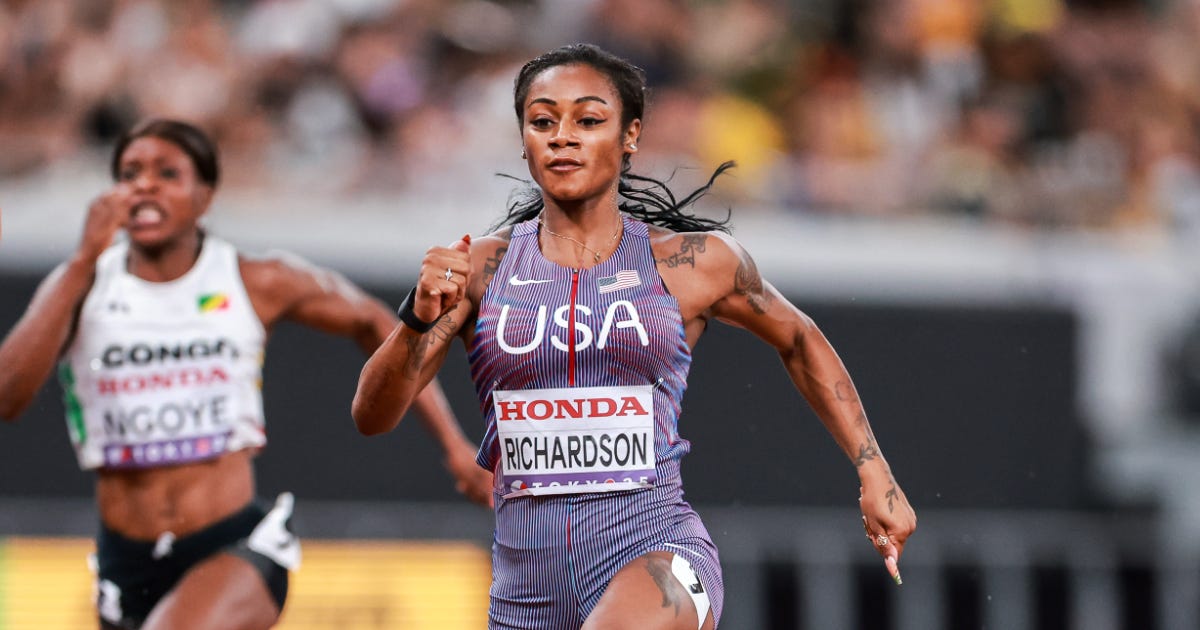
W100m - Sha’Carri Richardson and Adaejah Hodge are outside the quota.
W200m - Julien Alfred and Brittany Brown are outside the quota. Also, eight of the 16 athletes are American.
W800m - Tsige Duguma and Mary Moraa and are outside the quota.
M800m - Cooper Lutkenhaus, Marco Arop, and Djamel Sedjati are outside the quota.
M1500m - Josh Kerr, Yared Nuguse, and Timothy Cheruiyot are outside the quota. Also, four of the 12 athletes are Australian.
Letsile Tebogo is not in the 100m, and Kenny Bednarek is not in the 200m.
Olympic champion Grant Holloway has been injured all year, but has qualified.
Olympic 400m champion Quincy Hall ran 45.54 for eighth in Rabat, but has qualified.
While fitness improves and athletes race more, many of these apparent glitches will course-correct. But still, rankings discourse will be an integral part of the World Ultimate Championship experience.
More News From The Track And Field World 📰
– Despite our grousing last week about the current state of the NCAA regional meets, there were some impressive performances thrown down at both—here are a few: Alabama’s Samuel Ogazi (43.82) and Florida’s Justin Braun (43.99) went 1–2 in the East region 400m; Kanyinsola Ajayi ran 9.84 to lead five Auburn men who qualified for nationals in the 100m; all 12 men’s qualifiers in the 400m hurdles and 11/12 in the flat 400m ran PBs; and Doris Lemngole (Alabama) soloed 15:08.45 to win the 5000m.
– Out west, Arkansas’s Sanu Jallow won the 800m in 1:57.74, just .01 seconds off Athing Mu’s collegiate record; Stanford’s Alyssa Jones went 7.09m in the long jump, the second best in collegiate history; and Kansas State’s Tafadzwa Chikomba long jumped 8.75m—further than the NCAA record, but he had a 3.2m/s tailwind.
– Sam Blaskowski, a 14-time NCAA Division III champ for the University of Wisconsin - La Crosse, won the 100m at the Music City Track Carnival in 9.89—that’s the second fastest time in the world this year. He then joined Chris Chavez on the CITIUS MAG Podcast!
– In the process of breaking the Swiss record and setting a world decathlon lead (8778) at the Hypomeeting in Götzis, Austria, Simon Ehammer managed to post the top long jump mark in the world this year, 8.51m—to be clear, that’s the further jump by anyone, not just multi-eventers. His compatriot Annik Kälin won the heptathlon, also in Swiss national record fashion and world leading fashion, with 6726 big ones.
– The Great Manchester Run lived up to its billing: it was a great run in Manchester. 2020 Olympic 10,000m champ Selemon Barega continued his exploration of the tarmac, winning the 10K race in 27:37, while Slovenia’s Klara Lukan took home the women’s ‘W’ in 30:58.
– We don’t see much of a point in reporting results from races with elevation profiles so net-downhill that their results can’t count for really anything. But a part of our lizard brain kicked into gear when we saw that Burundi’s Rodrigue Kwizera covered the 10K course at the Madrid Vintage Run in 26:01—we haven’t been able to find a faster 10k time on record, even if that record includes goofy-ass courses.
– At the 8th Irena Szewińska Memorial in Bydgoszcz, Poland, Jamal Britt continued his 2026 undefeated streak in 110m hurdle finals, going 13.10, and Klaudia Kazimierska gave the home crowd something to celebrate with a 3:59.99 1500m victory.
– Britt gets a second bullet point for returning to the track two days later to win another 110m hurdle final, this time going 13.20 into a headwind at the Josef Odlozil Memorial in Prague. Let this be a lesson to all other athletes reading this: if you want more bullet points, win more frequently.
– 2016 U.S. Marathon Trials qualifier and accomplished ultra runner Tyler Andrews has—pending certification—lowered the fastest known time for an oxygen-assisted ascent of Mount Everest.
– Carey McLeod, the 2024 World Indoor bronze medalist for Jamaica, has been issued a two-year ban by the Athletics Integrity Unit for whereabouts failures.
Interested in reaching 20,000+ dedicated runners and track and field fans? Advertise with us here.