

Onto Lap 2026 ⏱️
Lap 254: Sponsored by Olipop
Sponsored by Olipop

Olipop’s most requested flavor has just entered the chat… 🍒
A blast from the past, Olipop’s Shirley Temple combines smooth vanilla flavor with bright lemon and lime, finished with cherry juice for that nostalgic grenadine-like flavor. One sip of this timeless soda proves some flavors never grow old. Head to DrinkOlipop.com and use code CITIUS25 for 25% off your orders.
Compiled by David Melly & Paul Snyder
Get Ready For A Wild And Unpredictable World XC 🤪
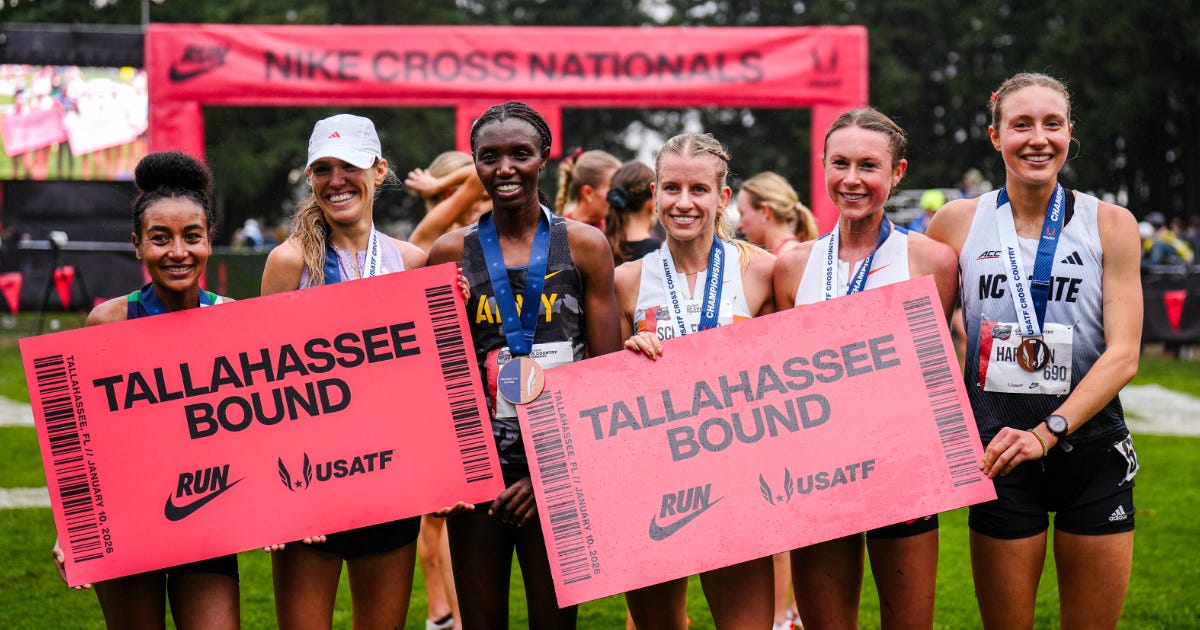
The last time the World Cross Country Championships were held in the U.S. was 1992, at Boston’s historic Franklin Park. This Saturday, however, many of the top harriers from around the globe will line up on American soil once again to determine who’s fastest over hill and dale.
Okay, maybe not hill or dale, because the races will take place in exurban Tallahassee, and the spectator-friendly course features manmade, Florida Panhandle-y elements called things like “Alligator Alley” and the “Rollercoaster.” Despite the race requiring relatively light travel for American athletes, a few of Team USA’s top dogs still opted to sit this one out. Such is life for an event sandwiched between the conclusion of a fall marathoning season and the outset of most indoor campaigns. The theoretical beauty of World XC is that it pits the best miler-types against world-beater marathoners, but given its current spot on the calendar, that’s not exactly the case in practice.
But that’s not to say the action in Tallahassee is going to be underwhelming. We’ve still got some truly excellent racing to look forward to just based on the pedigrees of the entrants (in true World Athletics form, entry lists were only posted yesterday), and the fact that cross country and its undulating, mucky terrain tends to flub up descending order-list-based predictions.
One athlete who does tend to come out on top at these things, despite the potential for volatility, is Uganda’s Jacob Kiplimo. Kiplimo is looking for his third consecutive World XC crown, and yeah, is just really good at the whole running thing regardless of footing or distance. If there’s one knock against his threepeat chances, it’s that he has been hyper-focused on the marathon as of late. It feels crazy to pose this question, but does a 2:04:43 showing in Chicago in October help or hurt his case in a 10k race on grass and dirt three months later?
Even if Kiplimo gets beaten to the line, he’s a very likely low stick for a solid Ugandan squad that’ll be looking to stand atop the podium for the first time since 2019. Kenneth Kiprop (ranked #11 per WA in cross country) and Dan Kibet (#12) are likely angling for top-10 finishes, but the absence of Joshua Cheptegei means Uganda’s team chances will hinge on whether or not one of its other, less-established runners can finish ahead of Ethiopian (unlikely) and Kenyan (more likely) athletes with more impressive track credentials.
Between those two perennial powerhouses, Ethiopia is looking stronger coming in. Kenya’s selection event was headlined by a slate of largely unproven-on-the-global stage athletes, with the country’s track and road superstars largely foregoing the chance to compete.
Ethiopia’s squad boasts names like Tadese Worku (a former U20 world champ), Bereket Nega (8th at the U20 World XC race in Bathurst), Biniam Mehary (U20 3000m world record holder), and Berhihu Aregawi (2nd in the 10,000m in Paris). With those four likely comprising Ethiopia’s scoring contingent, they’re looking like the favorites. Even if one or two of these bigger-to-massive names lay an egg, this team’s depth should provide something of an insurance policy—plenty of other countries will have low sticks, but not many others will have enough low sticks to make a splash in the team scores.
The big questions for us will likely be boiled down to “Kenya, Ethiopia, or Uganda for gold?” and “Does Team USA medal?”, but other contenders include Spain—Thierry Ndikumwenayo is very, very good at cross country and Burundi, led by Célestin Ndikumana and Emile Hafashimana. Hell, France, with Jimmy Gressier and Yann Schrub could probably slot into this section, too.
Team USA brought most of the big guns, which is the only reason a medal is even a possibility. On paper it ought to be led by Nico Young and Graham Blanks, but in practice, those two were shown a clean muddy pair of heels by the likes of Parker Wolfe, Rocky Hansen, Wesley Kiptoo, and Ahmed Muhumed. If the two Olympians have leveled up since the U.S. Champs—which were admittedly at an even weirder time on the training calendar for most pros—and the guys who beat them are still running strong, a podium finish isn’t out of the question. But in a race where only four runners score, it’ll take a great day.
The women’s race received its first significant shakeup well before the gun sounded—reigning double champ and legitimate GOAT-candidate Beatrice Chebet will not be racing as she’s pregnant. With no Nadia Battocletti or Faith Kipyegon, either, Burundi’s sole entrant, Francine Niyomukunzi, comes in as the highest ranked athlete actually competing here and should be considered a threat for the solo title.
No matter for Kenya’s team title hopes. Cross country ace Maurine Chebor, former junior star Joyline Chepkemoi (6th in the U20 race in Bathurst), Brenda Kenei (30:29 10k PB), reigning national 5000m champ Rebecca Mwangi, and road superstar Agnes Ngetich look poised to step up, with Ngetich a favorite for the individual title.
Ethiopia has a theoretical low stick of its own in 2023 U20 champ Senayet Getachew, plus plenty of depth in the form of other former U20 studs (Lemlem Nibret, Aleshign Baweke) and proven road warriors like Asayech Ayichew (29:43 10k PB) and Shure Demise (U20 marathon world record holder, and a very cool name). You’ve gotta go back to 2002 to find a result at this meet where Ethiopia and Kenya don’t occupy the top two spots for the women.
Uganda is, once again, a consistent-ish third spot atop the podium. That squad is an interesting one this time around: Rispa Cherop spent her 2025 competing on both the roads and at the World Mountain & Trail Championships; and Uganda’s most accomplished 5000m/10,000m runners, Joy Cheptoyek, and Sarah and Rebecca Chelangat all disappointed at Worlds in Tokyo. We’ll see how the revenge tour goes for the latter, and how much of a benefit mountain running is when racing in a state with a geographic high point just 345 feet above sea level.
The United States squad looks to be led by Weini Kelati, who has finished as high as 15th at World XC. Katie Izzo (perhaps the American pro who spends the most time annually racing cross country), Ednah Kurgat (has finished 18th at World XC), and Karissa Schweizer finished behind Kelati at the U.S. Champs, and if nothing too wild happens (hardly a guarantee) should make up Team USA’s scoring four. That’s a solid squad, but one that will require a little bit of Tallahassee Magic to score a podium finish.
As for the mixed-gender relay? Well, there are almost too many variables for us to even begin to prognosticate. Hand-offs? By athletes who, for the most part, have likely not held a baton in over a calendar year? On a cross country course? Over a distance most of them have only raced once in their life? C’mon now.
The starriest lineup is Australia, featuring Olli Hoare, Linden Hall, and Jessica Hull, all well-credentialed internationally over 1500m. But Kenya just always seems to play on another level at events like this, and despite World 1500m bronze medalist Reynold Cheruiyot being the only truly big name, it feels wrong to bet against them. Thanks to studs like Ethan Strand and Sage Hurta-Klecker signing up, it’s feels reasonable to put the American medal over/under at 1.5 across the senior races and the relay, and if two of those three squads really do podium, that’s a pretty great weekend.
The fact that so much of this championship is hard to predict makes everything feel very authentically cross-country. The sloppier the conditions and stranger the outcome, the more racing on grass continues to feel like a distinct, interesting subset of the broader sport, and that alone makes World XC worth tuning into.
No Rabbit; No Problem 🐇
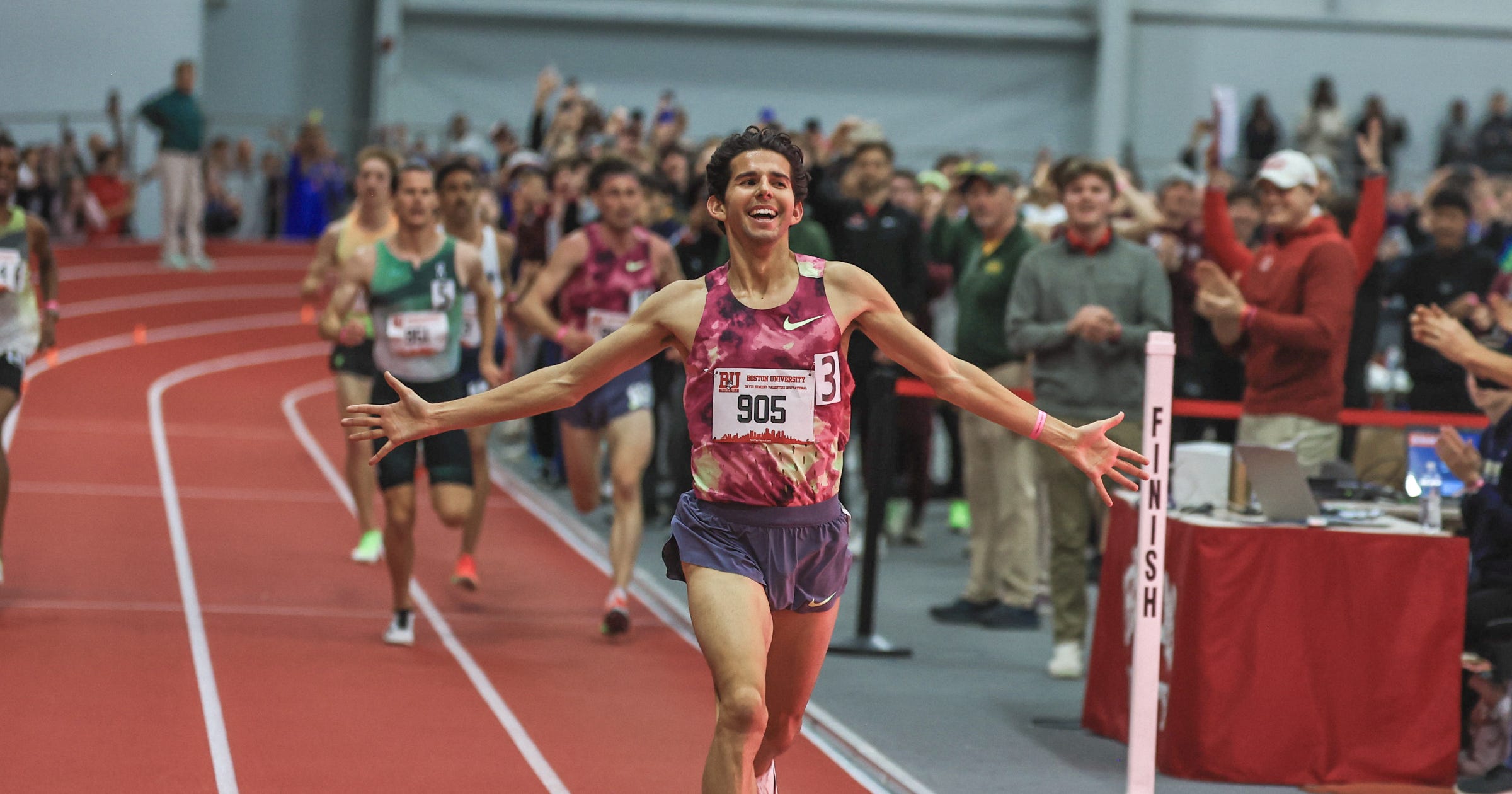
It may be a new year, but trackflation isn’t going anywhere.
Every American distance runner who isn’t dusting off their cross country spikes or tuning up for Houston—which is to say, almost everyone—is begging their coach to send them to Boston with an exaggerated seed time in hopes of picking up a big PB or an early qualifier.
But if it’s not the tracks, it’s the spikes… the Wavelights… the bicarb… the training systems… the everything else… Looking at times from even ten years ago to now, we’re in a totally different ZIP code, particularly in the distance events.
A totally understandable response is to wanna rip up the record book, throw your hands in the air, and say that times don’t matter at all anymore. As tempting as that may be, however, there’s still a tiny, less-jaded, less-cynical fold in our brains that lights up when Grant Fisher clicks off lap after lap after lap of 30-second 200s en route to a new American record.
We inherently love to watch people run fast! Even if results become more difficult to compare across eras. That’s something the “competition is all that matters” crowd will always have to reckon with. And said crowd is probably feeling especially defensive after Grand Slam Track didn’t quite pan out as hoped. But there’s room for all sorts in the 2026 track tent, and we’re all about solutions that attempt to appease all stripes of track fan.
Whether or not you love World Athletics as a governing body, they have a lot of power to explicitly and implicitly tell us as fans what to care about. The World ranking system, meet quality ratings, championship qualifying standards, and even which events count as a “world records” versus a “world bests.” They’re all ultimately the product of WA telling us what matters, and how it matters, when it comes to performance.
And yet World Athletics doesn’t in any formal way track one of the most important determinants of time (at least for multi-lap races): whether or not there was a pacemaker.
For long-distance women’s times, WA does recognize the difference between the marathon world record (run with the assistance of mixed-gender pacing) vs. the world record (run in a women’s-only race). The latter is particularly important to Brits as the London Marathon has played host to the four “women’s-only” marks on the books since the difference received official recognition.
There’s ample precedent for World Athletics saying, essentially: These are different kinds of races that deserve different all-time lists. That’s the entire concept of an indoor—sorry, “short track”—world record. At this point, there’s way more difference between a rabbited and championship-style race than an indoor or outdoor track. Sure, you could draw up any other arbitrary distinction—old spikes vs. carbon, sunny vs. rain, etc.—but paced vs. unpaced racing is a recognizable, pre-existing phenomenon with a significance that track fans inherently understand.
Should this new system go into effect, plenty of the new records would have come from Olympic or World Championship events, especially in the 800m-5000m range. But that’s because there isn’t really an incentive for regular-season, non-paced racing. After World Athletics expanded its recognition of road world records down to the mile, an influx of road-specific exhibitions like the adidas “Road to Records” event and pretty much everything that happens in the city of Valencia followed.
In the long distances, it could make the marathon scene even more interesting. There are high-profile unpaced marathons, like Boston and New York City, but typically they also occur on tough, point-to-point courses where official records aren’t feasible or even an option technically speaking. As the World Marathon Major circuit continues to expand, it would be great for one of the additions to be a flat, fast course with no rabbits, since that’s not currently on offer.
It could also create an exciting new narrative in an event that… has a little bit of awkwardness around both official world records. The late Kelvin Kiptum’s 2:00:35 and Ruth Chepngetich’s 2:09:56 may very well not get broken again for a few more years (although don’t bet against Sabastian Sawe on the former point for too long…), but the unofficial unpaced world bests of Tamirat Tola’s 2:04:58 from NYC 2023 and Gotytom Gebreslase’s 2:18:11 from the Eugene World Championships are very gettable.
Editor’s note: Because this is not an officially recognized record, these are the research team’s best guess of the unpaced world records. If you know of a faster run we missed, let us know!
One of the most memorable world records of all time—David Rudisha’s legendary 1:40.91 800m at the 2012 Olympics—was made all the cooler by its purity. Rudisha led the whole race from gun to tape, no pacer. And while someone like Emmanuel Wanyonyi or Marco Arop could try and replicate his performance out of pure gamesmanship, why not try and create the circumstances for other events in non-championship settings to be just as dazzling? Noted frontrunners like Gudaf Tsegay, Jakob Ingebrigtsen, or Winfred Yavi would surely be up for the challenge.
We’ll never have a future where time doesn’t matter. But we can build one where context changes what times mean. As everything else around the constant of a ticking clock evolves rapidly, it’s worth exploring how we too can change without moving backward.
Five New Year’s Resolutions Runners Never Keep (And How To Fix Them!) 🎇
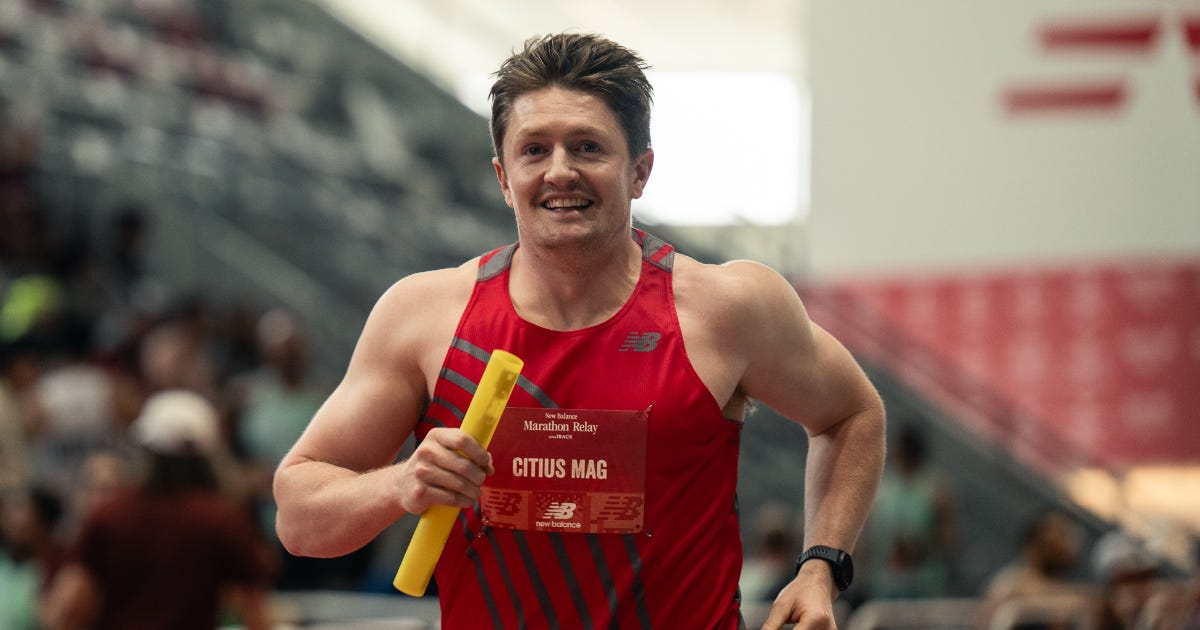
“New year, new me,” you determinedly tell yourself as don’t hit snooze on your 6:00am alarm for once and lace up those shiny white trainers Santa delivered last week.
We’re just over a week into 2026, so hopefully you’ve still got the juice to get yourself out the door with a fresh set of goals, and mainlined enough motivational Instagram slop that the cold, dark January mornings haven’t gotten the better of you just yet.
Here’s the looming bad news: while 2026 may be a new year, you’re still the same schmuck.
Unless you’re some kind of New Year’s Resolutions savant, history suggests you’re most likely re-upping on a promise you made yourself in 2025 then broke before February. But you’re not alone! Millions of runners all over the world are making the same resolutions over and over again, hoping for a different outcome. This time, however, we’re here to help you break the cycle. So if any of these common running resolutions find themselves already wavering on your vision board, we’ve got the answer to make them stick.
“I’ll activate before/stretch after runs.”
Take it from these newsletter writers and our aching Achilles tendons: if activation exercises before runs are still optional for you, consider yourself lucky. But if you’re a morning routine procrastinator, it can sometimes feel harder than a 20-mile run to simply do three minutes of prehab. The key here is to implement a reward system—be both Pavlov and the dog. Find a small, low-stakes treat in your life to tie to your PT routine. Maybe it’s a handful of Skittles; maybe it’s ten minutes of TikTok scrolling. BUT you have to get yourself salivating at the prospect of loosening up your hip flexors first.
“I’m going to PR in ____ this year.”
Well, that’s not a resolution as much as a hope, is it? We can all resolve to break four minutes in the mile or make a U.S. team, but good luck actually doing it. Resolutions that are outcome-based and not process-oriented are doomed to fail, because you’re not actually giving yourself an achievable day-to-day action. Instead, think about the steps that you (or better yet, you and your coach), think need to be done to get that big PR. Is it increasing your running from four days a week to six? Getting massage treatment once a month? Not swapping out every long tempo run for repeat 400s? Make a list of the changes you think need to happen to take you from point A to point (P)B, and bingo: those are your actual resolutions.
“I’ll start doing core.”
Nice. That’s an all-time classic. We all say it’s to stabilize our running form and lower our injury risk, but let’s be real: we all just want a sick eight-pack. And yet, the yoga mat sits in the corner collecting dust from January 10th onward until next December you solemnly declare that this is the year. This is a tough nut to crack, but one small step is to physically leave your house. Sure, you don’t technically need to go to the gym to get a few minutes of planks in, but at the gym there’s not a comfy couch or bed just inches away, and hey, you came all this way? This won’t work if the harder step for you is walking out the door than doing the sit-ups, but if you’re simply not a bedroom abs-master, a change of scenery could do the trick.
“I’m going to slow down on easy runs.”
Coaches around the world are screaming this one into the abyss, and yet stubborn, type-A distance runners everywhere insist upon clicking off slightly uncomfortable mileage simply to make their Strava graph look pretty. Telling yourself you’re going to notch it back 30 seconds a mile seems like a good idea in theory, until that third split clicks in and you start getting antsy. (And then you wonder why your legs are heavy for the next workout, week in and week out.) But peer pressure can be a good thing: get your training group on board and encourage public shaming. Vow that no matter how crisp the air or how springy the shoes, you won’t dip under 7:30 pace. Then relentlessly dog on the compulsive half-stepper who splits a 7:28, and the rest will fall in line.
“I’m going to eat healthier.”
This is a classic one that extends even beyond the running community. You head out on that first grocery store trip of January full of optimism, stuffing your cart with kale and quinoa and all manner of super foods. Inevitably, the complexity of cooking up new recipes or the urge to simply DoorDash a burrito overwhelms you and you’re back on your processed-sugar, fast-food BS. The fix to this one is to not aim for a full Gwyneth Paltrow-style reinvention; simply find one or two new, healthy recipes you actually like and go from there. Very few of us actually enjoy a plate of raw vegetables every meal, but hey, you like sweet potatoes? Cook those suckers up with a little oil and salt. Smash avocado onto everything if that’s your vibe. Treat your sweet tooth to a blueberry smoothie. Eating healthier doesn’t have to mean eating food you don’t like.
They say it only takes a few weeks of consistency for a practice to become a habit. So by the time we’re writing newsletters about Millrose, you could be a whole new runner—for good this time. You can do it!
More News From The Track And Field World 📰
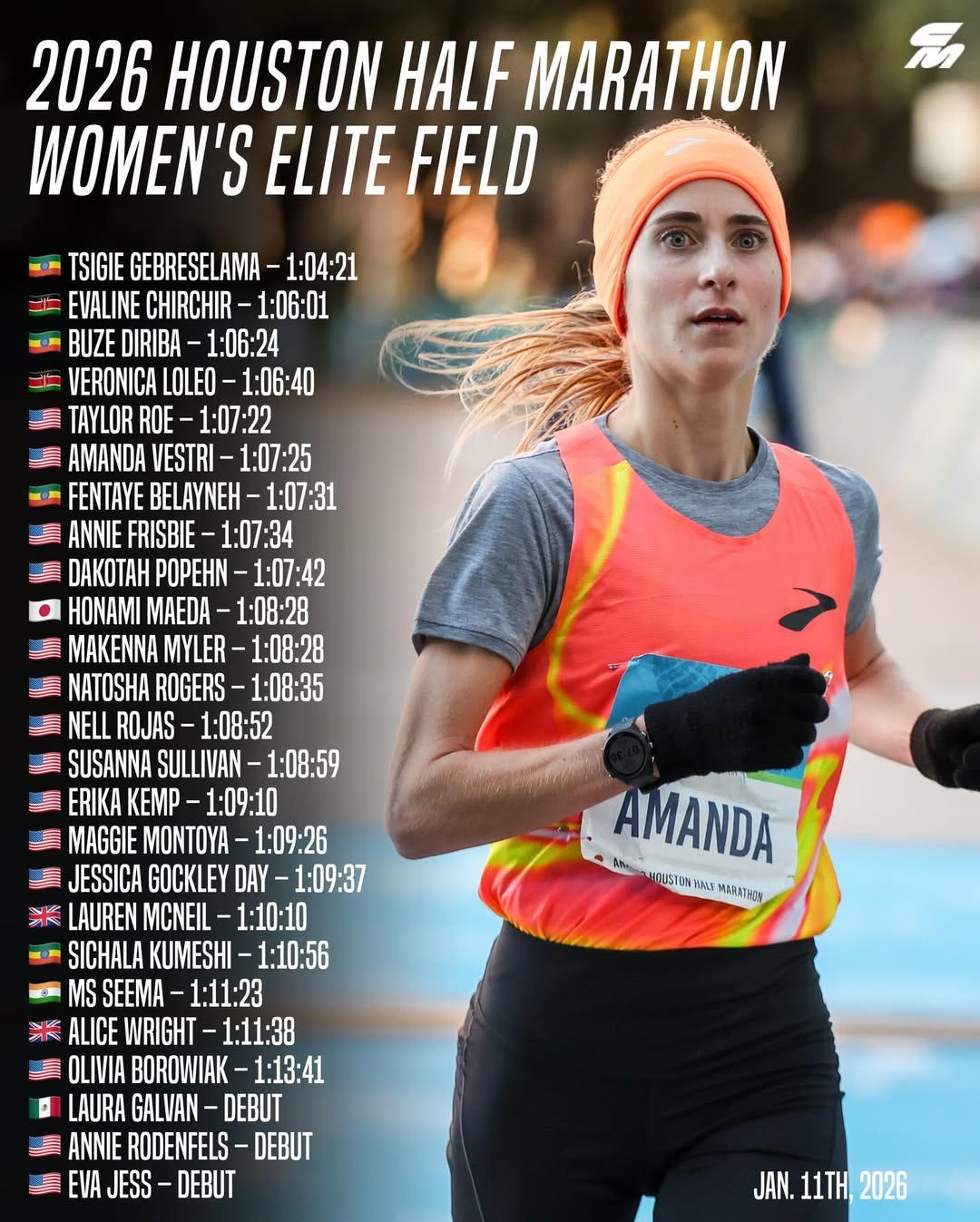
– Giddy up! The fields for the Houston Half have been announced. Tsigie Gebreselama leads the women’s field, and Taylor Roe and Amanda Vestri are the top American entries. On the men’s side, we’re being treated to a throwback battle: Galen Rupp vs. Cam Levins, plus Habtom Samuel’s debut at the distance.
– No World XC, no problem: Brit Eilish McColgan and Swede Andreas Almgren an interesting field of fast road racers for the Valencia 10k on Sunday, where a bevy of national records feel very threatened.
– Nice! (Get it?) Speaking of road records, Jana Van Lent of Belgium lowered the European 10k record to 30:10 at the Prom’Classic in Nice, France.
– Interesting use of the offseason: Shelby Houlihan made her trail debut at the Christiansen Trail Race in Phoenix, AZ, setting a women’s course record and beating the men’s winner with a 1:34:12 run for 24k.
– After three years with On, U.S. steeplechaser Courtney Wayment is switching to the Swoosh, signing with Nike and sticking with coach Diljeet Taylor in Provo.
– Congrats to Grant Fisher on the engagement! The two-time World medalist hiked out to the Grand Canyon and popped the question to fellow Stanford alum Sarah Walker, who said yes.
Interested in reaching 20,000+ dedicated runners and track and field fans? Advertise with us here.
Nice post! Let's give Grant his due, though (i.e., he is a two-time Olympic medalist).