

What A Weekend! ⏱️
Lap 250: Sponsored by Olipop
Sponsored by Olipop

Sweet lime, quince, and mild ginger come together to help craft a uniquely sophisticated yet nostalgic Ginger Ale flavor, bringing visions of candied ginger dancing in our heads. Olipop’s original refrigerated formula contains 9g of fiber and should be stored in the fridge, ready to chill whenever you are. Head to DrinkOlipop.com and use code CITIUS25 for 25% off your orders.
Compiled by David Melly, Paul Snyder, Chris Chavez & Jasmine Fehr
Same Time Next Month? 🔁
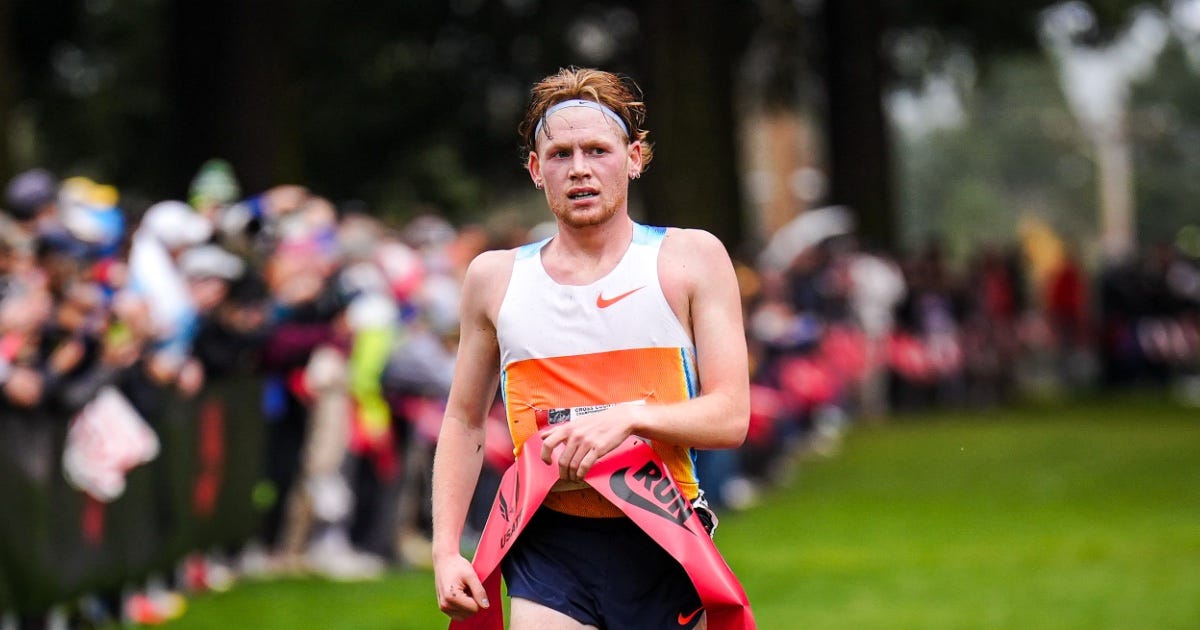
A marathoner, an NCAA All-American, and a middle-distance pro walk into a bar…
…okay, maybe not a bar – at least not before the race. But last weekend, an impressively wide range of runners from different backgrounds, levels, and skillsets descended on Portland, Oregon, for the U.S. Cross Country Championships, and as a result, the results themselves were a little unexpected. On first blush, Weini Kelati and Parker Wolfe aren’t the craziest names to pick up a national XC championship over 10 kilometers, nor are Ethan Strand or Gracie Morris over 2km. But look at the athletes that followed them through the chute and things get a lot less predictable.
On paper, you wouldn’t expect two Olympians with sub-27 10,000m PBs to finish fifth and sixth, just one spot ahead of the reigning Big East 1500m champion (who in turn beat a two-time Olympic medalist). Or maybe you picked Shelby Houlihan, the reigning U.S. 5000m champion who won this race in 2019, to finish higher than 20th.
But that’s cross country for ya, baby. The addition of a few rolling hills and a little mud can throw the form charts into disarray, which makes it very fun to watch. This year was even more of a show than usual thanks to the looming World XC championships in Tallahassee and the co-location with Nike Cross Nationals, meaning everyone from eighth-grader Brianna Reilly (ninth in the NXN girls’ championship) to 45-year-old trail runner Max King (the men’s 40+ champion) were tackling the same grassy loops. The addition of a specific trial for World XC’s mixed-gender 4x2km relay attracted the likes of Craig Engels, Sage Hurta-Klecker, and more.
Usually, the U.S. XC championships are a bit of an afterthought, confusingly scheduled apart from the similarly-named club cross country champs and often skipped by top pros in favor of a BU time trial or heavy training block. But the opportunity to represent Team USA on home soil was too enticing for many to leave alone, and its placement in early December, rather than January or February, lowered the number of potential conflicts.
The timing also meant that there was a wide range in “most recent races” on the start line in Portland: for Kelati, it was the Manchester Road Race; for fourth placer Karissa Schweizer, it was the Fifth Avenue Mile; for fifth Emily Venters, it was the Chicago Marathon; for sixth-placer Grace Hartman, it was NCAAs.
Yes, you read that final part correctly. Rather than kicking back into an offseason or booking a flight to Boston, NC State junior Grace Hartman tacked on four more kilometers of distance and added one more cross-country race to her schedule. Over on the men’s side, Wake Forest junior Rocky Hansen led the whole damn thing for over nine kilometers, dropping a who’s-who of American distance greatness in the process until only Wolfe could hang with his pace. It’s impressive that he was able to run so fast with a pair of basketballs in his short-shorts. Racing one more long, grueling race at the end of an already long, grueling season is certainly a gamble. Especially when the alternative is bouncing your way to a safe NCAA qualifier on the track. But for Hartman and Hansen, it paid off: they get to represent Team USA in an honest-to-goodness global championship while still in college.
Hansen in particular added some impressive head-to-heads to his resume, as Nico Young and Graham Blanks both made the team but needed the last two automatic spots to do it. Surely, the more experienced pros (wild that the 23-year-olds are now in the “veterans” category) are probably at the front end of a training cycle rather than riding out a championship peak, but a win is a win. And assuming everyone accepts their spots, a group that includes Paul Chelimo, Sean McGorty, and Woody Kincaid will be staying home. Talk about an embarrassment of riches.
Over in the 2km, the main takeaway was that the rising talents are, in fact, on the rise. Gracie Morris seems to have found every possible way this fall to send warning shots to the competition that she’ll be a force to reckon with in 2026, following up her Fifth Ave win with a sixth-place finish in Manchester and now a victory over 2km on the grass leaving sub-four 1500m runners Addy Wiley and Emily MacKay in her dust. Ethan Strand already sent a pretty clear message this summer with his surprise finish in the 1500m at USAs, but the fact that he and Wolfe are hitting the professional scene at full-tilt is a promising sign of a successful transition.
While we’re poring through the cross country results and trying to read the tea leaves of future potential, two names in particular stand out. The first is Elise Stearns, the NAU grad who finished seventh in the women’s race. Now with Swoosh TC, she’s got the tools (and a 15:08.07 5000m PB) to be a real factor on the next level, but in college her best NCAA finish was fourth. Even more comparatively unknown is men’s 11th-placer Camren Todd, who was “only” a 13:53/28:10 man at Utah State but finished ahead of guys like Drew Hunter and Cooper Teare. Some athletes are disproportionately good at cross country and that remains true throughout their careers. But others could be flashing signs of greatness as they transition to the pros that will show up big-time on the track or roads in the seasons to come.
The smorgasbord of new and familiar names, guys moving up and gals dropping down, all in pursuit of a U.S. team made this particular USAs a weird and wonderful delight. This kind of thing could and should be replicated more, especially on the roads where there was a good-faith effort to create a series of selection events for the now-delayed Road Running Championship in San Diego (R.I.P.). Having something to run for not only attracts better talent, but a wider range of it, and that in turn makes the races themselves far more interesting.
New Standard, New Qualifiers, Same Great Moments 🇺🇸
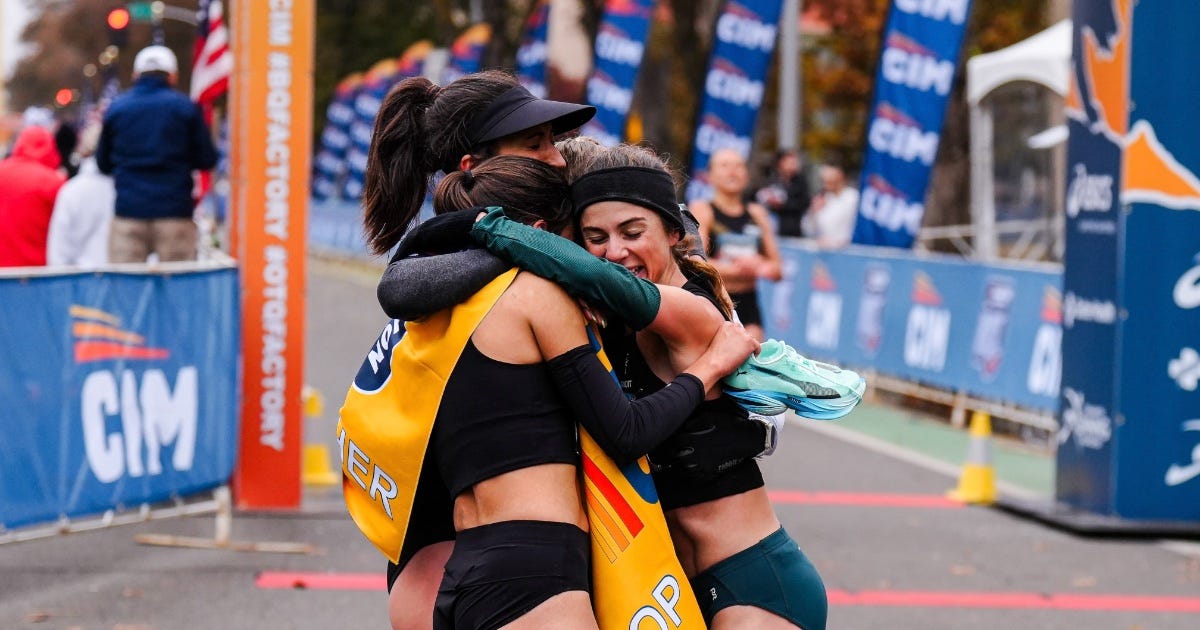
CIM and OTQ are almost synonymous. The California International Marathon has built a reputation of being one of the best American courses to chase an Olympic Trials qualifying marks. In total, 54 American women ran under 2:37:00 and 52 men under 2:16:00 to earn their spots for the 2028 Trials (wherever they end up getting held).
The running Grinches may look at that stat and come to the decidedly un-festive conclusion that 107 people doing something in one race makes it less special. The truth is quite the opposite, however: as the standards get tougher every cycle, the ability of runners of all backgrounds to rise to the occasion and dip under the standard is exactly why the finish line in Sacramento is so special. If you thought the field in Oregon was diverse and unusual, wait ‘til you hear about the stories that came out of NorCal.
Here’s a few standouts from this weekend:
Sarah Hall just keeps going: While Hall securing a Trials qualifying mark wasn’t exactly a surprise, her career longevity continues to astonish. If she lines up in 2028, it will be her NINTH Olympic Trials, between the track and marathon. Like anyone else, she’s had her ups and downs and dropped out of the NYC Marathon last month. But the thing that makes Sara special is how reliably she gets back up for the next one. “I’ve had so many setbacks in my career, so it’s just remembering all the times in my career that I was able to bounce back and have some of my best races ever,” she said in her post-race interview.
Joey Whelan has no fear: Whelan already had his OTQ locked in. This was actually his fourth sub 2:16 of the year, but he deserves some credit for his incredible consistency and for his determination to race what seems like weekly. After winning the Indy Monumental Marathon last month in 2:12:29, he returned to run 2:09:42 for second at CIM. In his 32nd career marathon, he finally broke 2:10 in a gutsy race where he led almost the entire race, with no pacer, before getting caught in the final mile.
Heather Kampf won’t quit: Kampf is another familiar name in the sport. Many fans remember her famous fall and improbable comeback win in the 2008 Big Ten 600m and then her middle-distance road running prowess—she captured four U.S. road mile titles between 2012 and 2016. Her luck on the roads has extended to the marathon as she secured her second Marathon Trials berth in 2:35:41. This will be her sixth career U.S. Olympic Trials across the track and marathon.
Tessa Barrett makes it official: Barrett’s fall season has been a journey, to say the least. In October, the full-time financial advisor out of Washington, D.C., won the Marine Corps Marathon in a course record of 2:34:08 and thought she had earned her OTQ… only to find out that the course wasn’t USATF certified, meaning her time wouldn’t count. Her training shifted to CIM, where she not only secured the standard for real, but took another four minutes off her personal best by running 2:30:10.
Mohammed Bati finishes his season: Going from NCAA XC to USAs is one thing… how about going from the 8k to 26.2? Bati just finished second at the NCAA DIII championship two weeks ago for Augsburg University, and yet before the mud could be kicked off his spikes, the Minnesotan wound up running 2:12:27 for 11th overall, securing the OTQ, and nearly cracking the top-10 of a U.S. championship.
Molly Born crushes the debut: Born’s entrée to the marathon was perhaps the most memorable performance of the day. “Out of college, I kind of knew this was my shot to run professionally long term: the marathon,” she said in her post-race interview. And she was all-in from the start, sticking with the lead pack early and coming away with a 2:24:09 win. Despite falling in the final stretch of the race, she got back up and still won by 27 seconds over Hall. For those less familiar with Born’s background, her best showings at Oklahoma State were fourth in the NCAA 10,000m and sixth in the indoor 5000m in 2024. Chalk up one more victory for Alistair and Amy Cragg’s superb 2025 campaign for Puma Elite.
JaQuavious Harris continues to surprise: The former JuCo national champ for Salt Lake Community College is now an Olympic Trials Qualifier, thanks to a 2:13:49 performance (a nine-minute PB) for 18th place overall. Harris and Nathan Martin’s OTQs at CIM, adds to the small but growing group of American-born runners of color who have qualified for the 2028 Trials—a trend that hopefully continues as the running boom continues and the path to LA brings even greater representation.
Leigh Anne Sharek needed a little more time: Shout out to a friend of CITIUS MAG, who previously co-hosted the Runners of NYC Podcast! Sharek got serious about the sport in adulthood, and began incrementally checking off big goals: BQ, sub-three hours, OTQing at CIM 2018, when the standard was 2:45. She took several shots at the 2:37 barrier ahead of the 2024 Trials, lowering her PB to 2:39:13, but ultimately watched the race from home. The forensic scientist out of Brooklyn kept at it though, still with an eye toward 2:37. One slight PR, a 2:39:06 showing in Chicago this past October, made her believe she had more in the tank. And she nailed it just two months later: 2:35:48.
Honorable [international] mentions: CIM managed to get a lot of the attention around U.S. Olympic Marathon Trials qualifiers due to the sheer volume produced, but there were a few more this weekend out of Valencia (more on the elite race below). The hot conditions may have stopped Emma Bates (2:25:51) and former American record holder Keira D’Amato (2:28:14) from having faster days. Central Park Track Club teammates Kidan Kidane and Maddie Offstein finished close together in 2:33:05 and 2:33:27 to both secure their second Trials appearances. And Allie Schaich (2:35:51) is now a three-time Trials qualifier.
Valencia Should Make You Very Excited For 2026 📈
It’s totally understandable if you’re feeling a little down about the world of elite marathoning over the past few years.
In 2024, Kelvin Kiptum, the fastest man to ever cover the distance (in a legal race setting), was killed in a car accident just four months after he ran 2:00:35 at the 2023 Chicago Marathon. At the 2024 edition of Chicago, Ruth Chepngetich obliterated the women’s world record, going 2:09:56—one year later she was handed a three year suspension after testing positive for a banned substance. And the marathon’s most celebrated figure and inarguable G.O.A.T., Eliud Kipchoge announced his formal retirement from elite racing, and a pivot to marathoning as a means of raising funds and improving global vibes.
A horrific loss of life. A serious blow to the sport’s integrity. A bittersweet farewell to the best to ever do it.
And yet, as we prepare to hang a new calendar and welcome in another year on the road racing circuit, we’re feeling more excited than ever. At the top of the heap, we’re witnessing some historically great athletes ascend into their racing primes—with true parity to boot, thanks to a continual reshuffling of the podiums at World Majors! Just behind them, we’re being treated to some fascinating career resurgences. And for good measure, we’re also sitting in the front row for a sort of living thought experiment on how technology, training, and tactics can expand the realm of the possible. What’s more, pretty much all the 2026 storylines we’ll be following got a lot more interesting after last weekend’s Valencia Marathon.
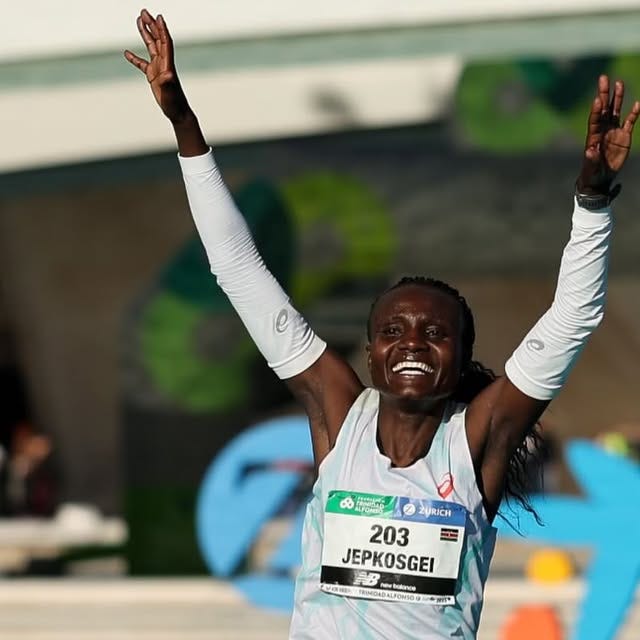
Let’s start with the thrilling duel that headlined the women’s race, which saw Joyciline Jepkosgei and Peres Jepchirchir running stride for stride until just under two miles remained in the race. At which point Jepkosgei turned the screws on Jepchirchir, and began to open up a gap that grew to 43-seconds wide at the finish line: 2:14:00 to 2:14:43—the next finisher clocked in at 2:20:38. For both Jepkosgei and Jepchirchir, it was their first time under 2:16, which puts them at No. 4 and No. 6 all-time, and elevates their PRs into the same echelon as the rest of their impressive resumes.
Coming in, Jepchirchir had never lost to Jepkosgei over 26.2 over their three previous showdowns. Jepchirchir had just one other marathon—and race, period—on her card for 2025: her gold medal performance from the World Championships. Jepkosgei’s 2025 schedule has been far busier, with plenty of under-distance racing, and only one other marathon: a 2:18:44, second-place showing at London. This is all to say, that with both athletes in their early 30s as they continue to get better, we are entering a truly exciting era for women’s marathoning.
Jepchirchir and Jepkosgei already sat firmly in the mix of the best-active-marathoner discussion, but both had some credible arguments going into their season that their best days were behind them. Jepchirchir looked damn near invincible in 2022, when she became the first and, to date, only woman to win the Olympic, New York, and Boston marathons in the space of nine months. She won London last year as well, but finished only 14th at the Olympics. Now, with two signature performances under her best in 2025, it’s clear she isn’t facing a downturn anytime soon. Similarly, Jepkosgei’s two World Major wins came in 2019 and 2021, but she hadn’t won a marathon in over four years before her victory Sunday. Her PB also knocked 2+ minutes off her prior lifetime best.
Their lowered PBs place them in even more rarefied air, and much closer to Tigst Assefa’s and Sifan Hassan’s. Plus, Brigid Kosgei isn’t done yet, as evidenced by her recent 2:16:36 clocking in Shanghai. But all these millennials will have to contend with Hawi Feysa, the 26-year-old “wunderkind” and reigning Chicago champ. If you look at the all-time list, a staggering number of ranking performances were posted over the past three years. All these stars shining so brightly at once can only mean we are in for even more exhilarating matchups in a year that didn’t have a decisive number one.
The men’s race wasn’t quite as captivating from a one-on-one slug-fest perspective, but it did solidify one thing in the minds of marathoning fans: John Korir has put that whole Chicago DNF thing behind him and believes he is the best marathoner alive. He won Valencia in a 2:02:24 after opening up a gaping hole on the field around 25k, a 20-second PB using a big negative split that sets him up nicely for an assault on sub-2:02 next season. It was a perfect end cap to a year that saw him also win the Boston Marathon.
Korir, now No. 8 on the all-time list, has his work cut out for him as he stakes his claim as the current world’s best, but he’s gotta like how he theoretically stacks up in a battle between him, Jacob Kiplimo, Benson Kipruto, and Sabastian Sawe. Among that group, only Sawe has a stronger claim to 2025 supremacy, with two major wins to Korir’s Boston-Valencia double.
We obviously love rambling about the fastest times run on a given day, but part of what makes sport interesting is the more unexpected results and idiosyncratic approaches taken by those just behind the winners.
Case in point: in fourth place was Suguru Osaka. Yes, that Suguru Osaka. The former Oregon Project member who was, for years, treated more as a sparring partner for Galen Rupp in practices, and who last ran under 2:06 back in 2020. He appears to be back-back if his shiny new 2:04:55 PB is any indication. He last made a World Major podium in 2018, but he just broke the national record of a country that worships the marathon. If he’s thinking what we’re thinking, he’s likely hoping to stand atop another in 2026.
Just under two minutes behind Osaka came Paris Olympic gold medalist… in the triathlon(!) Alex Yee. Yee, who was making his second ever attempt at the distance, ran 2:06:38, and might be the only man in human history who could run a time like that and (intelligently) not decide to go all in on the marathon. Anyway, whether he wades deeper into roadrunning world or dives back firmly into the tri camp, he’s now the second fastest Brit ever behind only Mo Farrah.
And we’ll conclude what could have been an even longer section with a shoutout to somebody the mid-oughts track fans won’t soon forget: King Ed Cheserek. He didn’t run a PB, and didn’t place in the top-10, but he mustered a 2:07:13 showing for 14th. If that’s what he’s running on what’s clearly an off day, that’s not a bad spot to be in for a 2:05 man. Still in a sort of allegiance purgatory—despite publicly stating his intention to compete for America, he still represents Kenya, one of the only countries on earth where an athlete of Cheserek’s caliber will not get picked for international teams. But imagine the alternate reality where an American not named Conner Mantz had run 2:07, 2:07, and 2:05 in his last three big races.
2025 was one hell of a year for the marathon. But with the top dogs hitting their stride in unison and a slew of wild card-types waiting in the wings, 2026 is poised to be even better. So rest up road racing fans—we’re just over a month out from marathon season liftoff with Houston and things surely won’t slow down from there.
More News From The Track And Field World 📰
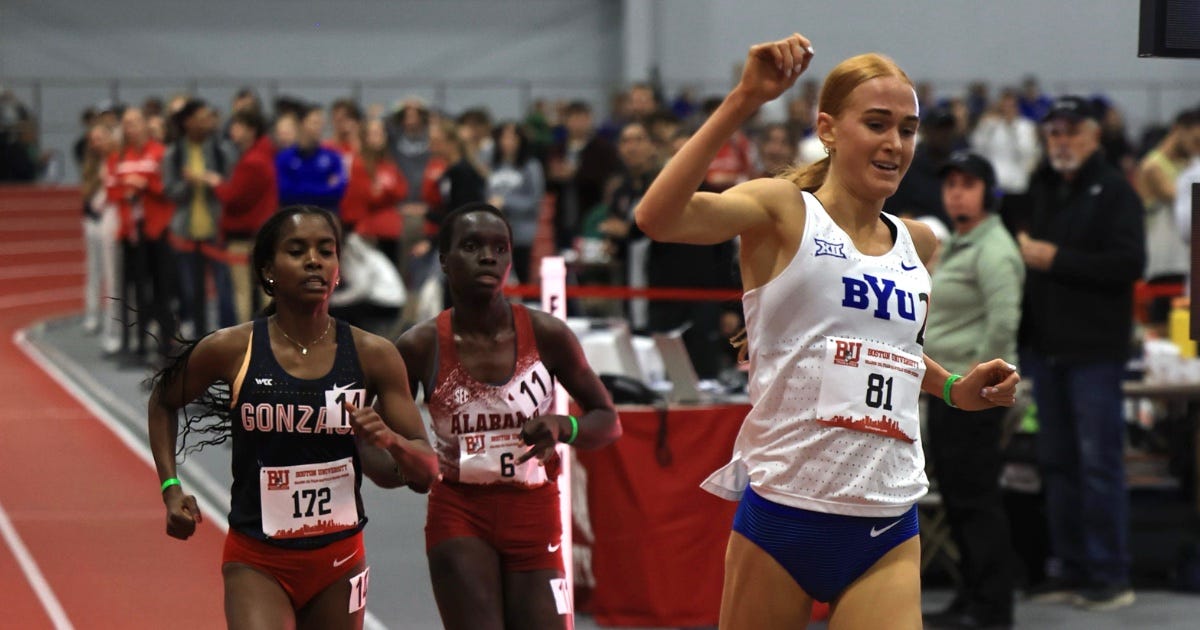
– At the annual BU “Run Your NCAA Indoor Qualifier Off Of XC Fitness” Classic, BYU’s Jane Hedengren dominated the 5,000m in 14:44.79, a new NCAA record, and Josh Hoey set a new indoor 600m world record, going 1:12.84. There were of course other notable results that even a decade ago might have garnered their own bullet point if not outright section, but alas, here in 2025 they don’t even make the highlights.
– At NXN, the Wayzata girls—led by seventh-place finisher Maddie Gullickson—and Niwot boys—paced by fifth-placer Quinn Sullivan and sixth-placer Hunter Robbie—took home the team titles, while Natasza Dudek and Jackson Spencer were the individual champs.
– Former UW Husky track and cross country standout Anna Gibson is probably best known for her mountain running prowess—she placed third at the world championships in the uphill race. But as noted by Allison Wade of Fast Women, she’s also apparently very good at a sport called “skimo.” So good that via her exploits this past weekend, her performance ensured the U.S. can field a team in it at the upcoming winter Olympics.
– Jakob Ingebrigtsen may not be competing at the European XC championships this weekend, but World 10,000m champ Jimmy Gressier, who’s known for both his cross-country prowess and finish-line antics, will be there for the first time since 2021.
– Eliud Kipchoge’s quizzical journey to run with every person on the planet is off to a rolicking start—Queen Suthida of Thailand enjoyed expert pacing from the G.O.A.T. at the Amazing Thailand Half Marathon.
– In less altruistic news, Hillary Chepkwony, who trains in the same group as Kipchoge under coach Patrick Sang, was provisionally suspended by the AIU for an Athlete Biological Passport violation.
Interested in reaching 20,000+ dedicated runners and track and field fans? Advertise with us here.
Killer coverage of the XC champs! That Rocky Hansen move was ballsy as hell—leading sub-27 10k guys for nine kilometers straight after an entire NCAA season shows the kind of recklessness that seperates good from great. The fact that he and Hartman gambled on wrecking themselves one more time instead of playing it safe for indoor quals says alot about hunger versus caution. Makes ya wonder if we're undervalueing raw guts in the pro transition phase.
I love what you are doing and keep up the great work BillTheriault PHAQUAWEE 81 years old and still walking