

No Sydney? No Femke? No problem! ⏱️
Lap 278: Sponsored by CORE & Bandit
Sponsored by CORE
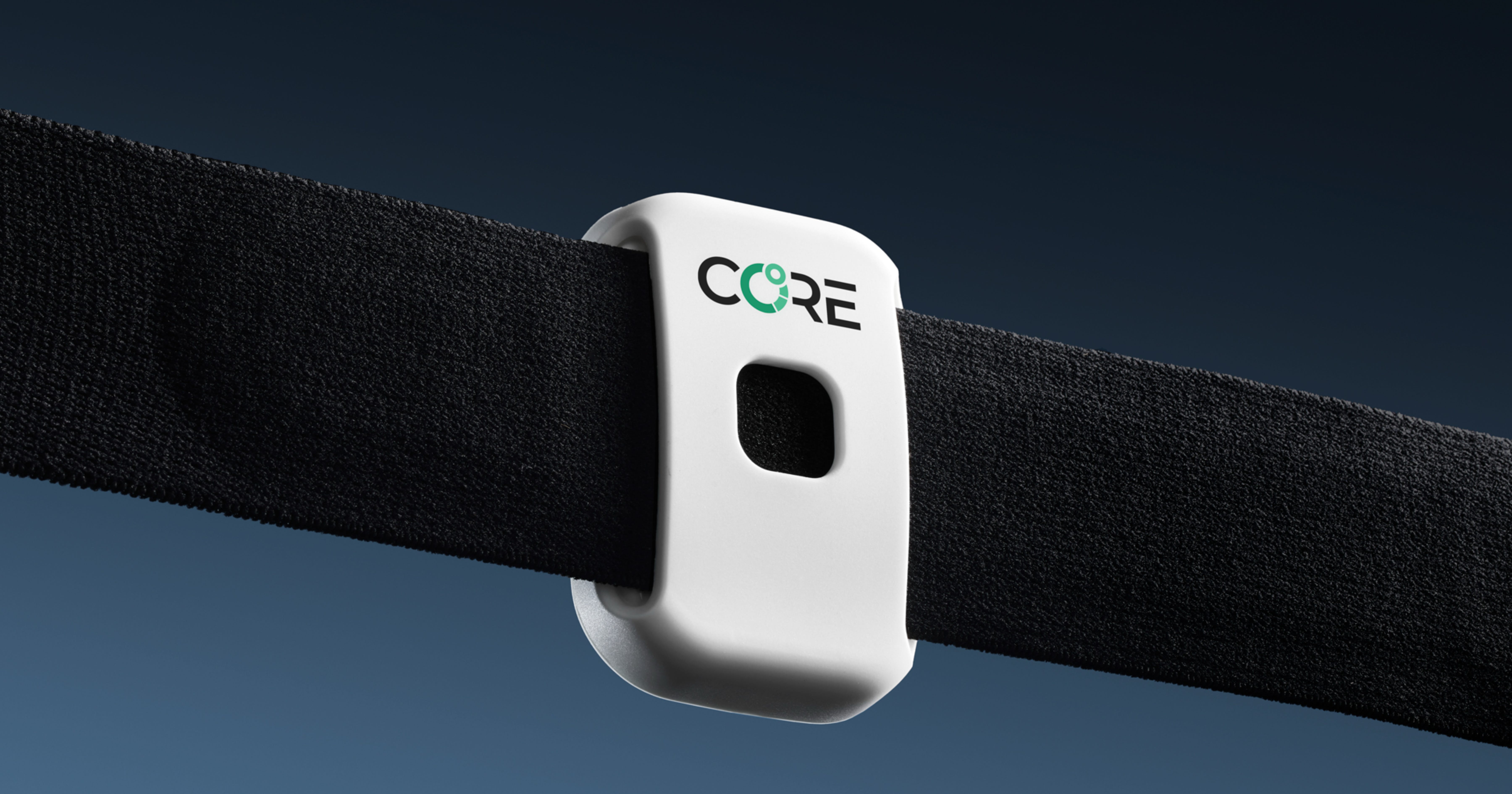
Most runners struggle in races these days because they overheat, not because they’re unfit. CORE 2 addresses that blind spot. The lightweight sensor streams your real-time core temp straight to your watch, so on race day you can know the exact moment to grab ice, dump water, or dial back the pace before your engine redlines. Train with it and you’ll build heat adaptation that boosts hemoglobin mass and VO2 max, which can match the same gains you get at altitude, minus the trip to the mountain. Waterproof, 5-day battery, research-backed accuracy.
Stop guessing what your body is telling you and try it today. Readers get 10% off the CORE 2 Thermal Sensor using code CITIUS10 at corebodytemp.com
Compiled by David Melly, Kyle Merber, & Paul Snyder
Put Some Respect On Emma Zapletalová’s Name 😤
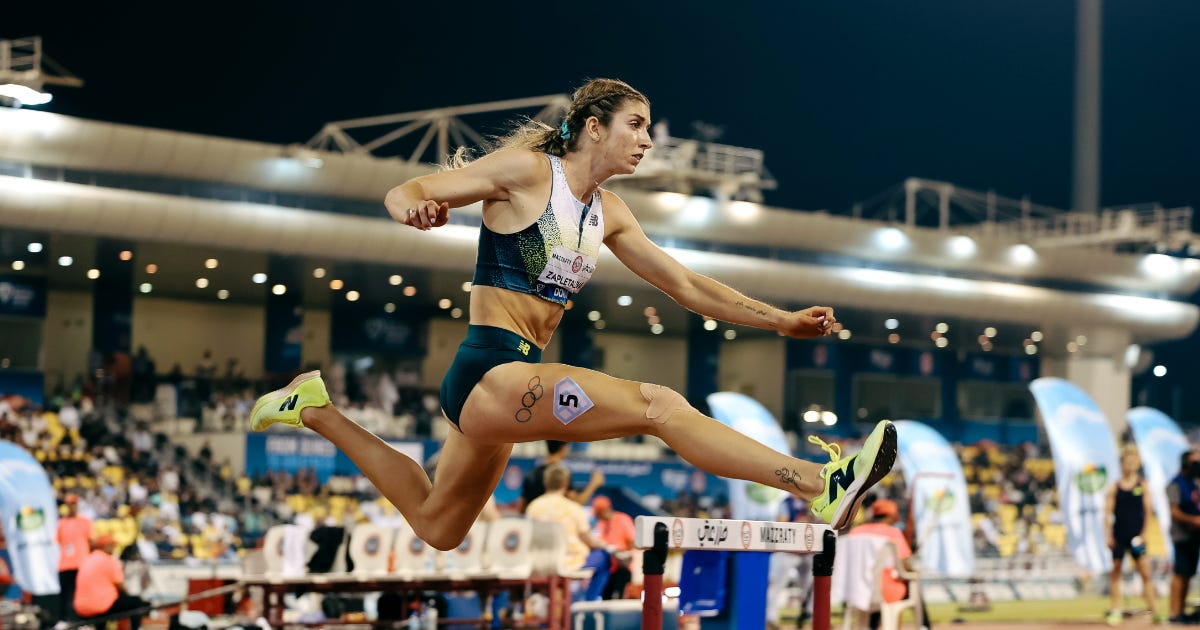
As we approach the halfway point of the Diamond League season, only three runners have won every DL competition on offer in their preferred event: Alison dos Santos, Soufiane El Bakkali, and Emma Zapletalová.
Dos Santos is the 2022 World champion in the 400m hurdles, a four-time global medalist, and the third fastest man of all time. El Bakkali is a four-time global champ in the steeplechase. And Zapletalová is… probably not an athlete many fans outside of Slovakia knew by name before last year.
The 26-year-old entered 2025 with a 54.28 personal best from four years earlier, and her fastest 400H in the last three seasons was only 57.26. Injuries cost her the entire 2023 season and she only raced three times in 2024, but Zapletalová turned things around in 2025, finishing second in three different DLs and putting a bow on things with a bronze medal at Worlds in Tokyo.
This year, she picked up where she left off, and then some, setting an indoor 400m PB of 50.78 and, most recently, winning the first four 400m hurdles on the Diamond League circuit. Outside of a cool, breezy day in Oslo, she’s improved her PB every time out, dipping under 53 seconds and getting all the way down to 52.30 last week in Doha.
In a few short weeks, Zapletalová has moved from #29 to #6 on the all-time list. She’s beaten three of the five women ahead of her this season head to head (Jasmine Jones, Dalilah Muhammad, and Anna Cockrell). With Femke Broeders-Bol focusing on the 800m and Sydney McLaughlin-Levrone expecting her first child, a new star has emerged in the 400m hurdles.
Is that all this is, though? A void left by two giants in an event (with less relative depth) gets filled by a “best of the rest”?
Not so fast: Zapletalová is no also-ran.
Only three times in the last five seasons has an athlete not named Femke [pre-Broeders] Bol won a DL 400H with a mark under 53 seconds. Muhammad, Cockrell, and Shiann Salmon have each done it once. Remember: Zapletalová has done it three times this year. Her resume is starting to look a lot like Broeders-Bol’s than anyone else’s, a clear sign she’s moving out from the crowd and into some very rarefied air.
It’s hard to compare times across eras, but it’s still worth noting that Zapletalová has leapfrogged big names like Olympic champions Lashinda Demus and Melanie Walker. She’s now bettered every time in the pre-Dalilah era, and her 52.30 in Doha would’ve landed her on the podium of every global championship except for the 2020 2021 and 2024 Olympic finals.
The case for Zapletalová being a true-blue, no-matter-who’s-on-the-track contender is rock solid at this point. If the injury bug doesn’t return to bite her, it may start to look once again like the podium spots at World and Olympic championships are pretty much spoken for, even with Muhammad threatening to retire every season. And we shouldn’t make any assumptions on finish order, either, given that this new and improved version of Zapletalová hasn’t gone head-to-head against McLaughlin-Levrone or Broeders-Bol, and thus, hasn’t been pushed to an even faster time by the event’s undisputed all-time number one or two.
Given the known absence of its two brightest stars, heading into this year it was easy to assume that the women’s 400m hurdles would be either a) boring or b) evenly-matched, but at a lower level of competition overall. So far, neither possibility has come to pass. Sure, Zapletalová winning every week may not exactly be thrilling in its unpredictability, but it’s way more exciting to see how long she can sustain this newfound dominance than to watch Femke pick up her 45th circuit victory. Since she’s gotten faster and faster every week, the conversation will inevitably move to just how close she can get to gold-medal contention even with FBB and SML returning.
The lesson here is clear: the track and field universe works in mysterious ways. An empty throne will never remain empty for long. Whether it’s new runners rising through the ranks, athletes sensing an opportunity and switching events, or long-toiling veterans getting their time to shine, the vacuum will eventually incent and incite greatness. Emma Zapletalová saw her chance and took it, and good luck taking her down now that she’s on top.
Niels Laros Finds Himself At The Classic 1500m Crossroads 🛣️
To quote the great poet Robert Frost: “Two roads diverged in a wood, and I—I took the one that I hoped would lead to 1500m gold.”
…or something like that. These days, 1500m gold actually feels like a road more traveled. Every year it’s a different guy on the top step of the podium. As a result, we’ve got an ever-increasing sample size of the path to middle-distance success—and a dwindling sample of strategies for sustained, multi-year dominance.
Historically, very few milers are equally skilled at both 800m and 5000m. Only two men in history have broken 1:45, 3:30, and 13:00, and they were two of the all-time greats: Saïd Aouita and Augustine Choge. Conventional wisdom is that there are two kinds of 1500m runners, the speed-based ones and the strength based ones. In our bicarb-fueled current reality where winning championship times in the 3:20s are becoming downright commonplace, the balance seems to have tipped toward the latter, with runners like Jakob Ingebrigtsen, Yared Nuguse, and Cole Hocker finding success in fast-from-the-gun wars of attrition.
Call it the Timothy Cheruiyot Effect. The lesson from the 2019 World Championship was clear: Cheruiyot opened up a huge gap on the entire field by front-running alongside teammate Ronald Kwemoi, and the gap proved insurmountable. Cheruiyot ended up winning by two full seconds in 3:29.26, rendering the kicks of Matthew Centrowitz, Taoufik Makhloufi, and others powerless. In the next four global finals, the winner has changed, but the winning time has been 3:29 or faster every time.
Fast forward to 2025, when the absence of Ingebrigtsen in his de facto pacer role meant that the winning time was 3:34.10, and the top three spots went to speed demons. 2025 champ Isaac Nader has run 1:43.86 in the 800m, but he’s never raced a track 5000m; runner-up Jake Wightman has only run 13:52 on the roads; and bronze medalist Reynold Cheruiyot has a PB of 13:16.40.
Is razor-sharp footspeed back in style? Niels Laros seems to think so. The 21-year-old Dutchman ran his first race since last year’s World 5000m final this past weekend in Hengelo, clocking a 1:43.83 PB for the win. Laros has “only” run 13:10.86 in his short but illustrious career so far, but he’s also run 7:29.49 in the 3000m and his best results in 2025 came in fast-paced Diamond League races.
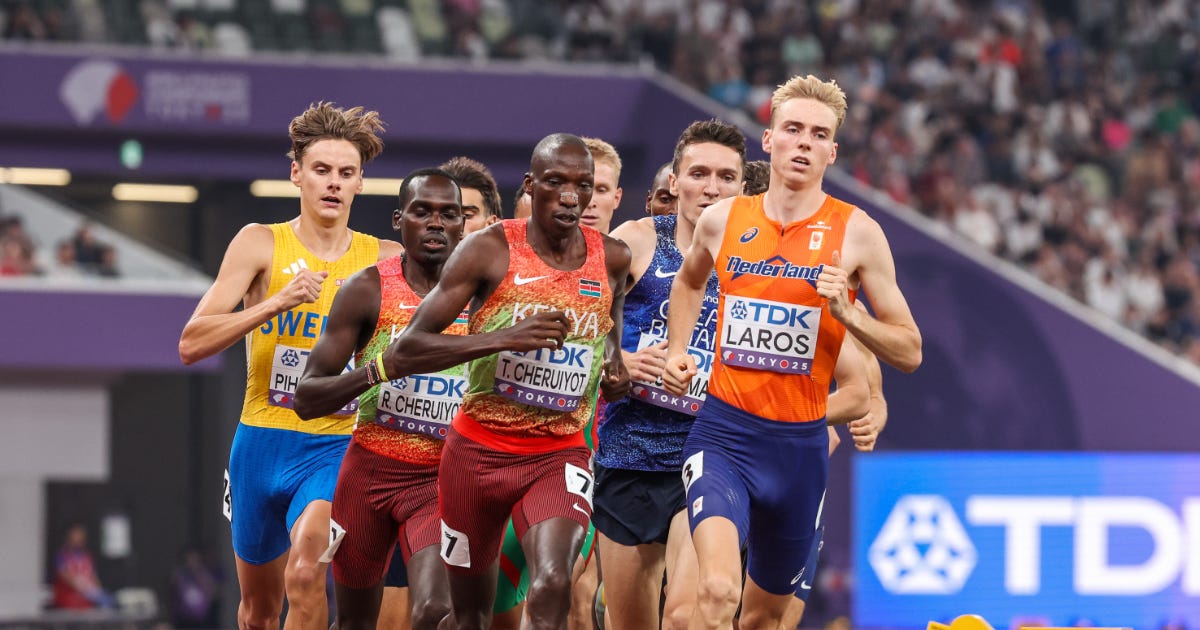
Even before his 800m last weekend, it was clear that Laros wasn’t settling for one road or the other. At the European U23 Championships, he skipped the 1500m entirely and instead picked up wins in the 800m and 5000m, using the opportunity of slightly-watered-down age-group competition to hone his chops at both ends of the spectrum. At the Pre Classic, he first burst into the international spotlight with his epic kick to reel in Nuguse from way back, but in the Diamond League final, he took the win in 3:29.20 by sticking in the top three the whole race.
In Tokyo, Laros ended up fifth as the shuffle and chaos of a kicker’s race didn’t quite work out in his favor. After handily dispatching many of the same men in three different DL races, he discovered a racing weakness the hard way. Much like the men in that 2019 final finding themselves unable to reel in Cheruiyot over the last lap, there was a lesson to be learned, and if Laros’s season opener is any indication, he’s taken it to heart.
Generally speaking, the most consistent middle-distance runners of the 2020s have been jacks-of-all-trades, or something close to it. Josh Kerr has yet to run a fast 5000m, but his battles with Cole Hocker over 3000m and two miles make it clear that he isn’t wilfully sacrificing strength for speed in training. Jake Wightman is generally known for his kick, as demonstrated in last year’s final, but it’s worth noting that the 2022 World champ won his gold medal in a 3:29 race, staying close enough to Ingebrigtsen to use his speed to its max effect. With all the advancements in training, fueling, and technology, it’s easy to envision the list of sub-1:45/3:30/13:00 guys ballooning rapidly in the next few seasons.
If Laros is going to keep the streak alive in 2027 of a new World 1500m champion being crowned each year, he’s got to be prepared for either kind of race. And if anyone else wants a chance at beating him to the punch, it’s looking increasingly like they’ve got to reject the notion that the two middle-distance roads must diverge and try to venture down two paths at the same time.
Sponsored by Bandit
Bandit Running’s Unsponsored Project returns for 2026.
There are athletes running at the championship level who make exactly zero dollars from the brands whose logos they’re wearing on the start line. For the past four years, Bandit has been putting athletes in unbranded kits and paying them to represent themselves while they chase their dreams. The financial assistance can go toward travel, lodging, or anything else the athletes need to compete at the highest level.
For 2026, Bandit is providing support for any Unsponsored athletes competing at the USATF Outdoor Championships. Every contract includes a release clause so an athlete can sign with a bigger brand the moment an offer lands. 11 Unsponsored alumni have already gone on to deals with some of the largest footwear brands in the world.
Competing at USATF Outdoors? Interested? Contact: timrossi@banditrunning.com
U.S. U20 Championships Ushered In A New Wave Of Stars… Or Did It? 👋
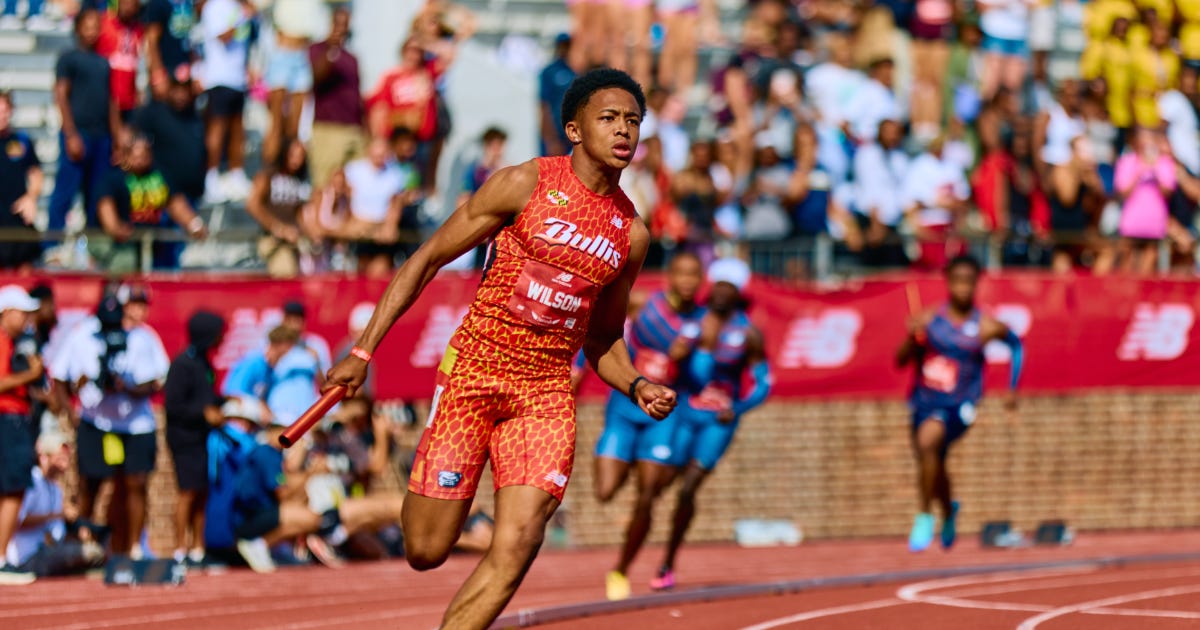
The last time the U.S. U20 Championships were held in Eugene, Oregon, the year was 2014. The San Antonio Spurs were cruising toward the franchise’s fifth NBA title. Barack Obama was president. Hayward Field was still the wooden old Hayward Field. And a bunch of American teenagers qualified for their first taste of international competition as part of Team USA.
Qualifiers at that meet included: Raevyn Rogers (800m), Elise Cranny (1500m), Mary Cain (3000m), Kendell Williams (100m hurdles), Arianna Washington (100m), Kaylin Whitney (200m), Shamier Little and Sydney McLaughlin (400m hurdles), Elle Purrier (steeple), Quanesha Burks (long jump), Keturah Orji (triple jump), Raven Saunders (shot put), Valarie Allman (discus), Brooke Andersen (hammer); Trayvon Bromell (100m), Grant Fisher (1500m), TJ Holmes and Kenny Selmon (400m hurdles), and Curtis Thompson (javelin).
Twelve years later, this group has collectively accomplished quite a bit in the sport: Olympic and World medals, American records, impressive showings on the Diamond League circuit. Not all of them progressed into global podium threats, but each of them carved out something of a career for themselves in the sport—no small feat.
However, just like qualifying for World U20s didn’t necessarily lead to a big boy/big girl medal a decade later, there were plenty of athletes who finished outside of qualification at U.S. U20s back in the day and went on to much bigger and better things (Brittany Brown, for example, took third in the 200m and sixth in the 100m).
So which is it: a U.S. U20 breakthrough means O20 (a phrase we are desperate to coin for “over-20” competition) stardom; or making a U20 team basically means very little? It depends! The answer is complicated.
For starters, U20s are a weird event at both the U.S. and World level. They aren’t held every year, so there’s an element of randomness to who is eligible to compete. Being 19 in the right year can be a real advantage. Unless you’re the best to ever compete in your event—like Sydney McLaughlin-Levrone—you likely aren’t going to be good enough at 14(!) to take on college freshmen.
For American athletes, U20s aren’t necessarily a top priority before fall cross country season or after a long indoor/outdoor campaign. Distance runners especially may already be deep in summer training, and frankly, some kids who had a lot of success during the school year might, understandably, simply want a vacation. And of course there are the true freaks, the Cooper Lutkenhauses and McLaughlin-Levrones who are legitimate medal contenders at the senior level while still teenagers. The true top-end talent has the luxury of skipping U20-level competition entirely and jumping directly to the big show.
Even still, it’s worth keeping close tabs on U20 Team USA members to seem like a cool, knowledgeable track fan a few years from now. In 2014, the top U20 athletes were essentially still prospects: athletes you squint at in hopes of divining their futures. But this past weekend, about a dozen qualifiers for next month’s U20 World Championships—also in Eugene—are already competitive on the world stage at the senior level.
That’s where this current batch of U20 athletes feels different. This past weekend, New Hayward in New Eugene hosted the U.S. U20 Championships sort of in conjunction with Nike Outdoor Nationals. And a lot of the names at the top of the results have been at the top of high school ranks for years and making a splash in bigger ponds. They may not be poised to extend their season to the World Ultimate Championships after a speed run of Diamond League outings, but they’re already ranked favorably among their senior peers and have to be thinking that senior U.S. teams—and even medals—is no more than a year or two out of reach.
Take the 110m hurdles, for instance, which is rapidly becoming a Hayward Field trademark. Zacchaeus Brocks won it in 12.98, a new high school national record and a top-five time in the world this year including the seniors. Brocks, who will attend Ohio State in the fall, won by 0.002 seconds over Georgia freshman Le’Ezra Brown. To qualify for the World U20 team you had to break 13 seconds!
Quincy Wilson is already an Olympic gold medalist. He predictably made the U20 team after running 44.84 in the 400m final. But less predictably, he placed second to Jayden Deleon (44.52), which forces us to ask the question “is the kid with the Olympic medal even the top freshman going into the next year of NCAA competition?” Wilson will compete for Maryland and Deleon for LSU. Tate Taylor, a Texas Tech-bound high school senior, spent the better part of the spring traveling the world and competing against professional 200m runners. He’s ranked 14th in the world this year after his 19.94 victory in Eugene.
Wondering whether or not these guys take the next step to become stars almost feels like asking the wrong question… by basically any metric, they’re already stars. Even if they don’t get much better, they could all conceivably make a World final in 2027.
While the U.S. U20 women don’t have as many super-highly ranked athletes in the mix as the men do, to place in the top-two and advance to… well, Eugene again… you’ve gotta be a top-100 ranked athlete in the world, at least in the sprints or throws.
Oregon Duck signee Jaslene Massey is the high school record holder in the discus and California record holder in the shot put. She won both events in Eugene, and is ranked 43rd and 99th, respectfully, in the world in each. Mia Maxwell, who won both the 100m and 200m, is ranked 57th and 33rd. Her sister Mariah Maxwell placed second behind Mia in both events, and ranks 70th in the world in the 100m and 28th in the 200m. Ataja Stephane-Vazquez won the 400m in 51.08, which ranks the Georgia-bound senior 52nd in the world this year. Natalie Dumas’s 56.13 puts her in the 80th slot in the world in the 400m hurdles, but given her lifetime PBs—all set last outdoor season—span impressively from 51.14 in the 400m to 2:00.11 in the 800m, she feels like someone whose best event going forward could change.
An athlete ranked 28th through 80th in the world is already elite. You don’t need to perform advanced calculus or practice the dark arts of sports scouting to make the argument that plenty of 2026 World U20 Team USA members will go on to be great at the next level, too. That’s what makes this year so intriguing. Junior athletes generally have high ceilings, but these are high-floor athletes already established as globally competitive. We’ll certainly be tuning into World U20s in July… and keeping tabs on potentially lucrative futures bets for 2028 Olympic medals.
Let’s Make “Off Year” USAs A Bit More Interesting 🤔
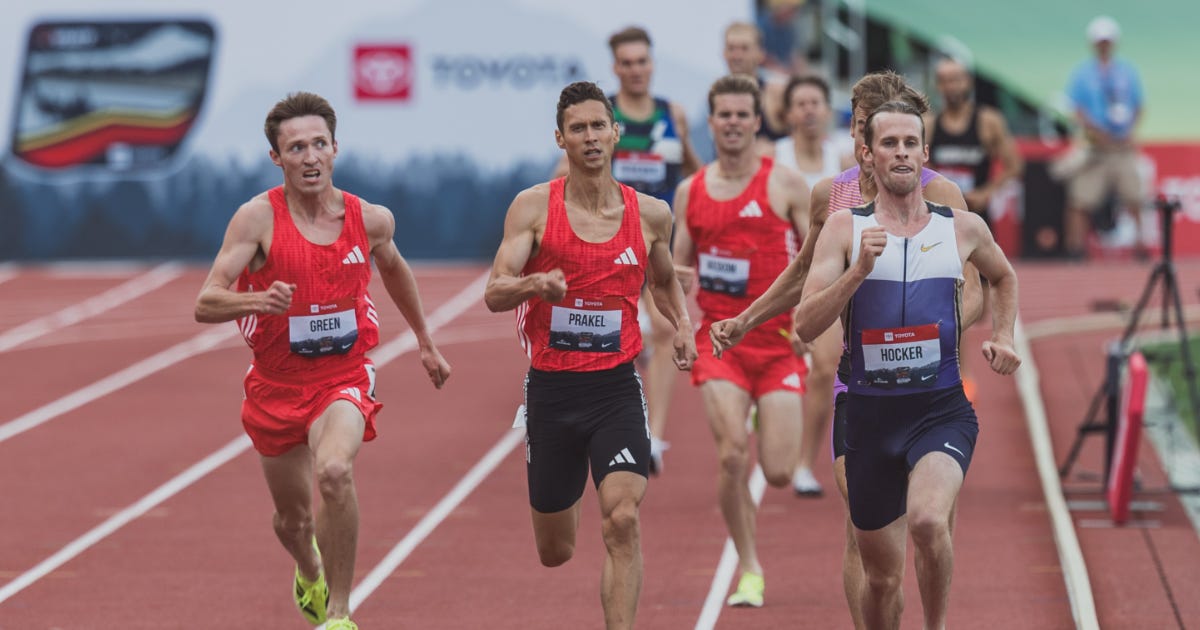
Who’s your favorite runner’s favorite runner?
Though it’s a title of endearment and a massive compliment to anyone in consideration, it’s a little backhanded given that being described this way means you’re probably not a unanimous fan favorite. That’s because fans know accolades, while the pros know each other.
Your favorite runner’s favorite runner is probably not a perennial medalist. They likely don’t have the most Instagram followers and almost certainly don’t have the biggest contracts. Instead, their popularity is earned by how often they show up, and how they show up once there. They’re the type of athletes who have run in every U.S. championship the last decade but haven’t always made the team. But they’re sure to keep the pace honest in a prelim because they always make the final.
These runners are staples on the circuit. They know their way around the train stations in Belgium and rack up loyalty points on every European country’s cheapest airline. This runner shows the college kids where to warm up and picks their meet schedule partly based on where the best afterparties are.
So when Sam Prakel ran 3:33.23 to win the 1500m in Hengelo, his peers let out a collective “Hell yeah!”
Prakel is 31 years old, has run 3:38 or faster every year since 2016, and this year has already posted a personal best of 3:32.76. Although he’s represented the United States at the World Indoor Championships and earned a bronze medal in the Road Running Championships, he’s never represented the nation at a global outdoor championship.
That’s not because he hasn’t been good enough—he was simply born in the U.S. around the same time as so many of its all-time great middle distance talents. But during this “off” year, that doesn’t really matter, because there are no caps on qualifiers per country for the World Ultimate Championships. Should Prakel scratch and claw his way to a high enough world ranking to sit within the field size quota, it doesn’t matter if three, or four, or five other Americans are ranked higher.
While considering how exactly to follow this strange conventional championship-less outdoor campaign, it’s worth keeping an eye on the Sam Prakels of the world. Can he earn a spot at his first outdoor global championship? Picking up 1199 points for the performance in Hengelo will certainly help the cause, but the additional 100 points for winning a Category A meet will help further.
Those extra points add up, particularly because the U.S. Championships will be worth less than usual. As a “Category B” meet with no qualifying spots on the line, there has never been a better time for A-listers to skip USAs entirely. Fortunately, the easy travel and novelty of a non-Eugene host—and a trip to New York City—will be enough to pull in some talent; we can assume Sam Prakel will be there.
Now here’s where we slide into interesting proposal territory: why doesn’t USATF game World Athletics’s own system to give its athletes a better shot at World Ultimate qualification?
One criteria that separates Category A from Category B meets could be addressed at no additional cost: a minimum of 15% of the total Athletes participating in a Meeting shall be based outside the host area. So why not open up the U.S. Championships to foreigners in off years? It would increase the overall level of competition while ensuring that performances are worth more in the eyes of World Athletics. And there’s precedent!
In 1993, Noureddine Morceli, the Olympic gold medalist from Algeria, won the U.S. Indoor Championship in the mile. In 2015, American Andrew Wheating won the 800m at the New Zealand National Championships. Some nations basically always open up their national championships to the rest of the world.
Just last year, Grenada’s Lindon Victor was allowed to compete in the decathlon at the outdoor U.S. Championships. This year, USATF is again encouraging international athletes to compete at USAs, so long as they’re heptathletes or decathletes—seemingly as part of the World Athletics Combined Events Tour. Let’s extend that policy to all events!
Allowing international athletes to compete in the U.S. Championships once every four years isn’t just a clever workaround for a complicated point system, it’s a lifeline to maintain fan interest. By inviting the world to race on American soil, there is an opportunity to elevate the national meet to a must-watch event. All while simultaneously giving the truest grinders in the sport—the Sam Prakels of the world—another chance to boost their rankings.
More News From The Track And Field World 📰
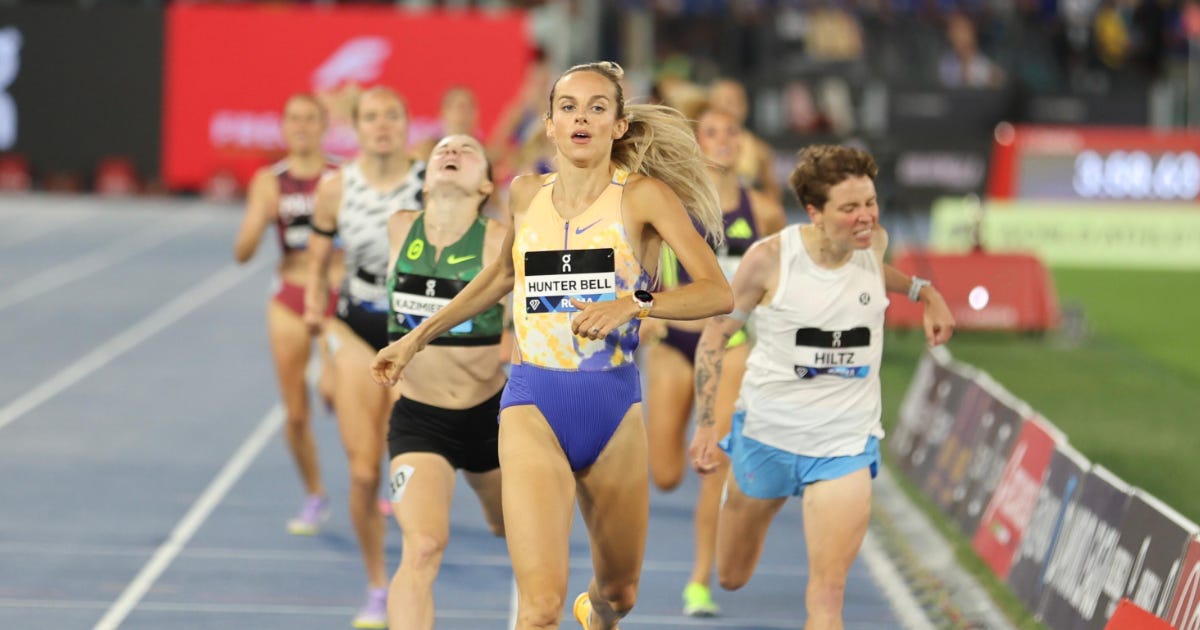
– Oblique Seville threw down a 9.82 100m (+0.6) to win the Jamaican Championships; the Shericka Jackson comeback tour continued apace, as she won the 100m in 10.81 (-0.3) over Tina Clayton (10.85); and Demisha Roswell went 12.40 to win the 100m hurdles.
– With Commonwealth Games spots on the line at the Kenyan Championships,
Timothy Cheruiyot did what he’s done all season long: kept his foot on the gas. His 3:32.28 was enough to fend off Reynold Cheruiyot (3:32.35) and Brian Komen (3:32.60). And reigning World 800m champ Lilian Odira secured a victory of her own in 2:00.44.
– At the UK Athletics Championships Amy Hunt prevailed over 100m in 11.01; Georgia Hunter Bell obliterated the championship 800m record, going 1:55.93 for the win; Amber Anning also broke a championship record—her own in the 400m—at 50.16; and Jake Wightman snagged a tactical 800m title in 1:45.40. After running 51.62 in the 400m prelims, Keely Hodgkinson scratched from the final, citing a “twinge.”
– It feels nuts to follow up a slate of national championship recaps with a bullet point exclusively for a lowkey meet in an Orlando suburb, the Star Athletics Sprint Series, but alas, that’s where Sha’Carri Richardson went 10.77 (+0.3)—her fastest time in about two years. Additionally, Courtney Lindsey went 9.89 (+1.4), and Brandon Hicklin and Sam Blaskowski went 19.92 and 19.93 in the 200m, respectively.
– One last shout from the FBK Games in Hengelo: Femke Broeders-Bol won the 800m in 1:57.41, keeping her string of solid showings in her new distance alive.
– Four-time World 1500m medalist Jenny Simpson experienced a medical emergency at a community track meet in Raleigh, North Carolina, last Thursday, requiring CPR and the use of an AED before being rushed to a local hospital. Per an update shared by her employer, Fleet Feet, she has shown “encouraging improvement.” Here’s wishing for a full and speedy recovery.
– Texas A&M and LSU coaching great Pat Henry has announced his retirement. Henry-led teams won a whopping 37 NCAA titles across his 54-year coaching career. Please join us in letting out a hearty “Gig ‘em” and/or “Geaux Tigers.”
– The 2027 London Marathon will take place across April 24th and 25th. Each day’s race will accommodate roughly 50,000 runners, making it twice as irritating for the nearly one million people who still won’t get selected to run.
– Boston Celtics superstar—and perpetual subject of trade rumors—Jaylen Brown met up with Noah Lyles for some offseason speed work.
Interested in reaching 20,000+ dedicated runners and track and field fans? Advertise with us here.