

U-S-ch(A)os ⏱️
Lap 262: Sponsored by Olipop
Sponsored by Olipop

A blast from the past, Olipop’s Shirley Temple combines smooth vanilla flavor with bright lemon and lime, finished with cherry juice for that nostalgic grenadine-like flavor. One sip of this timeless soda proves some flavors never grow old. Try Shirley Temple and more of Olipop’s flavors at DrinkOlipop.com. Be sure to use code CITIUS25 for 25% off your orders.
Compiled by David Melly, Paul Snyder, & Kyle Merber
U.S. Indoors Was Bad News For Millennials 👴🏼
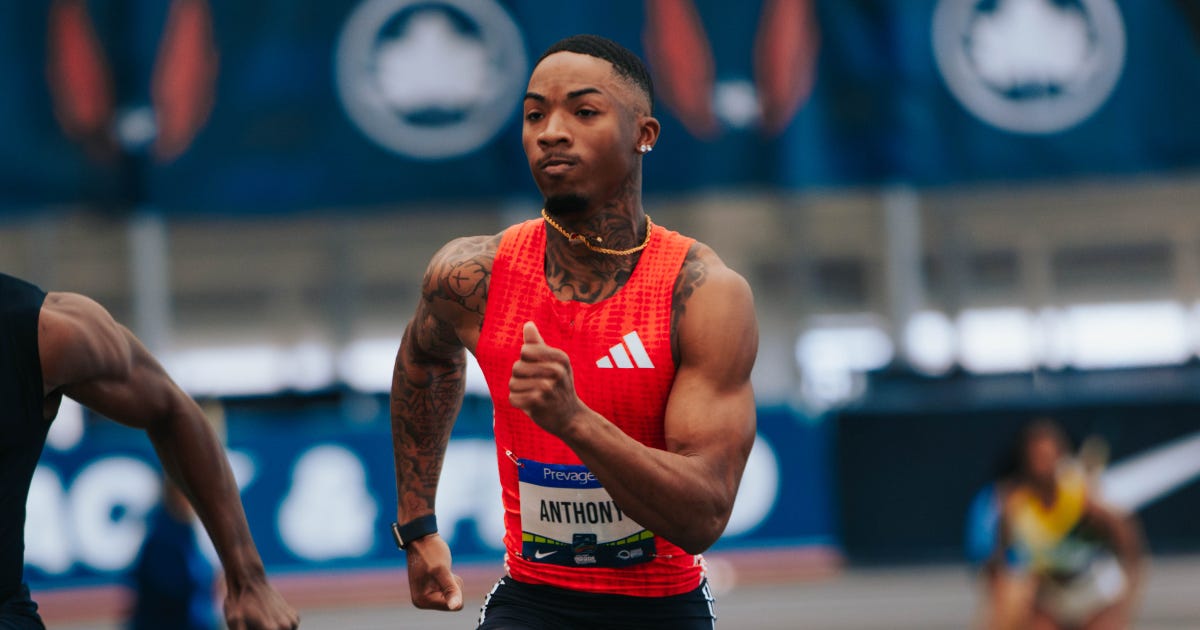
Hope your ferry ride home went smoothly! The 2026 USATF Indoor Championships returned to Staten Island for the second year in a row, and now we have (most of) our Team USA spots selected for this year’s World Indoor Championship in just two short weeks.
There’s two ways to look at U.S. Indoors in a year like 2026. On one hand, the “no global championship” vibe casts a bit of a pall over the whole season, as global stars choose to focus on having babies or launching music careers instead of loading up a full race schedule. But also, the lack of bigger fish to fry makes all the smaller fish appear slightly larger by comparison. If you abide by the theory that track athletes can only really peak two or three times max per year, you may choose to allocate one of those peaks to mid-March as a result.
As for us? We’re taking the glass-half-full view on U.S. Indoors, particularly given how unusually stacked a few events were. The men’s 60m featured Noah Lyles facing off with Trayvon Bromell—and neither took home the win. The 3000m lived up to the hype with Cole Hocker, Yared Nuguse, and Nico Young toeing the line and crossing the finish in basically a blanket. And the women’s 1500m featured yet another clash between Nikki Hiltz and Sinclaire Johnson, the two fastest American milers in history.
But here’s the thing: Hiltz, at 31 years old, was the only athlete in their 30s to take home a national title on the track. In the field events, shot put champ Roger Steen was the oldest U.S. indoor champ overall at 33, but only he and Chase Jackson (31) could join Hiltz in claiming the mantle of “Millennial.”
If there’s been a broader age trend in professional track over the last few years, it’s increased longevity. From Shelly-Ann Fraser-Pryce and Eliud Kipchoge on down, advancements in training and injury prevention have made it easier to view your mid- to late-30s as fruitful medal-winning years, not just a victory-lap addendum where commentators bring up your age constantly with a tinge of pity.
This weekend’s Staten Island antics revealed a very different theme: the next generation of stars isn’t just on their way; they’ve arrived. And assuming everyone accepts their spots, there will be more teenagers than moms on the World team. When Trayvon Bromell won his first World Indoor gold in 2016, this year’s 60m national champ, Jordan Anthony, was 11 years old.
The biggest standard bearer for the rise of young American talent is 17-year-old Cooper Lutkenhaus, who won the 800m title in 1:46.68 while looking like he was barely breaking a sweat. Lutkenhaus is clearly a generational talent, but every other pro in that race is likely hearing footsteps after a high school junior took them to the cleaners.
But he wasn’t the only record-setting wunderkind in Ocean Breeze. The runner-up in the women’s 60m was Mia Maxwell, who equaled the U.S. high school record with her 7.13 run. Her twin sister Mariah was only one spot and 1/100th of a second behind. In the men’s 60m, 16-year-old Dillon Mitchell was only seventh in the final, but earlier that day he ran 6.59 to set the U18 world record in the event. If these kids even make it to college before turning pro, God help their competition.
Speaking of “glad they’re not in college right now,” the sprinters of the SEC must feel pretty proud of their alumni—and pretty relieved they didn’t have to race them in Fayetteville this weekend. Across the men’s and women’s 60m, 400m, and 60H, five of the six champions came from the best sprint conference in the country (the lone exception being Howard University alum and 60H national champ Dylan Beard).
In particular, Anthony and Jacious Sears, the women’s 60m champ, are looking a lot like the Next Big Sprint Sensation. After winning the 60m and 100m at NCAAs last year, Anthony looked well-positioned to make a World team outdoors, but he couldn’t quite sustain the peak into August and ended his season at the semifinals of USAs. Sears has struggled at times to stay healthy, but when she’s able to get uninterrupted training and racing in, her prodigious talent is able to really shine. It’ll be great to see them take on more international competition later this month in Poland and see where they really stack up.
The middle-distance races featured a murderer’s row of 20-something’s in their racing prime, with 22-year-olds Addy Wiley taking the 800m in an indoor PB of 1:59.43 and Nathan Green out-maneuvering the 1500m field to win a tactical race in 3:37.65. The 3000m champs, Hocker (24) and Emily MacKay (27), aren’t exactly retirement age either. What’s all the more impressive is that the “veterans” in the field, like Elle St. Pierre and Yared Nuguse (both second in the 3000m) aren’t exactly fading or aging out; they’re simply being matched by the rising tide they helped start.
All this focus on the young guns isn’t to imply that the best Americans of 2025 are washed. It’s just shown that no one, not even Noah Lyles, can sleepwalk their way to a U.S. title anymore. You better show up sharp and prepared—and you still might get beat. In many, if not most, track and field events, the U.S. team is the hardest in the world to meet, and the swarm of new talent on the senior stage has only made things tougher. That’s a great problem to have, because it makes every race, even the indoor championship in a “down year,” more competitive and thus, more exciting. If you’re a pro reading this, just don’t get complacent, because no one else is.
The Search For Sporting Truth Comes To Atlanta 🫠
During the first stage of the 2025 Volt ao Algarve there things went haywire just before its conclusion: 50 riders mistakenly followed the lead vehicles down a chute that brought them to a parallel road from the finish line.
Filippo Gana crossed first with his arms up, but following massive pushback from the other athletes and their respective teams the race was annulled. The race director said they decided to cancel the stage because “sporting truth did not prevail in the end.” There were 192 kilometers of racing and no winner declared.
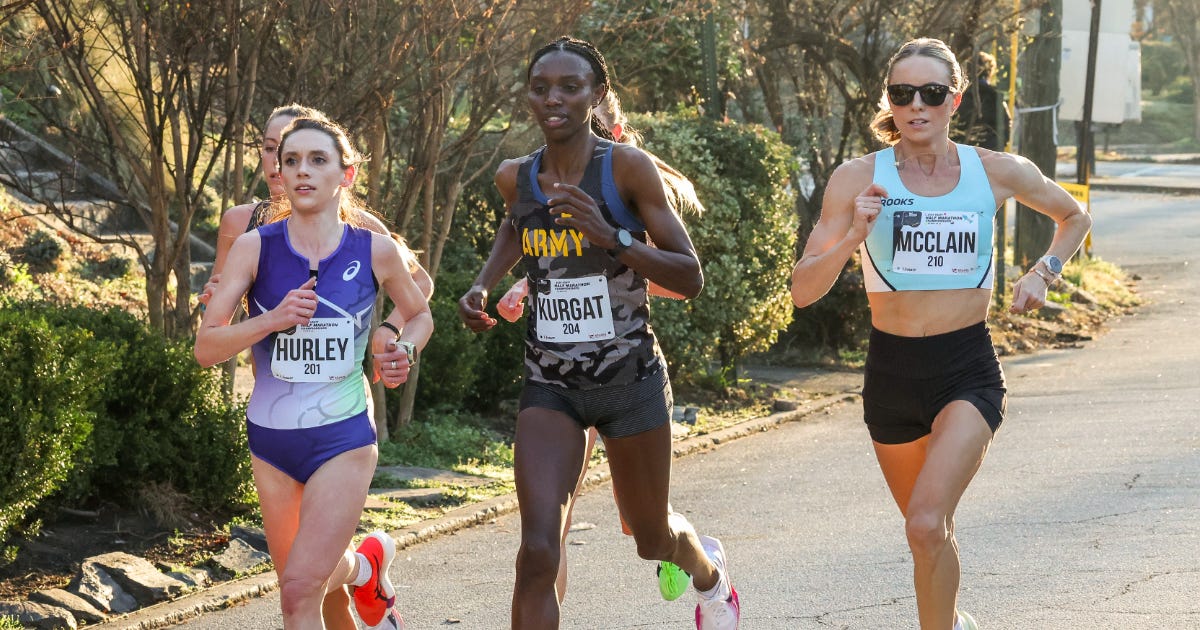
On Sunday at the USATF Half Marathon Championships in Atlanta, following closely behind the lead vehicle, the likely podium of Jess McClain, Emma Grace Hurley, and Ednah Kurgat made a wrong turn in the closing minutes of the race. By the time they realized what had happened and got back onto the actual course, they were no longer in qualifying position. There was a winner declared—just not the one anyone expected with a mile to go
Also unlike that cycling race in Portugal, this race was a qualifier with the top three athletes earning their spot at the 2026 World Road Running Championships. You can’t just cancel the race. The letter of the law of most road races is that individual competitors are responsible for knowing the course, but look at the race video for yourself and consider how McClain could’ve possibly reached any other conclusion than what she did.
Despite appeals, both technical and emotional, the order in which the athletes crossed the finish line has been upheld as the final, official results. Born has already come out and said she would not be accepting the spot if offered, and it’s a legit possibility that every woman that finished higher than they otherwise would have would follow suit.
These are beautiful displays of solidarity and sportsmanship. It’s too bad they might not make a difference. In the official selection policy, an athlete had to have finished in the top five to be considered for selection to the World Championship team, otherwise the governing body must defer to the descending order list of world rankings. Right now McClain, Hurley, and Kurgat are not the top three Americans.
If you read the USATF statement about the incident, the decision to leave the results untouched feels like it was more about avoiding potential lawsuits than attempting to right a wrong. Everyone is understandably very angry. But hopefully cooler heads will prevail. Behind the scenes there are likely many conversations taking place on how to legally rectify things.
The (mis)handling of this specific incident is not unique to road running. Cycling, triathlon, cross country skiing, and even the Iditarod would all look to their rule book for clarity in a similar situation and likely draw the same conclusion. In some ways, that’s part of the problem. In sport, there are going to be fringe cases and weird one-off circumstances that don’t slot neatly onto a preordained set of rules. As a fan, you know this is the case in moments like this, where strict adherence to the rules feels like more of an affront to justice than an attempt at bringing it about.
Shouldn’t the specific nature of an event factor into how rules are interpreted within it? This was both a national championship and a selection event. Justice means different things in each of those two scenarios. Paying out double prize money seems like a relatively simple (albeit costly) way to deal with the championship piece. But the goal of a qualifier is to pick the best team. In this case, we saw enough of the race unfold to know who the top three would have been had there not been a few missing cones and an erroneous lead car driver bungling some directions.
We can learn from Formula 1 about how to handle the absurd and unpredictable events that a two sentence clause could never predict. At the 2018 Canadian Grand Prix, Victoria’s Secret model Winnie Harlow waved the checkered flag a lap early, indicating one to go, and subsequently caused mass chaos and confusion among the drivers. During these gray area situations, F1 has a “Roll-Back” rule that allows the judges to use the last full lap to determine final placings.
Wouldn’t that be a nice article to have right now? Forget the times and go off of who was winning at mile 12—that’s how USATF would send the best team, which is ultimately what Sunday was meant to do.
Tokyo Set A High Bar For The Rest Of The ‘26 World Majors 🇯🇵
With apologies to the fine city of Houston and its world-class half and marathon, any road race—no matter how fast its results and star-studded its entry lists—that takes place in January is ultimately part of the preseason.
We were wowed by Zouhair Talbi’s 2:05:45 win, appreciated Habtom Samuel taking time away from his NCAA obligations to crush a 59:01 half, and energized by Taylor Roe and several other Americans’ rock solid season openers over 13.1. But hey… none of these stellar performances got these athletes any closer to earning their World Marathon Major six-seven-star medal. And that’s why anybody—even athletes knocking on the sub-2:03/2:20 door included—runs marathons, right?
Thankfully, after this past weekend’s Tokyo Marathon, the World Major season is officially underway. And what an opening salvo it was!
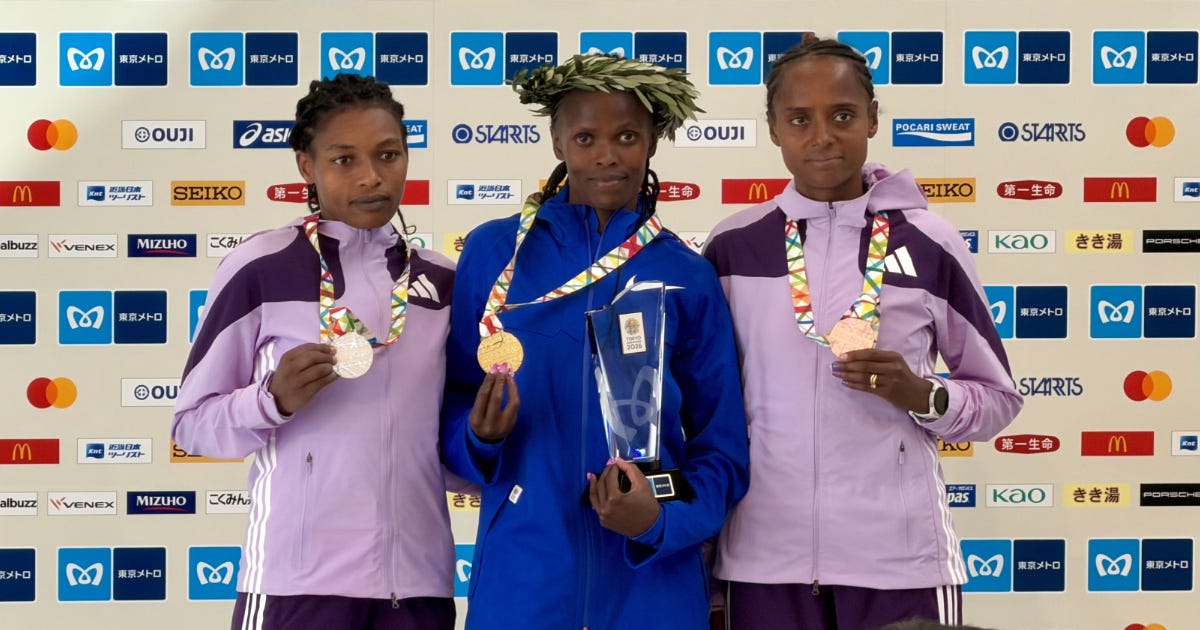
Brigid Kosgei’s 2:14:29 is the fastest women’s marathon time ever run on Asian soil and the seventh quickest mark in history. Her margin of victory—over two minutes up on second-placer Bertukan Welde in 2:16:36—reiterated her dominance on the day. But to truly appreciate how good Kosgei is right now, we need to pay a visit to ultimate fourth-place finisher Sutume Asefa Kebede, who previously held the course and Asian all-comer’s record.
Kebede and Kosgei ran stride for stride for 30km before Kebede began to reckon with that decision. Over the race’s remaining miles, a three-plus minute gap opened up between the two, Kebede’s brave early efforts rewarded by her being kicked off the podium thanks to a last-second charge to the finish by Hawi Feysa.
Kosgei decisively beat some really fast marathoners, including several who had higher world rankings than her coming into the race. And because she did so at the first Major of the year—a massive stage, but at a time when we have little other data to go on—we have to consider the possibility that she’s returned to the form she exhibited in the late 2010s and early 2020s, when she struck Olympic silver, and won five World Majors. She also became one of two women ever to run sub-2:15 on multiple occasions… but the other athlete on that list is Ruth Chepngetich, so she’s the solo non-busted-for-doping member of the club. Is Kosgei one of the handful of women looking to claim the mantle of “World’s Best Marathoner” right now? It’s hard to say she isn’t!
While the women’s race was highlighted by Kosgei’s run-away victory, the men’s came down to a three-way kick for glory between Tadese Takele, Geofry Kipchumba, and Alexander Munyao: 2:03:37 to 2:03:37 to 2:03:38, with Takele nosing out the win.
First off, yeah… hell yeah… HELL YEAH! That’s the type of finish you absolutely love to see at a race of this caliber. As is practically a national tradition at this point, Japan’s Ryuichi Hashimoto took things out honest and then some, leading the field out at a quick clip for the first half of the race before fading to six minute pace and a 2:11:21 finish. But the three podium finishers were able to stick with every move and keep things as interesting as possible for the full 26.2-mile race.
Like in the women’s race, in the absence of who’s generally considered the marathon’s true top dogs right now—there’s not a single clear best marathoner, but we usually count Sebastian Sawe, John Korir, and Jacob Kiplimo as the contenders—drawing first WWM blood goes a long way to establishing yourself as a candidate for the honor.
Those are the top-line takeaways. There were other, below-the-fold happenings though, as well. Peiyou Feng set a Chinese national record (2:05:58) in 10th. Selemon Barega lowered his PB to 2:05:00 in his second attempt at the marathon. And Syracuse alum Illiass Aouani’s 2:04:26 performance marked a 90-second PB and the fastest marathon on record for a runner who once competed in the NCAA.
That’s the beauty of getting your first big shot out of the way early on the calendar: you establish the tone everyone else has to match or better for the rest of the year. It’s not exactly a given that just because a race is a World Major it’ll be captivating or narrative bolstering. But Kosgei, Takele, Kipchumba, and Munyao delivered on the promise of what elite marathoning ought to be.
Now it’s up to the rest of the world—in particular, any Americans, largely absent from Tokyo, who have something to say—to issue a rebuttal in Boston next month.
More News From The Track And Field World 📰
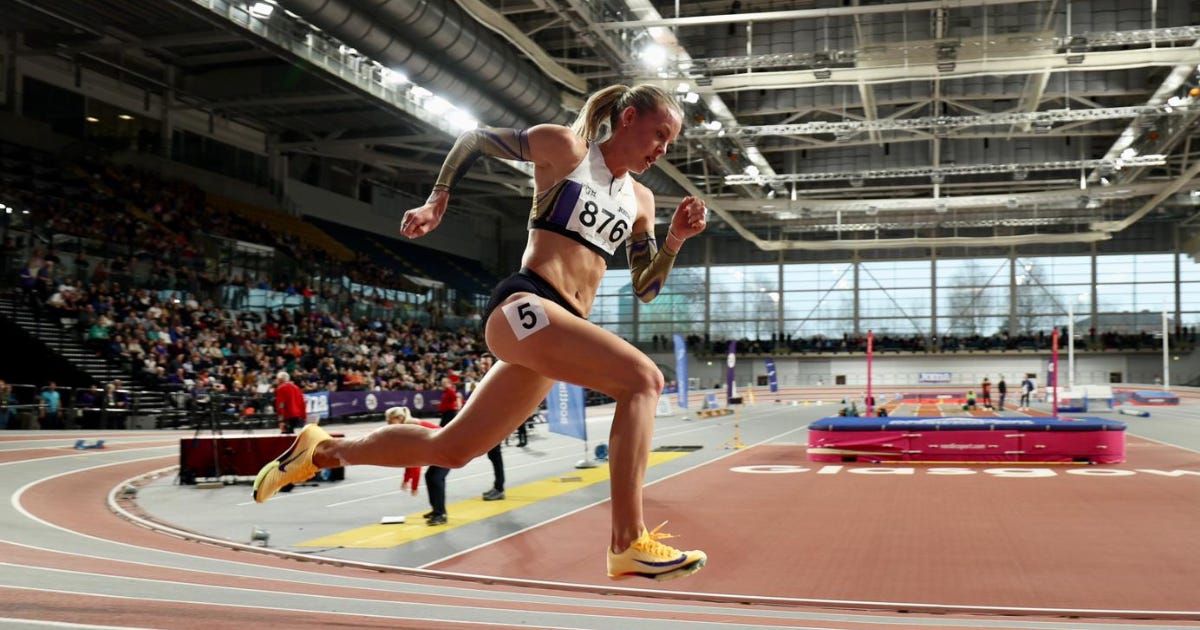
– Keely Hodgkinson posted a 400m PB—51.49—in Glasgow, and effectively entered future 4 x 400m relay discussions for UK Athletics; at the same meet, Georgia Hunter Bell popped off a 1:57.80 800m—Great Britain now claims three of the four fastest 800m runners this indoor season.
– NCAA track appears to be wading into the college basketball waters, allowing former professionals to return to the collegiate ranks. Despite having signed a pro deal with Asics, Louie Hinchliffe, the 2024 Olympic 4 x 100m bronze medalist and 2024 NCAA 100m champ, is set to return to the University of Houston.
– 1972 Olympic marathoner, coach to the people, best-selling author, running store founder, and evangelist for the sport Jeff Galloway has passed away.
– Diribe Welteji’s provisional two-year ban for refusing to provide a sample is now officially on the books. Her 2025 World Indoor 1500m silver medal has been stripped, and her 3:51.44 1500m PB—set at last year’s Pre Classic—has also been invalidated.
– Rita Jeptoo—who has already been banned once for drugs and had her 2014 Chicago and Boston Marathon wins vacated as a result—has been banned again. This time it’s for good ol’ fashioned steroids.
– Jonathan Gault of Letsrun dropped a thoroughly reported story about a former Iowa State University runner now competing for Division III Rowan University—multiple ex-teammates of the athlete allege he was taking PEDs while competing for the Cyclones.
– That’s a lot of doping-related news, so as a palate cleanser here’s a different sort of terrible behavior: a person who claims to have run a 5k entirely within an airplane bathroom mid-flight. Please don’t dope. Please don’t do this either.
🏇🏇🏇 Now it’s time for an NCAA indoor conference championship jamboree! 🏇🏇🏇
– At Big 12s, Oklahoma State’s Billah Jepkirui took down BYU’s Jane Hedengren in the mile, 4:23.40 to 4:23.33—Billah came back to win the 1000m in 2:43.48 a bit later, while Hedengren secured an individual 3000m title in 8:46.11.
– At SECs, Kanyinsola Ajayi of Auburn tied the NCAA men’s 60m record (6.45); Georgia’s Adaejah Hodge took top honors in the 200m, well ahead of South Carolina’s JaMeesia Ford, 22.32 to 22.61; Samuel Ogazi of Alabama won the men’s 400m in 44.72, good for a top-5 time in the world this year; Though the majority of the highlights from SECs were sprinting-related, Arkansas senior Sydney Vaught did pop off a 15:02.52 5000m.
– At ACCs, Gary Martin of Virginia won the 3000m from the “slow heat,” going 7:43.18 with a little pacing help from teammate Will Daley; Juliette Whittaker of Stanford took the women’s 800m, which meant getting through Clemson’s Gladys Chepngetich and UNC’s Makayla Paige.
– The Big Sky champs were held in Pocatello, Idaho,and athletes had thoughts about the generally wooden and rail-less condition of the oval—nevertheless, NAU’s men’s and women’s squads returned to Flagstaff with team titles, and Colin Sahlman still won the 800m in a respectable 1:46.11.
– At Big 10s, Michigan’s men’s DMR squad edged out Oregon’s 9:38.72 to 9:38.85; Oregon’s Connor Burns was DQ’d in the 5000m, while his teammate Simeon Birnbaum secured the win; and Oregon’s Silan Ayyildiz had herself a weekend, winning the mile and 5000m, and placing second to teammate Juliet Cherubet in the 3000m.
– But perhaps no athlete in the country was more solely responsible for their team’s indoor team trophy than Brianna Lindo of Medgar Evers College, part of the CUNYAC (City University of New York Athletic Conference). Lindo scored points in a whopping 10 events, ranging from the triple jump to the distance medley relay.
Interested in reaching 20,000+ dedicated runners and track and field fans? Advertise with us here.
Nick Christie took the win AND an American Record, and he is in his 30s.
11 years old🤯🫣😂